Understanding Connectivity Options for Cambodia
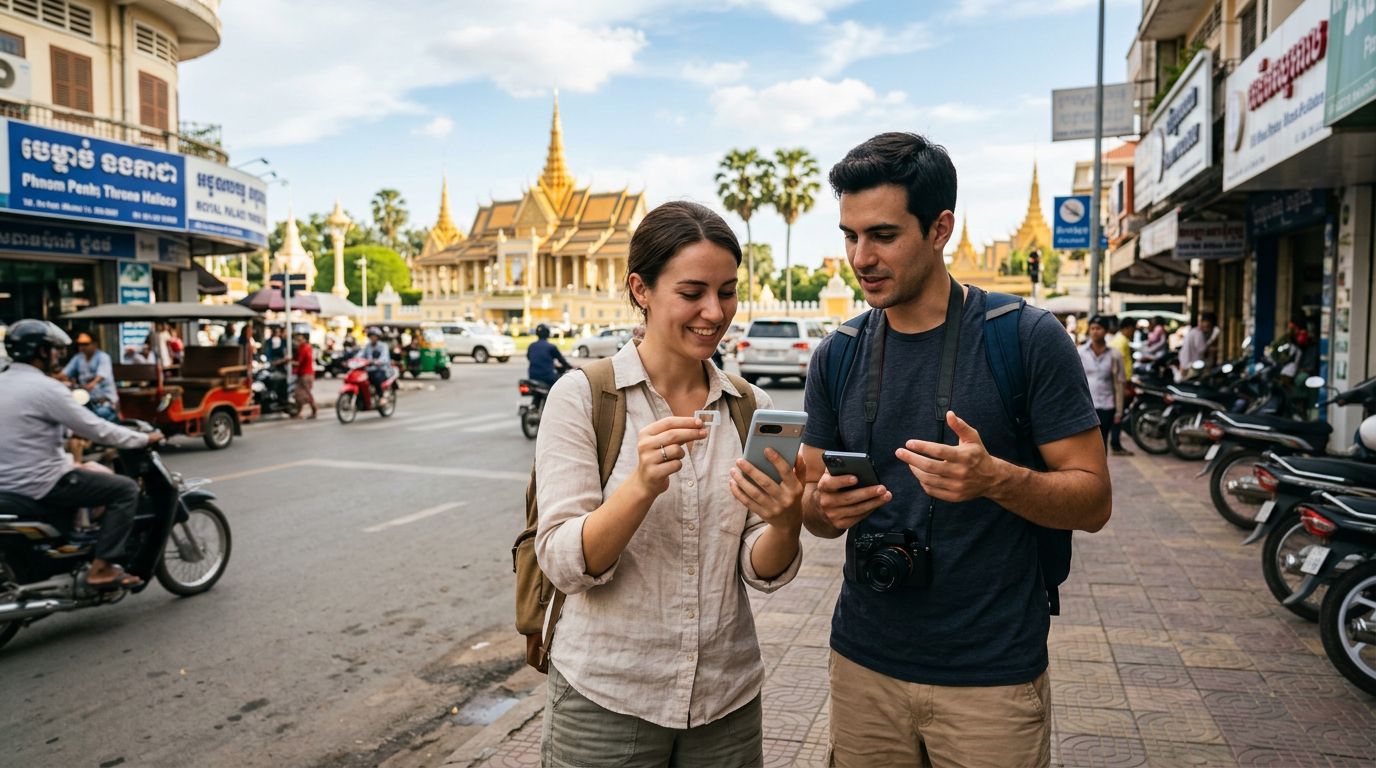
Traveling to Cambodia offers a rich tapestry of experiences, from the ancient stone carvings of Angkor Wat to the bustling markets of Phnom Penh. As you plan your itinerary, staying connected is essential for accessing maps, translation tools, and ride-sharing apps. When evaluating roaming vs eSIM for Cambodia, it is important to understand how each technology functions and how they impact your travel experience.
Traditional international roaming involves using your home mobile service provider while abroad. When you land at Siem Reap or Phnom Penh, your phone automatically searches for a partner network in Cambodia. While this is convenient because you keep your existing phone number, it often comes with significant drawbacks. Many home carriers prioritize their own profit margins, leading to complex billing structures that can be difficult to track. Furthermore, roaming often routes your data traffic back through your home country, which can result in high latency, making your internet connection feel sluggish even when you are on a strong local network.
An eSIM, or embedded SIM, is a digital alternative to the physical plastic cards we have used for decades. It is a chip built into the hardware of modern smartphones. Instead of swapping a physical card, you download a digital profile that allows your phone to connect to local mobile networks directly. By using a service like OneTapSIM, you bypass the middleman of your home carrier. This approach typically provides a more stable connection because your data is processed through local infrastructure, ensuring that your navigation apps and social media uploads remain responsive throughout your journey.
Comparing Convenience and Control
The primary argument for traditional roaming is the perceived ease of use. You do not have to change settings or install anything; your phone simply works. However, this convenience often masks a lack of control. With roaming, you are at the mercy of your home provider’s agreements with Cambodian networks. If your provider has a poor partnership, you might find yourself stuck on a slow 3G connection in an area where 4G or 5G is widely available to locals.
Conversely, eSIM technology offers a level of granular control that frequent travelers appreciate. When you use an eSIM, you can manage your data usage directly through your device settings. You can choose to keep your home SIM active for calls and texts while designating your eSIM specifically for mobile data. This setup prevents accidental roaming charges on your primary line while ensuring you have high-speed data for your travel needs.
Installation is another factor to consider. Setting up an eSIM is a straightforward process that can be completed before you even depart for the airport. Once you land in Cambodia, your device can instantly switch to the local network profile you have downloaded. This eliminates the need to visit a mobile kiosk at the airport or deal with the small, easily lost physical SIM cards. By choosing a dedicated travel eSIM provider, you gain the benefit of a service designed specifically for the needs of international visitors, rather than a one-size-fits-all roaming plan.
Reliability and Performance in Cambodia
Cambodia’s mobile infrastructure has improved significantly over the past few years. Major urban centers and tourist hubs are well-covered by reliable networks. However, the quality of your connection depends heavily on which network you are accessing. When you rely on your home carrier's roaming agreement, you are often locked into a single network provider. If that specific provider has a dead zone in a remote temple area, you are out of luck.
Travel eSIMs often provide access to the best available local networks. Providers like OneTapSIM work to ensure that their profiles connect to the most robust infrastructure in the region. This flexibility is vital when you are traveling between cities or venturing into more rural parts of the country. A reliable connection is not just about convenience; it is a safety feature. Being able to call a ride, check a translation, or look up emergency information in real-time provides peace of mind that a spotty roaming connection cannot match.
Furthermore, the transition to eSIM technology is supported by all major smartphone manufacturers. You can verify your device's compatibility by checking the settings menu on your phone or by visiting the official support pages for Apple or Google. Most devices manufactured in the last few years are fully capable of handling multiple eSIM profiles. This makes the transition away from traditional roaming not only feasible but highly recommended for anyone looking to optimize their travel experience.
When deciding between roaming vs eSIM for Cambodia, the choice often comes down to the balance between simplicity and performance. While roaming requires no effort, it offers little in terms of speed, cost transparency, or network flexibility. An eSIM requires a few minutes of setup, but it grants you a superior, localized connection that functions exactly as it should. For travelers who value efficiency and want to avoid the common pitfalls of international mobile usage, the digital route is the modern standard for staying connected in Southeast Asia. By preparing your device before you board your flight, you ensure that your focus remains on the wonders of Cambodia rather than the status of your cellular signal.
Get an eSIM for
Plans for the destinations covered in this guide, with instant QR delivery.