Understanding the Connectivity Landscape in Georgia
Planning a trip to Georgia—a country known for its breathtaking Caucasus Mountains, ancient wine traditions, and vibrant capital of Tbilisi—requires careful preparation, especially regarding how you stay connected. Whether you are trekking through Svaneti or exploring the narrow streets of the Old Town, having reliable internet access is essential for navigation, translation, and sharing your experiences. When considering the debate of roaming vs eSIM for Georgia trip planning, travelers often find themselves choosing between the convenience of their home carrier and the flexibility of digital alternatives.
Traditional international roaming allows you to keep your primary phone number active while using your home provider's network infrastructure abroad. While this sounds seamless, it often comes with significant drawbacks. Many home carriers rely on agreements with specific local networks in Georgia, which may not always offer the best coverage in remote mountain regions or the fastest speeds in urban centers. Furthermore, the reliance on your home provider means you are subject to their specific service terms, which can be restrictive when you are thousands of miles away from home.
Conversely, an eSIM represents a modern shift in how we manage mobile data. An eSIM is a digital SIM card embedded directly into your device's hardware. By using a service like OneTapSIM, you can download a local data plan directly to your phone without needing to swap out physical plastic cards. This technology allows you to maintain your home SIM for calls or SMS while dedicating your data usage to a local network, effectively giving you the best of both worlds.
Comparing Convenience and Technical Reliability
The primary difference between traditional roaming and using an eSIM lies in the technical execution and the user experience. When you rely on roaming, your phone automatically searches for a partner network upon arrival. While this requires zero effort on your part, it also leaves you with little control. If your home carrier has a poor partnership with a specific Georgian provider, you may find yourself with slow data or frequent signal drops, and you have no way to switch providers manually to improve your connection.
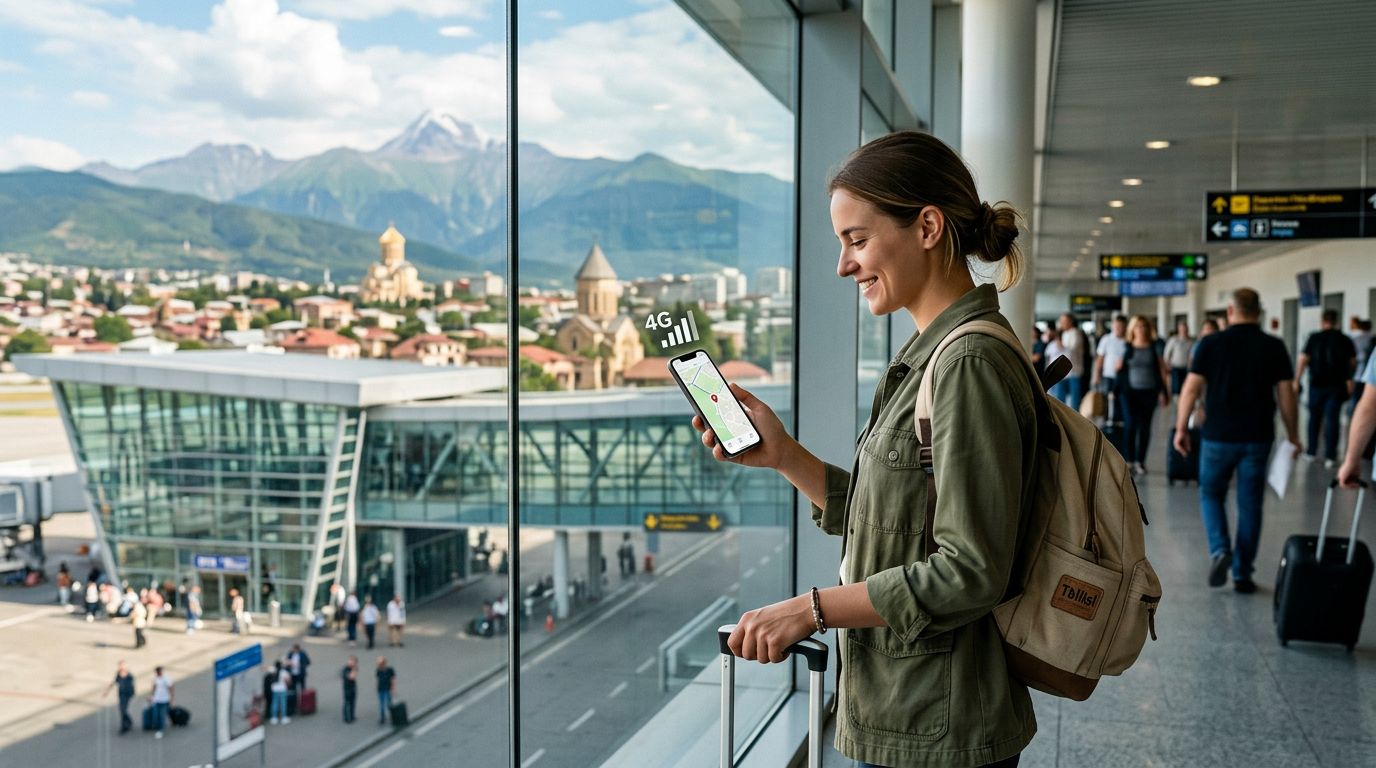
With an eSIM, the process is proactive. You install the profile before you board your flight or immediately upon landing at Tbilisi International Airport. Because eSIMs are designed to connect directly to local infrastructure, they often provide a more stable and faster connection. If you choose a reputable provider like OneTapSIM, you are essentially purchasing access to local networks that are optimized for data performance. This means your maps will load faster, your video calls will be clearer, and your uploads will be more reliable.
Compatibility is another factor to consider. Most modern smartphones manufactured in the last few years support eSIM technology. Before you travel, it is wise to verify that your device is unlocked, meaning it is not restricted to a single mobile carrier. If your phone is unlocked, you can easily manage multiple eSIM profiles alongside your physical SIM. This setup is particularly useful if you need to receive important calls on your home number while using your eSIM for high-speed data to navigate the winding roads of the Georgian countryside.
Why Travelers Choose eSIMs for Their Georgian Adventure
When weighing the pros and cons of roaming vs eSIM for Georgia trip logistics, the flexibility of the eSIM often wins out. One of the most significant advantages is the ability to manage your data consumption effectively. Roaming plans are often bundled with broad, expensive packages that may not align with your actual usage. With an eSIM, you can select a data-only plan that fits your specific travel duration and needs. If you find yourself using more data than expected to upload photos of the Narikala Fortress or to stream music during long bus rides, you can often top up your data through your provider’s app without needing to visit a physical store.
Another often overlooked benefit is security. When you rely on roaming, your data is routed back through your home provider's servers, which can sometimes introduce latency. When you use a local eSIM, your traffic is routed through the local Georgian network, which is generally more efficient. Furthermore, relying on your own dedicated data plan reduces the temptation to connect to public Wi-Fi networks in cafes or airports. Public Wi-Fi can be a security risk, as these networks are often unencrypted and susceptible to interception. By maintaining a private, secure cellular connection through your eSIM, you protect your personal information and digital footprint throughout your journey.
Finally, the ease of setup cannot be overstated. With OneTapSIM, the process is streamlined to ensure you are connected the moment you touch down. You do not have to stand in line at a kiosk in the airport to buy a physical SIM card, deal with language barriers, or worry about losing your original SIM card while swapping it out. You simply scan a QR code or follow the digital installation prompts, and your phone is ready to go. This level of autonomy allows you to focus on what truly matters: enjoying the hospitality of the Georgian people, tasting the local cuisine, and exploring the stunning landscapes that make this country a unique destination. By choosing the right connectivity solution, you ensure that your trip is defined by your experiences rather than the stress of staying connected.
Get an eSIM for
Plans for the destinations covered in this guide, with instant QR delivery.