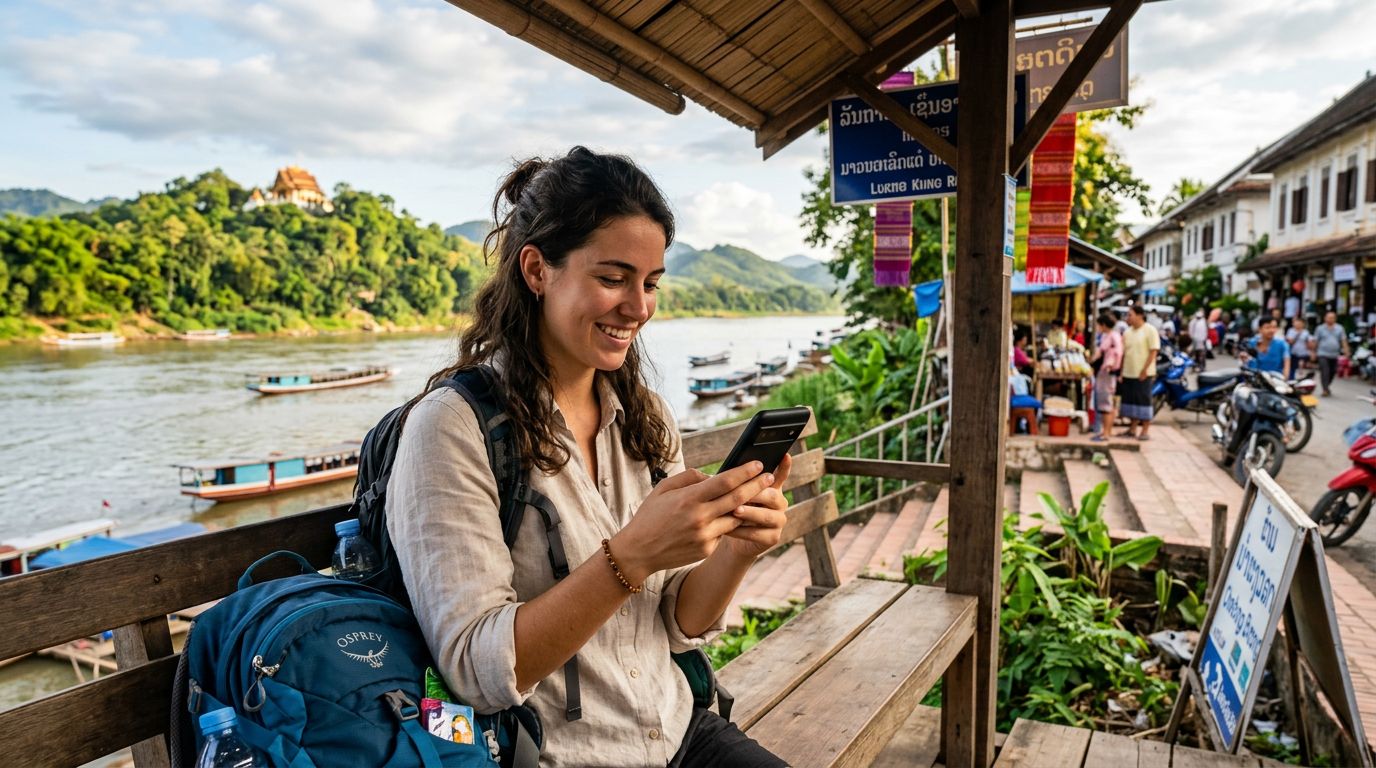
Understanding Your Connectivity Options in Laos
Planning a trip to Laos is an exciting endeavor. Whether you are trekking through the lush jungles of Luang Prabang, exploring the ancient temples of Vientiane, or cruising down the Mekong River, staying connected is essential for convenience and safety. When you arrive, you will need a way to access maps, translate local languages, and share your experiences with friends and family. This leads many travelers to compare the traditional method of international roaming with the modern convenience of an eSIM.
International roaming is the service provided by your home mobile carrier that allows your phone to connect to a local network in a foreign country. It is often the default option because it requires no hardware changes or new accounts. However, it is frequently criticized for being unpredictable. Some carriers charge flat daily fees, while others bill based on data usage, which can lead to unpleasant surprises when you return home. Furthermore, your home carrier is at the mercy of their roaming agreements with local providers in Laos. If those agreements are limited, you might find yourself stuck with slow speeds or restricted network access.
An eSIM, or embedded SIM, is a digital alternative to the physical plastic cards we have used for decades. It is a chip already built into your smartphone. Instead of swapping out a tiny card, you download a data plan directly to your device. This technology has changed how travelers manage connectivity. By choosing an eSIM, you are essentially purchasing a local data package in advance, which often provides a more stable and direct connection to local infrastructure. For a destination like Laos, where cellular infrastructure can vary significantly between urban centers and remote regions, having a reliable data source is paramount.
Comparing Roaming and eSIM Performance
When evaluating roaming vs eSIM for Laos vacation planning, performance is the most critical factor. Traditional roaming relies on a "handshake" between your home provider and a partner network in Laos. Because your data traffic is often routed back to your home country before reaching the internet, you may experience increased latency. This delay can make simple tasks like loading a map or sending a photo feel sluggish.
An eSIM functions differently. When you activate a service like OneTapSIM, your device connects to the local network as if it were a local user. By bypassing the complex routing associated with international roaming, you gain a more direct path to the internet. This usually results in faster loading times and a more responsive connection, which is vital when you are trying to find your way through a bustling night market or booking a last-minute boat tour.
Reliability is another area where eSIMs often outperform roaming. With traditional roaming, if your home carrier does not have a strong partnership with a specific provider in Laos, you might find yourself with no service at all in certain provinces. eSIM providers typically partner with multiple local networks to ensure broader coverage. This flexibility allows your phone to switch between towers more effectively, keeping you connected even when you venture off the beaten path. Additionally, because you can manage your eSIM settings entirely through your phone’s software, you have total control over your data usage, preventing the accidental background downloads that often plague travelers using standard roaming.
Practical Considerations for Your Laos Trip
Beyond technical performance, the user experience differs significantly between these two options. Setting up traditional roaming usually involves calling your carrier before you leave or adjusting settings in your account portal. While this sounds simple, it is often prone to errors. If the roaming feature is not activated correctly, you could arrive in Laos without any connectivity at all, leaving you scrambling to find Wi-Fi at the airport.
In contrast, an eSIM offers a seamless setup process. You can purchase and install your plan well before your flight departs. Once you land in Laos, you simply toggle the eSIM on in your phone’s settings, and you are ready to go. This "plug-and-play" nature is a major benefit for those who want to avoid the stress of airport kiosks or language barriers when trying to purchase a local physical SIM card.
Device compatibility is the main hurdle for eSIM users, though this is becoming less of an issue as newer smartphone models hit the market. Most modern devices support eSIM technology, but it is always wise to verify your phone’s capabilities before you travel. If your device is compatible, the transition to an eSIM is straightforward. You keep your primary phone number active for calls or texts if needed, while using the eSIM specifically for your data needs. This dual-SIM functionality is perfect for travelers who want to stay reachable on their home number while enjoying the cost-effective and high-speed data provided by a dedicated travel eSIM.
Another point to consider is the environment. Traditional roaming often keeps you tethered to your home provider’s restrictive policies. If you run into a technical issue, you are left dealing with international customer support lines that may not be available in your time zone. With a dedicated travel eSIM service, support is often more streamlined and focused on the specific needs of international travelers.
As you finalize your plans for Laos, consider the value of your time and peace of mind. While roaming might seem like the path of least resistance, the potential for connection drops, high costs, and slow speeds can detract from the joy of your vacation. An eSIM provides a modern, efficient, and reliable way to stay connected. By preparing your connectivity in advance, you ensure that your focus remains on the stunning landscapes and rich culture of Laos, rather than on your phone settings or roaming bills. Whether you are navigating the streets of Luang Prabang or relaxing in a cafe in Vientiane, having a reliable data connection at your fingertips is the best way to make the most of your journey.
Get an eSIM for
Plans for the destinations covered in this guide, with instant QR delivery.