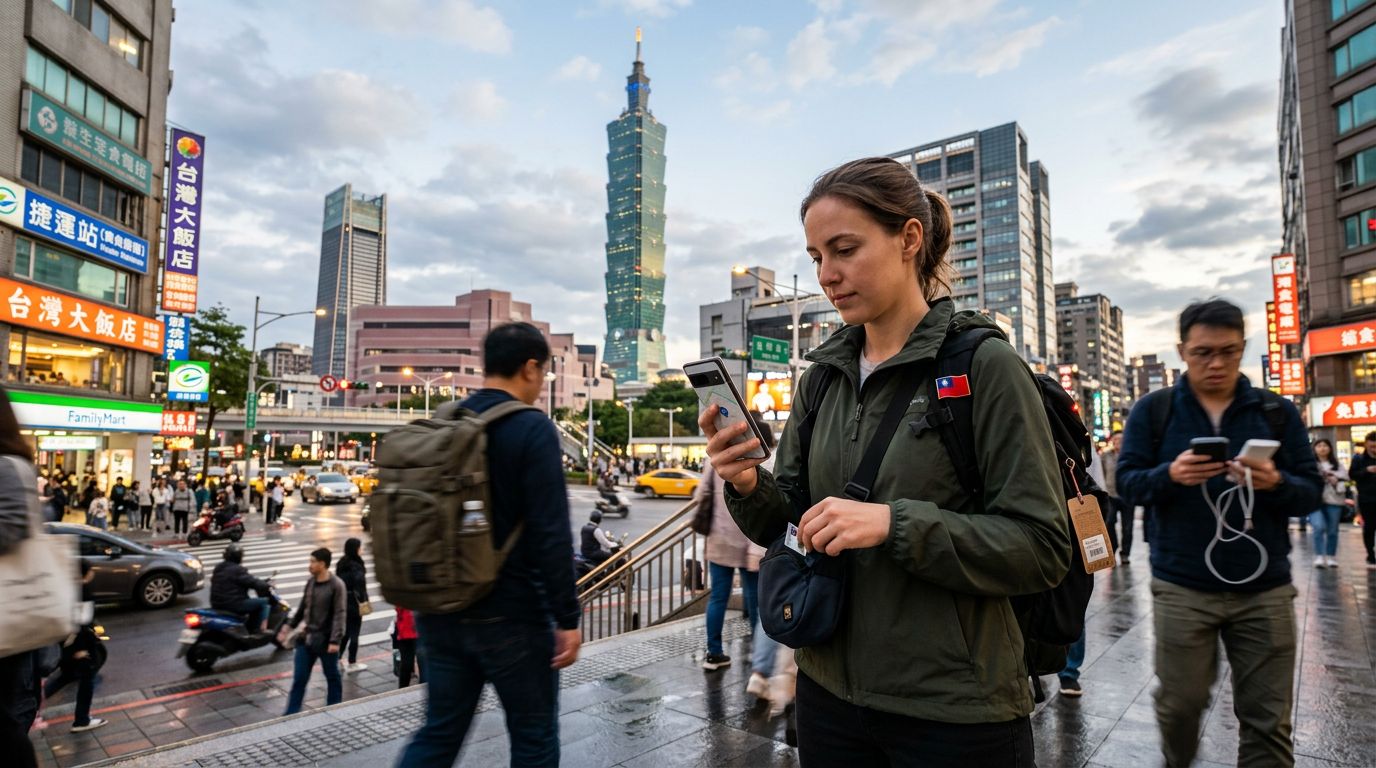
Understanding the Differences Between Roaming and eSIMs
Planning a trip to Taiwan involves checking many boxes, from booking your high-speed rail tickets to deciding how you will stay connected. For many travelers, the biggest dilemma is choosing between traditional international roaming through their home carrier and the modern convenience of an eSIM. While both options provide internet access, they function in fundamentally different ways, and choosing the wrong one can lead to unexpected complications or unnecessary expenses.
Traditional international roaming works by allowing your domestic mobile provider to connect to a local network in Taiwan. When you land at Taoyuan International Airport, your phone automatically searches for a partner network. This is often the default setting for many users, requiring no physical action on their part. However, this convenience comes with a trade-off. Because you are relying on your home carrier to broker the connection, the data routing can be inefficient, and you are subject to the specific terms and conditions of your domestic plan.
An eSIM, or embedded SIM, is a digital version of a physical SIM card. It resides directly on your phone’s internal hardware. Instead of swapping out a plastic chip, you simply download a digital profile that grants you access to a local network in Taiwan. When you use a service like OneTapSIM, you are essentially purchasing a temporary, local-style data plan that bypasses your home carrier’s infrastructure. This results in a more direct connection to the local cellular towers, which frequently leads to better speeds and more reliable coverage throughout the island, from the bustling night markets of Taipei to the scenic trails of Taroko Gorge.
The Pros and Cons of Traditional Roaming
For some travelers, the primary appeal of roaming is simplicity. You do not need to research local providers, download apps, or configure settings before you leave home. If your home carrier has a robust partnership with a major Taiwanese network, your phone will simply start working the moment you turn on your data. This "set it and forget it" approach is attractive for those who want to avoid any technical setup during their vacation.
However, the drawbacks of roaming are significant. First, your home carrier’s roaming agreements are often rigid. If your carrier does not have a high-quality partner in a specific region of Taiwan, you may find yourself stuck on a slower network, even if a faster one is available nearby. Furthermore, because roaming traffic is often routed back through your home country’s servers before reaching the internet, you may experience higher latency. This can make simple tasks like loading maps or making video calls feel sluggish.
Another major concern is the lack of transparency. When you roam, you are often at the mercy of your carrier’s international policies. If you accidentally exceed a data threshold or fail to activate a specific roaming package correctly, you might return home to a bill that is significantly higher than you anticipated. Relying on roaming also means you are tethered to your domestic number, which can be a security risk if you are receiving sensitive two-factor authentication codes while your phone is exposed to international network vulnerabilities.
Why eSIMs Are the Superior Choice for Taiwan Travel
When comparing roaming vs eSIM for Taiwan, the eSIM stands out as the more modern, flexible, and reliable option. OneTapSIM offers a streamlined experience that allows you to manage your connectivity entirely through your device. Because an eSIM acts like a local data plan, you get the benefit of connecting directly to the best available towers in Taiwan. This is particularly important if you plan on traveling outside of the major cities, where signal strength can vary between different local providers.
The installation process is straightforward. Most modern smartphones support eSIM technology, and you can verify your device compatibility through official manufacturer resources. Once you select a plan, you receive a digital profile that you activate in your phone’s settings. You can even set up your eSIM before you leave your home country, ensuring that you have an internet connection the moment your plane touches down in Taipei. This eliminates the stress of searching for a Wi-Fi hotspot in the airport or waiting in long lines at a physical SIM card kiosk.
Another major advantage is the ability to keep your home SIM active simultaneously. Most modern phones allow for dual-SIM functionality. You can keep your primary number active for incoming calls or SMS, while using your OneTapSIM eSIM for all your data needs. This allows you to use navigation apps, translate menus, and share photos on social media without worrying about the data usage impacting your home plan. You have full control over your data consumption, and since you pay for your eSIM plan upfront, there is zero risk of receiving an unexpected bill after your trip.
Furthermore, eSIMs are inherently more secure. Because you are not routing your data through your home carrier’s international roaming infrastructure, you reduce the risk of your traffic being intercepted or mismanaged by third-party roaming partners. You are essentially using the local network as if you were a resident, which provides a level of stability and performance that traditional roaming simply cannot match. Whether you are navigating the complex subway system in Kaohsiung or looking for the best bubble tea shops in Tainan, having a reliable, high-speed data connection is essential. By choosing an eSIM, you ensure that your digital experience in Taiwan is as smooth and efficient as the rest of your travel itinerary.