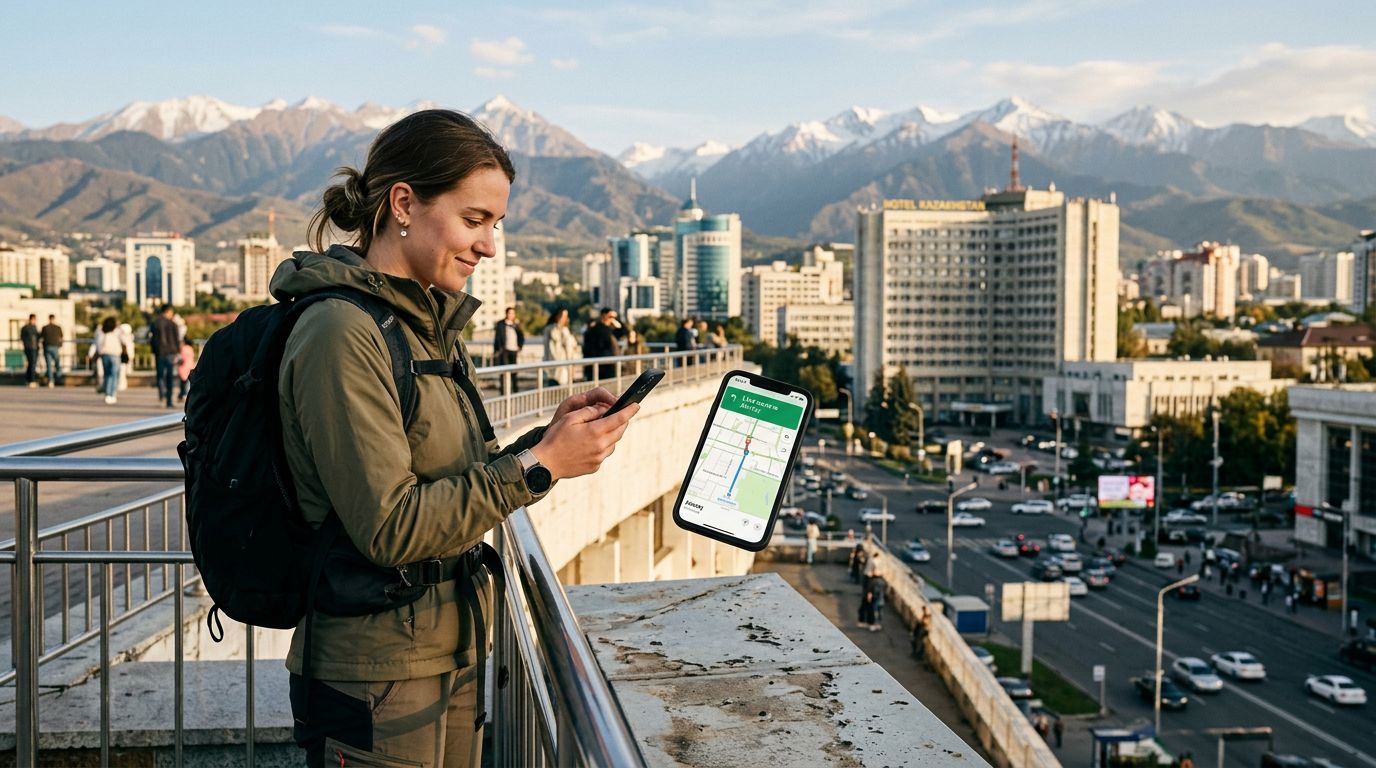
Understanding Your Connectivity Options in Kazakhstan
Planning a trip to Kazakhstan often involves balancing the desire for adventure with the practical need to stay connected. Whether you are trekking through the stunning landscapes of the Charyn Canyon, exploring the futuristic architecture of Astana, or navigating the bustling bazaars of Almaty, having a reliable internet connection is essential for maps, translation apps, and sharing your journey. When considering how to stay online, travelers generally weigh the traditional route of international roaming against the modern convenience of an eSIM.
International roaming is the service provided by your home mobile carrier that allows you to use your existing phone number and data plan while abroad. It is often the default option for many travelers because it requires no setup—you simply land, turn on your phone, and hope for a signal. However, this convenience often comes with significant drawbacks. Relying on your home carrier for international data frequently leads to unexpected connectivity issues, as your phone may struggle to switch between local networks, or your home provider may throttle your speeds to keep costs manageable.
On the other hand, an eSIM, or embedded SIM, is a digital alternative to the physical plastic cards we have used for decades. Since it is built directly into the hardware of modern smartphones, you can download a local data plan before you even board your plane. By choosing a provider like OneTapSIM, you can secure a data-only plan that connects you directly to local Kazakhstan networks. This bypasses the middleman of your home carrier, providing a more stable and efficient connection that behaves exactly like a local SIM card.
Comparing Roaming and eSIM Performance
When comparing roaming vs eSIM for Kazakhstan travel, the primary difference lies in how your device interacts with local infrastructure. Traditional roaming often routes your data traffic through your home country’s servers. If you are a traveler from North America or Europe, this means your data signal has to travel thousands of miles back to your home network before reaching the websites or apps you are trying to access. This "tromboning" effect causes significant latency, making simple tasks like loading a map or checking a restaurant review feel sluggish.
An eSIM functions differently. Because it provides you with a local data profile, your internet traffic is routed through the local Kazakhstan towers and local internet exchanges. This significantly reduces latency and provides a much snappier browsing experience. When you arrive in a country as vast as Kazakhstan, where you might be moving between urban centers and more remote natural sites, the quality of your connection matters. A local eSIM profile typically grants you the same priority access as residents, whereas roaming agreements can sometimes relegate international visitors to lower-priority bandwidth during peak hours.
Furthermore, there is the issue of reliability. Roaming agreements are complex, and your home carrier might only have a contract with one specific network provider in Kazakhstan. If that specific provider has poor coverage in the region you are visiting, you are essentially out of luck. With an eSIM, you are often granted access to the best available local networks, ensuring that you have the widest possible coverage footprint. This flexibility is particularly valuable in a country where infrastructure can vary greatly between the major cities and the vast steppe.
Practical Considerations and Setup
The transition to eSIM technology has simplified the logistics of international travel significantly. For most travelers, the setup process is straightforward. First, you must ensure that your smartphone is unlocked and eSIM-compatible. Most flagship devices released in the last few years support this technology. You can verify your device's capabilities through the official support pages provided by the manufacturer, such as Apple or Google.
Once you have confirmed compatibility, the process of activating a service like OneTapSIM is seamless. Instead of hunting for a physical kiosk at the airport after a long flight—where you might face language barriers or long lines—you can purchase and install your eSIM profile from the comfort of your home. You receive a QR code or an activation link, follow the prompts on your phone’s settings menu, and the digital SIM is installed. It remains dormant until you arrive in Kazakhstan, at which point you simply toggle it on in your settings.
One of the most significant advantages of using an eSIM is the ability to keep your home SIM active simultaneously. This is a "Dual SIM" setup. You can keep your home phone number active for essential SMS messages—such as two-factor authentication codes from your bank—while using your OneTapSIM eSIM for all your data needs. This prevents the common anxiety of missing an important call or message while ensuring you have high-speed, reliable data for navigation and social media.
When you weigh the pros and cons of roaming vs eSIM for Kazakhstan travel, the choice becomes clear for the modern traveler. Roaming is a legacy system that is often expensive and technically inefficient. An eSIM offers a modern, high-performance solution that integrates perfectly with your existing device. By opting for a dedicated data eSIM, you gain the freedom to explore the diverse regions of Kazakhstan without worrying about connectivity gaps or the performance lag associated with international roaming. Whether you are navigating the streets of Almaty or venturing into the wilderness, having a robust digital connection ensures that your focus remains on the experience rather than the technology behind it.
Get an eSIM for
Plans for the destinations covered in this guide, with instant QR delivery.