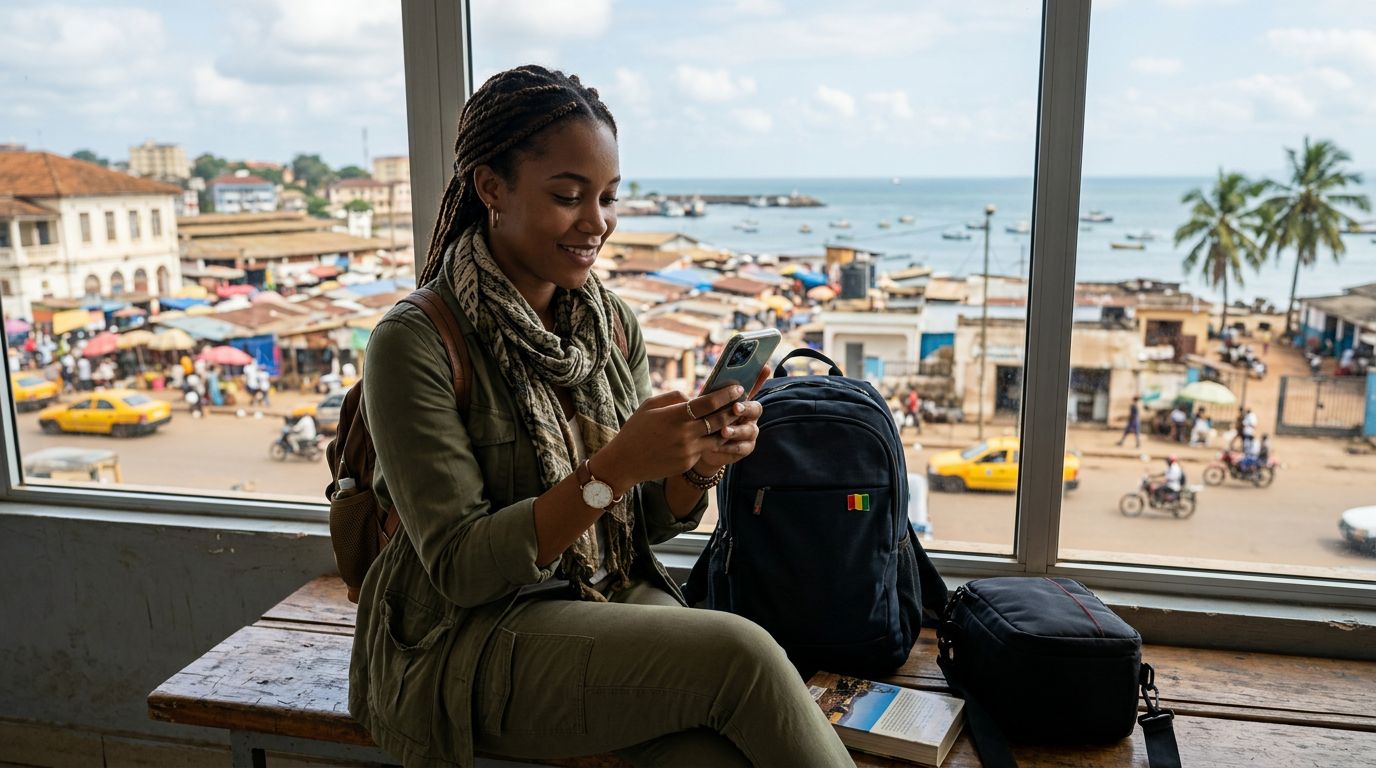
Understanding Connectivity in Guinea
Traveling to Guinea offers a unique experience, from the lush landscapes of the Fouta Djallon highlands to the vibrant markets of Conakry. However, staying connected while exploring this West African nation requires careful planning. For most international travelers, the primary choice for mobile data boils down to a traditional physical SIM card or a modern eSIM.
A physical SIM card is the standard plastic chip that has powered mobile phones for decades. To use one in Guinea, you typically visit a local mobile network operator’s store upon arrival, present your passport for registration, and have a representative insert the card into your device. This process can be time-consuming, often involving queues and language barriers.
In contrast, an eSIM is a digital version of a SIM card embedded directly into your phone’s hardware. Instead of swapping out a physical chip, you download a data profile via a QR code or an application. This allows you to activate your mobile data service before you even land in Guinea. Services like OneTapSIM facilitate this transition by providing streamlined digital profiles that bypass the need for physical retail interactions. As you weigh the pros and cons of these two technologies, consider your itinerary, your technical comfort, and how much time you are willing to spend setting up your connection.
Comparing Convenience and Setup
The most significant difference between a Guinea SIM card and an eSIM is the setup process. When you opt for a local physical SIM, you are committing to a manual task. You must find a store, wait for assistance, and ensure that your phone is configured correctly by a clerk who may be busy with other customers. If you arrive late at night or on a weekend, you might find shops closed, leaving you without data until the next business day. Furthermore, handling a tiny plastic card carries the risk of losing or damaging your original home SIM, which is often essential for receiving two-factor authentication codes or urgent calls from home.
eSIM technology removes these logistical hurdles. Because the profile is digital, you can purchase and install your data plan from the comfort of your home or while sitting in an airport lounge. Once you land in Conakry, you simply toggle your settings to switch from your home network to your travel data profile. This instant activation is ideal for travelers who need to call a ride-sharing service, check maps, or message family immediately upon arrival.
Compatibility is the primary constraint for eSIMs. While most modern smartphones manufactured in the last few years support this technology, it is essential to ensure your device is unlocked and eSIM-compatible. You can verify your device’s capabilities through the official support pages for your specific phone manufacturer. If your device supports it, the eSIM is almost universally more convenient, as it eliminates the need to carry extra hardware or manage small, fragile components during your transit.
Performance and Reliability Considerations
When evaluating Guinea SIM card vs eSIM, performance is often a major concern for travelers. Many assume that a local physical SIM provides better coverage or faster speeds than a travel eSIM. In reality, the underlying infrastructure is the same. An eSIM provider typically partners with major local telecommunications networks to provide connectivity. When you use a service like OneTapSIM, you are essentially accessing the same cellular towers and network bands as a local user.
The advantage of a travel eSIM often lies in the management of the connection. With a physical SIM, you are tied to a single local provider’s specific coverage map. If that provider has poor reception in a remote part of Guinea, you are stuck. Some eSIM providers offer multi-network roaming profiles that can switch between available towers to maintain a more stable connection.
Another factor is data management. Physical SIM cards often require you to manage your balance through USSD codes or specific local apps that may not be available in your language. An eSIM profile is managed through your phone’s built-in cellular settings. You can easily track your data usage, turn off roaming for your home SIM to avoid accidental charges, and keep your primary number active for incoming texts or calls if your phone supports dual-SIM functionality.
For those concerned about security, eSIMs offer a slight advantage. Because there is no physical card to remove, your phone is slightly more secure in the event of theft, as the data profile is tied to the device’s hardware and software configuration rather than a removable chip. Additionally, by avoiding public kiosks where you might be asked to hand over your passport and leave your phone with a stranger, you reduce the risk of unauthorized access to your device.
Ultimately, the choice depends on your personal preferences. If you enjoy the traditional experience of interacting with local vendors and do not mind the potential wait times, a physical SIM card is a reliable way to get online. However, for those who prioritize efficiency, immediate access, and the ability to manage their connectivity without physical hardware swaps, the eSIM is the superior choice for modern travel. By choosing a digital-first approach, you can spend less time configuring your device and more time enjoying the unique sights, sounds, and culture of Guinea. Whether you are navigating the streets of the capital or trekking through the interior, having a stable, pre-configured data connection ensures that you can share your journey and stay in touch with the world effortlessly.
Get an eSIM for
Plans for the destinations covered in this guide, with instant QR delivery.