Understanding the Connectivity Landscape in Slovenia
Slovenia is a gem of Central Europe, offering everything from the emerald waters of the Soča Valley to the bustling, café-lined streets of Ljubljana. Whether you are planning to hike in the Julian Alps or explore the subterranean wonders of Postojna Cave, having reliable internet access is essential. It allows you to use navigation apps, translate menus, look up historical facts on the fly, and share your travel experiences with friends and family back home.
When planning your trip, you will inevitably face the choice between two primary connectivity solutions: a pocket WiFi device or an eSIM. Both serve the purpose of keeping you online, but they function in fundamentally different ways. A pocket WiFi is a portable router that creates a local hotspot for your devices, while an eSIM is a digital SIM card embedded directly into your phone’s hardware. Choosing between them depends on your travel style, your technical comfort level, and how much gear you are willing to carry throughout your journey.
The Case for Pocket WiFi: Pros and Cons
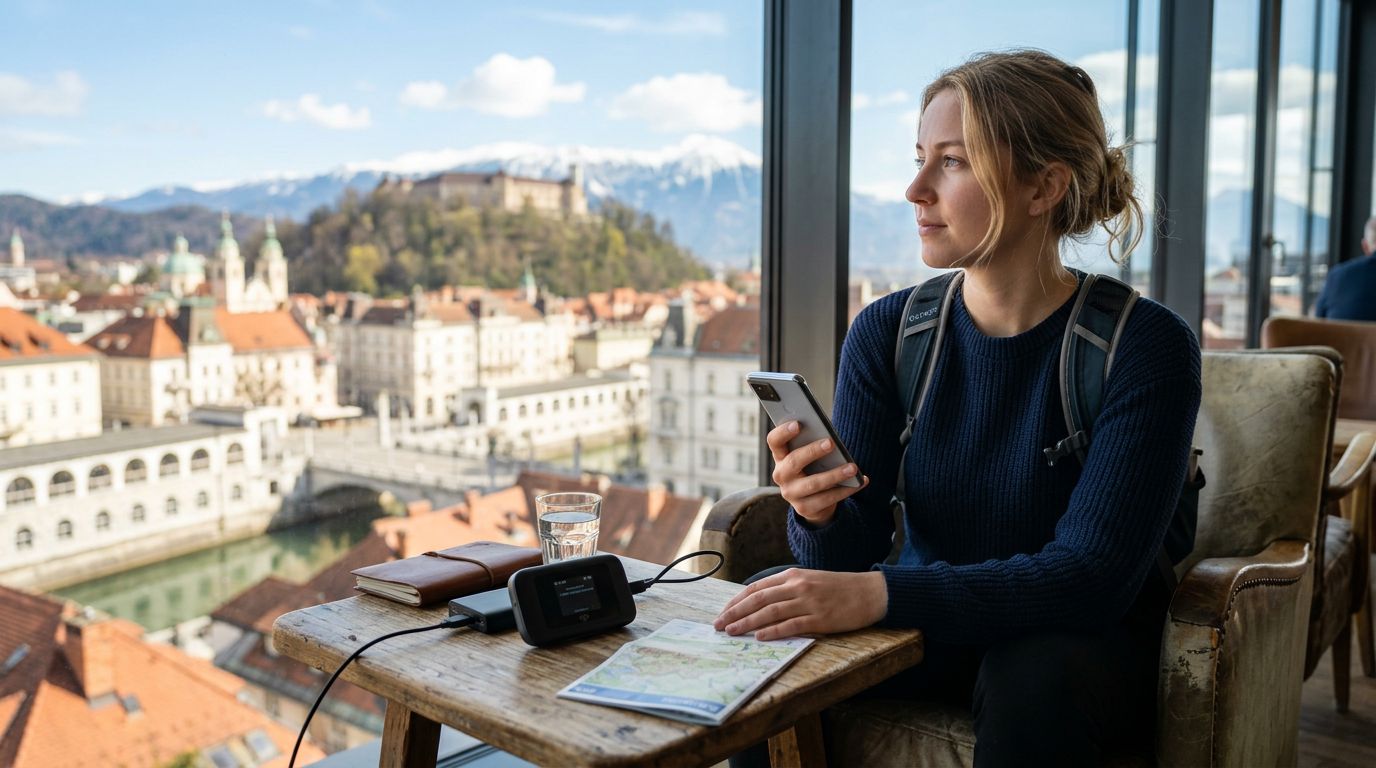
A pocket WiFi device, often referred to as a mobile hotspot, acts as a dedicated bridge between the local cellular network and your personal devices. You carry a small piece of hardware—roughly the size of a deck of cards—that connects to the Slovenian mobile network and broadcasts a private WiFi signal.
The primary advantage of a pocket WiFi is its ability to support multiple devices simultaneously. If you are traveling as a family or a group, one device can provide internet access for everyone. This is convenient if you have tablets, laptops, or multiple smartphones that all need to stay connected. Furthermore, because the device is independent of your phone, it does not drain your phone’s battery life.
However, the downsides are significant. Carrying a pocket WiFi means you have an extra piece of equipment to manage. You must ensure it is charged every night, which adds another cable and plug to your packing list. If you forget to charge it or leave it in your hotel room, you are left without connectivity. Additionally, you are responsible for the physical hardware. If the device is lost, stolen, or damaged during your trip, you may be liable for replacement fees. You also have to deal with the logistics of picking up the device at the airport or receiving it via mail before you leave, and then returning it after your trip, which can be a hassle if your travel schedule is tight.
The eSIM Advantage: Why Travelers Prefer Digital Solutions
The eSIM has transformed how we approach international roaming. Because it is a digital profile downloaded directly onto your phone, it eliminates the need for physical hardware. If your device is compatible, you can activate your Slovenian data plan in minutes without visiting a store or waiting for a delivery.
One of the most compelling reasons to choose an eSIM for your Slovenia trip is the convenience of seamless integration. With a provider like OneTapSIM, you can set up your connection before you even board your flight. As soon as you land at Ljubljana Jože Pučnik Airport, your phone will automatically latch onto the local network, allowing you to call an Uber or check your reservation details without searching for a public WiFi hotspot.
Security is another major benefit. Because you are using your own device, you avoid the risks associated with connecting to public, unsecured WiFi networks in cafes or train stations. Your data remains protected by the encryption protocols inherent to your mobile device. Furthermore, an eSIM allows you to keep your primary SIM card active for calls or texts from home while using the eSIM specifically for data. This dual-SIM functionality ensures that you never miss an important message while enjoying the benefits of a local data plan.
When comparing pocket WiFi vs eSIM for Slovenia trip logistics, the eSIM is the clear winner for solo travelers and couples. You don’t have to worry about carrying an extra device, managing batteries, or returning hardware at the end of your trip. It is a "set it and forget it" solution that works quietly in the background, leaving you free to focus on the sights rather than your tech.
Making the Final Decision
To decide which option is best for you, consider the specific nature of your trip. If you are a digital nomad who needs to connect a laptop, a tablet, and a phone simultaneously for hours of work, a pocket WiFi might offer the stability you require. However, for the vast majority of tourists, the simplicity of an eSIM is superior.
Slovenia is a country meant to be explored on foot, by bike, or by car. The freedom of not having to carry a bulky hotspot device or worry about its battery life is invaluable. With an eSIM, you can move from the streets of Piran to the peaks of Mount Triglav without ever losing your connection. The installation process is straightforward, and most modern smartphones support the technology, making it the most efficient way to stay connected in the modern era.
Before you depart, check your phone’s compatibility settings. You can verify if your device is unlocked and eSIM-ready by checking the settings menu on your iPhone or Android device. If you find that your phone is compatible, the transition to an eSIM is seamless. By choosing a digital solution, you reduce your environmental footprint, simplify your packing, and ensure that your connectivity is as agile as your travel itinerary. Whether you are navigating the winding roads of the Logar Valley or finding the best local restaurant in Maribor, having a reliable, integrated data plan will make your Slovenian adventure significantly smoother.
Get an eSIM for
Plans for the destinations covered in this guide, with instant QR delivery.