Planning a trip to Sierra Leone is an exciting endeavor. Whether you are heading to the pristine beaches of the Freetown Peninsula, exploring the historical significance of Bunce Island, or conducting business in the capital, staying connected is essential. Modern travelers often find themselves choosing between two primary methods for mobile data: traditional pocket WiFi devices and the newer, more streamlined eSIM technology. When considering pocket WiFi vs eSIM for Sierra Leone, the decision comes down to your specific travel style, technical comfort, and desire for convenience.
Understanding the Two Options
Pocket WiFi, sometimes referred to as a mobile hotspot or MiFi, is a portable wireless router. You carry this small device with you, and it connects to local cellular networks, broadcasting a private WiFi signal for your phone, tablet, and laptop to use. It acts as a bridge between the local towers and your personal hardware. Because it is a physical piece of equipment, it requires a dedicated battery, charging cables, and a secure place in your luggage. You must either rent it from a provider before you leave or pick it up upon arrival at the airport.
An eSIM, or embedded SIM, is a digital alternative to the physical plastic cards we have used for decades. Instead of swapping a tiny chip in and out of your phone, an eSIM is a software-based profile that you download directly to your device’s internal hardware. Once activated, your phone recognizes the eSIM as a legitimate cellular connection, allowing you to access data without needing any extra hardware. Technologies like OneTapSIM allow users to manage these profiles remotely, transforming the way international travelers handle connectivity.
Comparing Convenience and Logistics
The most significant difference between these two technologies is the logistical burden. With a pocket WiFi device, you are responsible for an extra piece of hardware throughout your entire trip. If you are traveling through remote areas of Sierra Leone, keeping that device charged becomes an additional chore. You must carry a power bank or ensure you have access to wall outlets, as the device will drain its battery while broadcasting a signal. Furthermore, there is the risk of loss or damage. If you lose the rental unit, you are often held liable for the cost of the hardware, which can be significant.
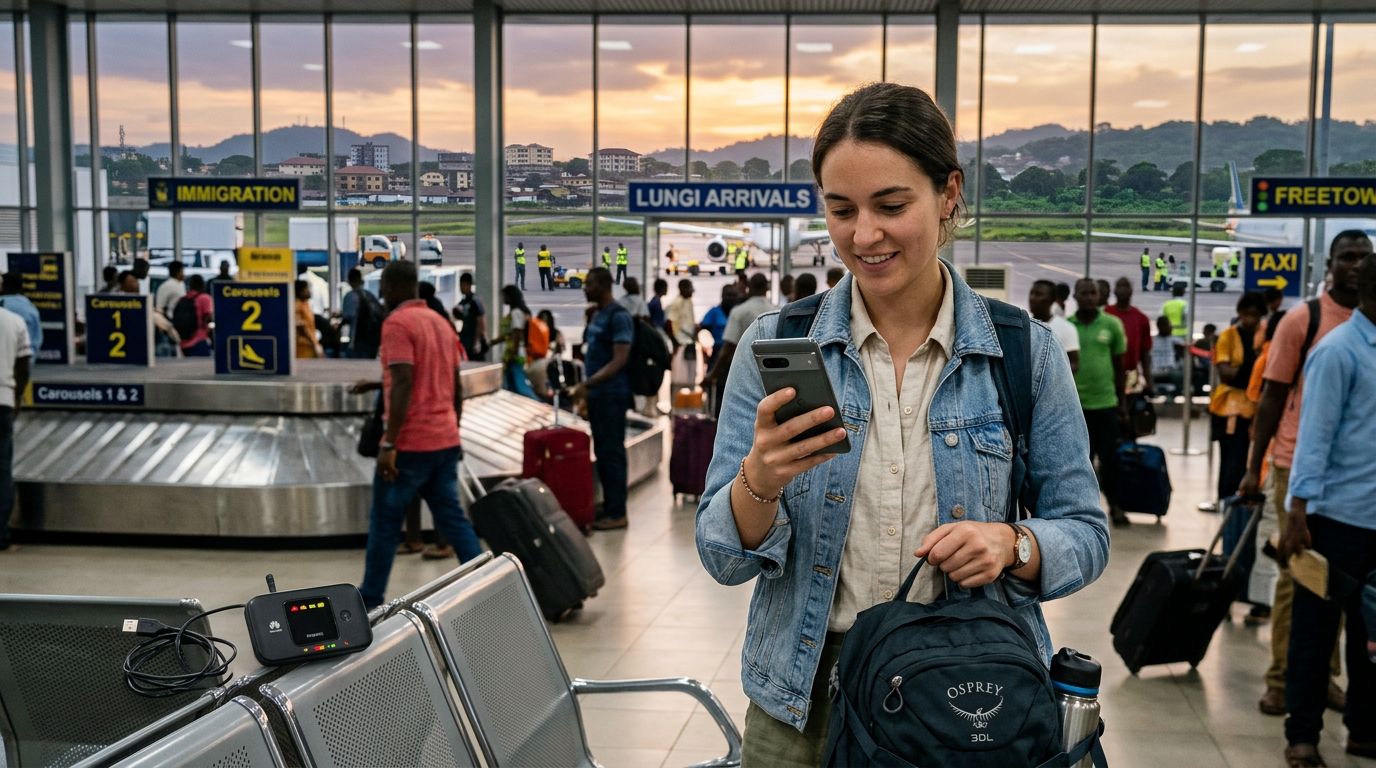
eSIMs eliminate these physical headaches entirely. Since the technology is already integrated into most modern smartphones, you do not need to carry anything extra. You can set up your connection before you even board your plane. By the time you touch down at Lungi International Airport, your phone is already prepared to switch to the local network. This is particularly advantageous for travelers who prefer to travel light. Because the eSIM resides within your phone’s existing architecture, you are only managing one device. If you need to switch between your home number and your travel data, it is as simple as toggling a setting in your phone’s menu.
Connectivity and Performance in Sierra Leone
Sierra Leone’s cellular landscape is unique, and coverage can vary depending on your location. In Freetown, you will generally find decent signal strength, but as you move into more rural regions or national parks, connectivity can become spotty.
Pocket WiFi devices are sometimes praised for their ability to connect multiple devices at once. If you are traveling as a large family or a group of colleagues, a single hotspot can provide internet to everyone simultaneously. However, this convenience comes at a cost to performance. If everyone is streaming video or downloading large files, the bandwidth is shared and can become quite slow. Additionally, if the person carrying the pocket WiFi walks away from the group, everyone else loses their connection.
eSIMs provide a more personalized experience. Because each person in your group can have their own eSIM, you are not tethered to one another. If you decide to go for a walk on the beach while your partner stays at the hotel, you both maintain your own independent data connections. OneTapSIM offers a seamless way to manage these individual connections, ensuring that you are not reliant on a single piece of hardware that could fail or run out of power.
Technical Requirements and Compatibility
Before you decide which route to take, you must verify that your phone is compatible with eSIM technology. Most flagship smartphones released in the last few years support eSIMs. You can verify your device’s capabilities by checking your phone’s cellular settings menu or by consulting the support pages for your manufacturer, such as the resources provided by Apple or Google. If your phone is locked to a specific carrier, you may need to contact them to have it unlocked before you can use an eSIM, as the phone must be able to accept network profiles from third-party providers.
Pocket WiFi does not have these strict device requirements. Because the device handles the cellular connection and broadcasts it as standard WiFi, almost any device with a WiFi chip can connect to it. If you are traveling with an older tablet, a laptop that lacks modern cellular capabilities, or a phone that does not support eSIMs, a pocket WiFi device is a reliable fallback. However, for the vast majority of modern travelers, the convenience of an eSIM far outweighs the compatibility benefits of a physical hotspot.
Final Considerations for Your Trip
When weighing pocket WiFi vs eSIM for Sierra Leone, consider the duration and nature of your visit. If you are staying for a short period and need to connect multiple non-cellular devices like laptops for work, a pocket WiFi might feel like a familiar solution. However, for most tourists and business travelers, the eSIM is the superior choice. It is more secure, as you are not broadcasting an open or password-protected WiFi signal that could be intercepted. It is also more environmentally friendly, as there is no plastic SIM card to discard and no hardware to ship back and forth across borders.
By opting for an eSIM, you streamline your travel experience. You avoid long lines at airport kiosks, you don't have to worry about returning equipment, and you keep your luggage footprint minimal. As you prepare for your journey to Sierra Leone, take a moment to check your phone’s settings and explore the options available through services like OneTapSIM. Choosing the right connectivity method allows you to focus on the sights, sounds, and culture of Sierra Leone rather than worrying about your signal strength or the battery life of a secondary device. Whether you are navigating the streets of Freetown or relaxing on the coast, having reliable, digital-first connectivity ensures that you can share your experiences, look up directions, and stay in touch with home without the extra weight of a pocket WiFi device.
Get an eSIM for
Plans for the destinations covered in this guide, with instant QR delivery.