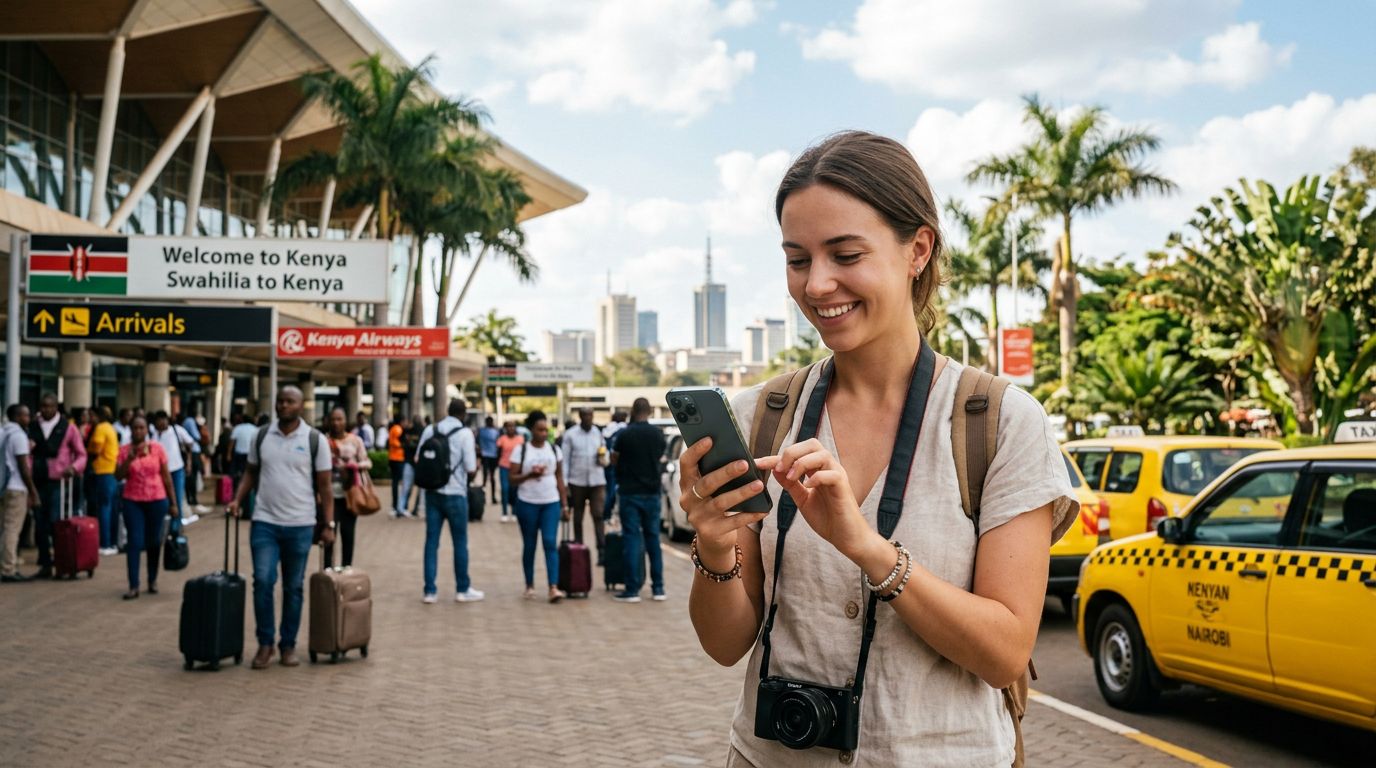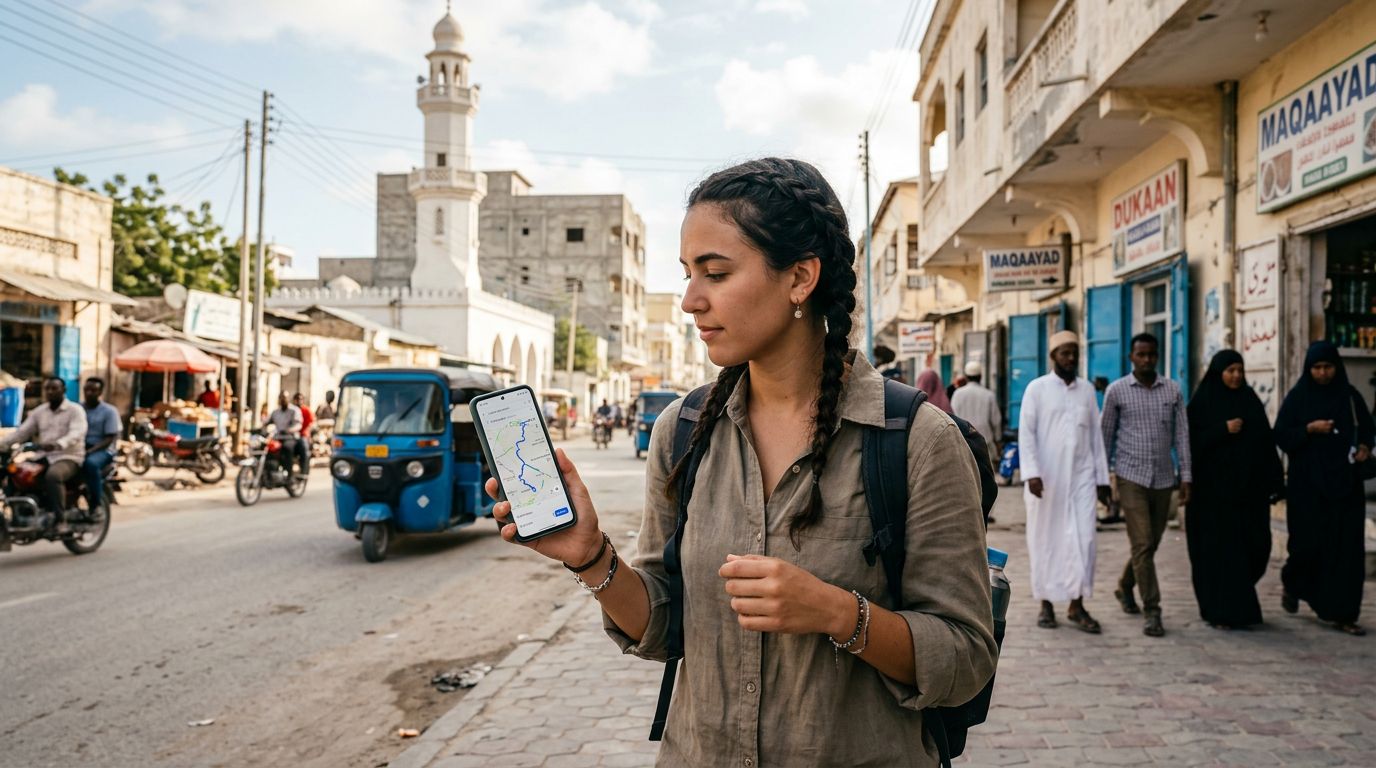
Traveling to Somalia offers a unique experience, whether you are visiting for business, reconnecting with family, or exploring the rich history of the Horn of Africa. As you move through bustling city centers like Mogadishu or travel between regions, having reliable access to digital maps is essential. Relying on physical maps or asking for directions can be challenging, especially when you are unfamiliar with the local layout. Using an eSIM allows you to maintain a consistent data connection, ensuring that your navigation apps remain functional throughout your journey.
Why Reliable Connectivity Is Essential for Navigation in Somalia
When you land in a new country, your phone often struggles to find a stable network if you rely on roaming with your home carrier. This can lead to intermittent signal loss, making it impossible to load map data exactly when you need it most. In Somalia, infrastructure is developing rapidly, and having a dedicated data connection through an eSIM ensures that you are not dependent on unpredictable public Wi-Fi networks.
Navigation apps rely on a steady stream of data to update your position, calculate traffic patterns, and provide turn-by-turn directions. If your connection drops, the app may freeze or fail to update your location, leaving you stationary on the screen while you are actually moving. By using a travel eSIM from OneTapSIM, you connect directly to local networks, which provides the stability required for GPS-based services to function accurately. This is particularly important when you are moving through areas where landmarks might not be immediately obvious or when you need to find specific service points, transport hubs, or accommodation.
Furthermore, a reliable data connection allows you to use real-time features. These include checking for road closures, finding alternative routes if a path is blocked, and identifying nearby points of interest such as cafes, banks, or clinics. Without a stable eSIM connection, you lose these dynamic capabilities, effectively turning your advanced smartphone into a basic, static map that cannot adapt to the changing realities of your surroundings.
Setting Up Your Device for Optimal Map Performance
Before you begin your journey, there are several steps you should take to ensure your smartphone is ready for navigation. First, ensure that your device is compatible with eSIM technology. Most modern smartphones support this feature, but it is always wise to check your device settings or the manufacturer’s support pages to confirm. Once you have purchased your eSIM, the installation process is usually straightforward. You will receive a QR code or manual activation details that allow you to add the eSIM profile to your phone’s settings.
Once the eSIM is installed and activated, you must configure your phone’s cellular settings to prioritize the eSIM for mobile data. This prevents your phone from attempting to use your home carrier’s roaming data, which can be both expensive and unreliable. Go to your cellular settings and ensure that the "Cellular Data" option is set to your travel eSIM. You should also verify that "Data Roaming" is enabled for the eSIM profile, as this is often required for the local network to provide full data access.
To maximize your battery life and data efficiency while using maps, consider downloading offline maps before you leave your hotel or accommodation. Both major map providers allow you to save specific regions for offline use. This means that even if you encounter a temporary dead zone, your phone will still be able to show your location and provide basic routing based on the downloaded data. Your OneTapSIM connection will then serve as the primary source for live updates, such as traffic congestion or new route suggestions, while the offline map acts as a critical backup.
Practical Tips for Using Maps While Traveling
Navigating a new city requires more than just a working GPS; it requires a strategy for managing your device and your data. When you are walking or driving, keep your phone mounted or held securely. If you are using a ride-sharing service or a taxi, you can use your map app to follow the route in real-time. This provides peace of mind, as you can see exactly where you are and ensure that the driver is following the most direct path to your destination.
Another vital tip is to manage your location permissions. Ensure that your map applications have "Always Allow" or "While Using the App" permissions enabled for location services. If these permissions are restricted, the app will not be able to track your movement accurately. Additionally, keep an eye on your background data usage. Some apps may try to sync photos or update software in the background, which consumes the data you need for navigation. You can restrict background data for non-essential apps in your phone’s settings to ensure that your eSIM data is reserved entirely for your maps and communication needs.
Finally, always carry a portable power bank. Using GPS, screen brightness, and mobile data simultaneously is one of the fastest ways to drain a smartphone battery. Since you will be relying on your phone for navigation throughout the day, having a backup power source ensures that you are never left without a map in an unfamiliar area. If you find that your data usage is higher than expected, check your map settings to see if you are using high-resolution satellite imagery, which consumes more data than standard map views. Switching to a standard view is a simple way to conserve data while still getting all the navigation information you need to move safely and efficiently across Somalia. By preparing your device and managing your connectivity with a reliable eSIM, you can focus on your journey rather than worrying about finding your way.