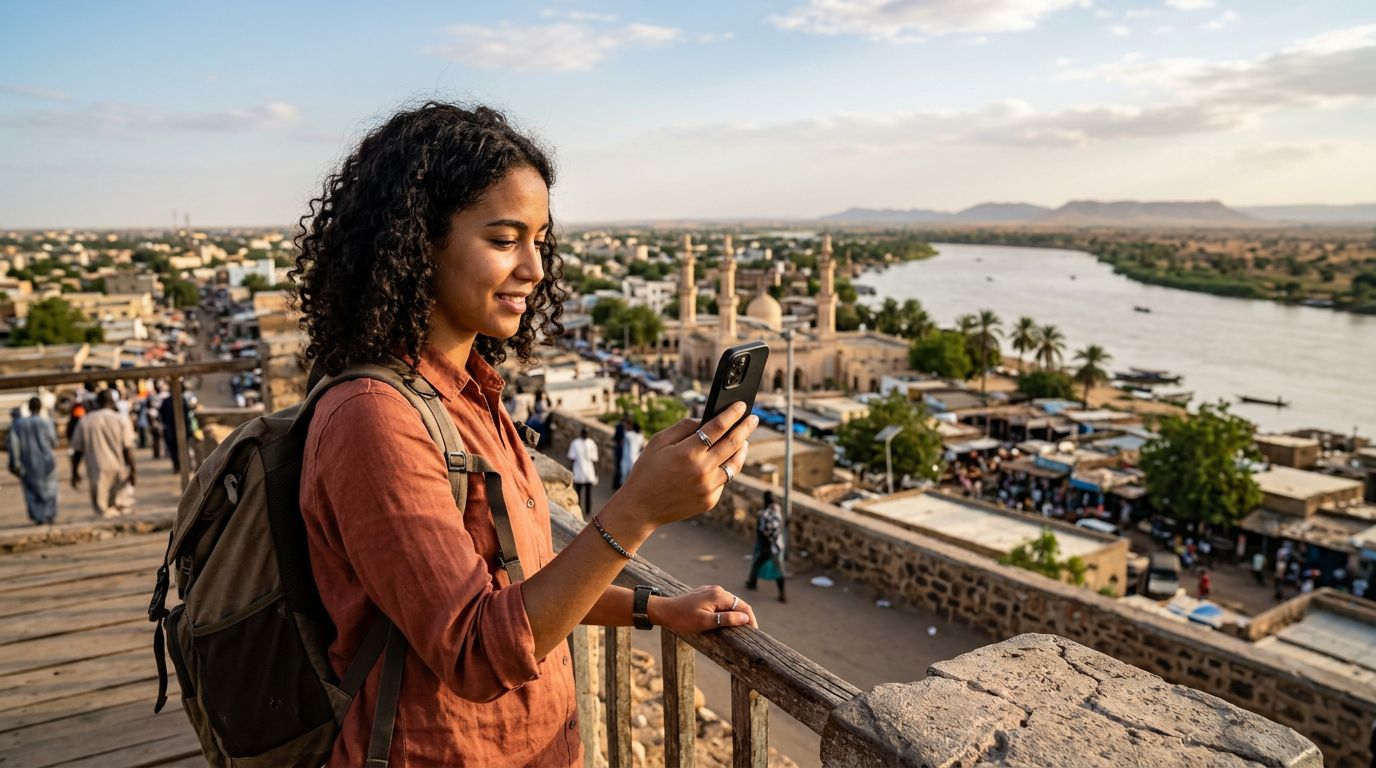
Traveling to Yemen presents a unique set of challenges and experiences. Whether you are visiting for humanitarian efforts, research, or specific travel purposes, maintaining a reliable connection is often a primary concern. Many travelers ask the question: does eSIM work in Yemen? The answer is nuanced, depending on the current state of local telecommunications infrastructure and the specific technology supported by your mobile device.
Understanding the Connectivity Landscape in Yemen
Yemen’s telecommunications infrastructure has faced significant strain over the past decade. The country relies on a mix of state-operated and private providers, but national coverage is inconsistent. In major urban centers like Sana’a, Aden, and Hadhramaut, you will find cellular networks that provide standard voice and data services. However, rural areas and conflict-affected zones often experience severe signal degradation or complete blackouts.
When considering an eSIM for your trip, it is important to understand that an eSIM is simply a digital version of a physical SIM card. It does not magically create a signal where none exists. If the local network towers in your specific destination are offline or incompatible with international roaming agreements, no SIM card—physical or digital—will provide you with connectivity.
Currently, local Yemeni mobile carriers do not widely offer eSIM provisioning for foreign tourists. This means you cannot simply walk into a local shop in Yemen and purchase an eSIM profile to activate on your phone. Instead, travelers must rely on international roaming eSIMs. These services partner with local networks to provide data access. While these roaming agreements are functional, they are subject to the same infrastructure limitations as the local networks themselves. If you are planning a trip, verify the coverage maps of the roaming partners associated with your chosen provider to see if they include the specific regions you intend to visit.
Device Compatibility and Technical Requirements
Before you attempt to use an eSIM, you must ensure your hardware is ready. eSIM technology is not universal across all mobile devices. Your smartphone must be carrier-unlocked, meaning it is not restricted to a single service provider. If your phone is locked to a specific carrier, it will reject any eSIM profile you attempt to install, regardless of whether that profile is technically compatible with the region.
To check if your device supports eSIM, consult the manufacturer’s documentation. For Apple users, you can find specific guidance on the official support pages for iPhone models. Similarly, Android users should check the support documentation provided by Google or their device manufacturer to identify if their specific model includes an embedded SIM chip.
Once you confirm your device is unlocked and eSIM-ready, the installation process is straightforward. OneTapSIM provides a streamlined way to manage these profiles. By using a digital service, you avoid the need to handle physical cards, which can be easily lost or damaged in challenging environments. To set up your connection, you will typically scan a QR code or enter activation details manually in your phone’s settings menu. Ensure you have a stable internet connection—perhaps at your home airport or a hotel with Wi-Fi—before you attempt to download your eSIM profile. Once the profile is installed, you can toggle it on or off as needed.
Practical Tips for Staying Connected in Yemen
Connectivity in Yemen is rarely seamless. Even with a functional eSIM, you should prepare for intermittent service. Data speeds may be significantly slower than what you are accustomed to in other parts of the world. Heavy applications, high-definition video streaming, and large file downloads will likely struggle or fail to load.
To maximize your limited data, adjust your phone settings before you arrive. Disable background app refresh, turn off automatic software updates, and restrict data usage for non-essential applications. Offline maps are essential; download the map data for the cities you plan to visit while you have a strong Wi-Fi connection. This ensures you can navigate even when your cellular data is unavailable.
Communication apps that use encrypted messaging are generally reliable for text-based updates, but voice and video calls may suffer from high latency or connection drops. It is wise to inform your contacts that your availability will be sporadic. If you are traveling for professional reasons, have a secondary communication plan, such as a satellite phone or a local physical SIM card as a backup.
While OneTapSIM offers a convenient way to manage your data profiles, always maintain a realistic expectation of the local environment. In Yemen, the best approach is to treat mobile data as a secondary resource rather than a primary lifeline. By combining a digital eSIM solution with offline tools and a conservative approach to data usage, you can maintain a baseline level of connectivity that is sufficient for essential communication and navigation. Always monitor your data usage through your phone’s built-in tracker to ensure you do not exhaust your allotment unexpectedly. As infrastructure continues to evolve, the reliability of these services may change, so checking for the latest updates from your service provider immediately before your departure is the best practice for any traveler.
Get an eSIM for
Plans for the destinations covered in this guide, with instant QR delivery.