The Traditional Airport SIM Experience
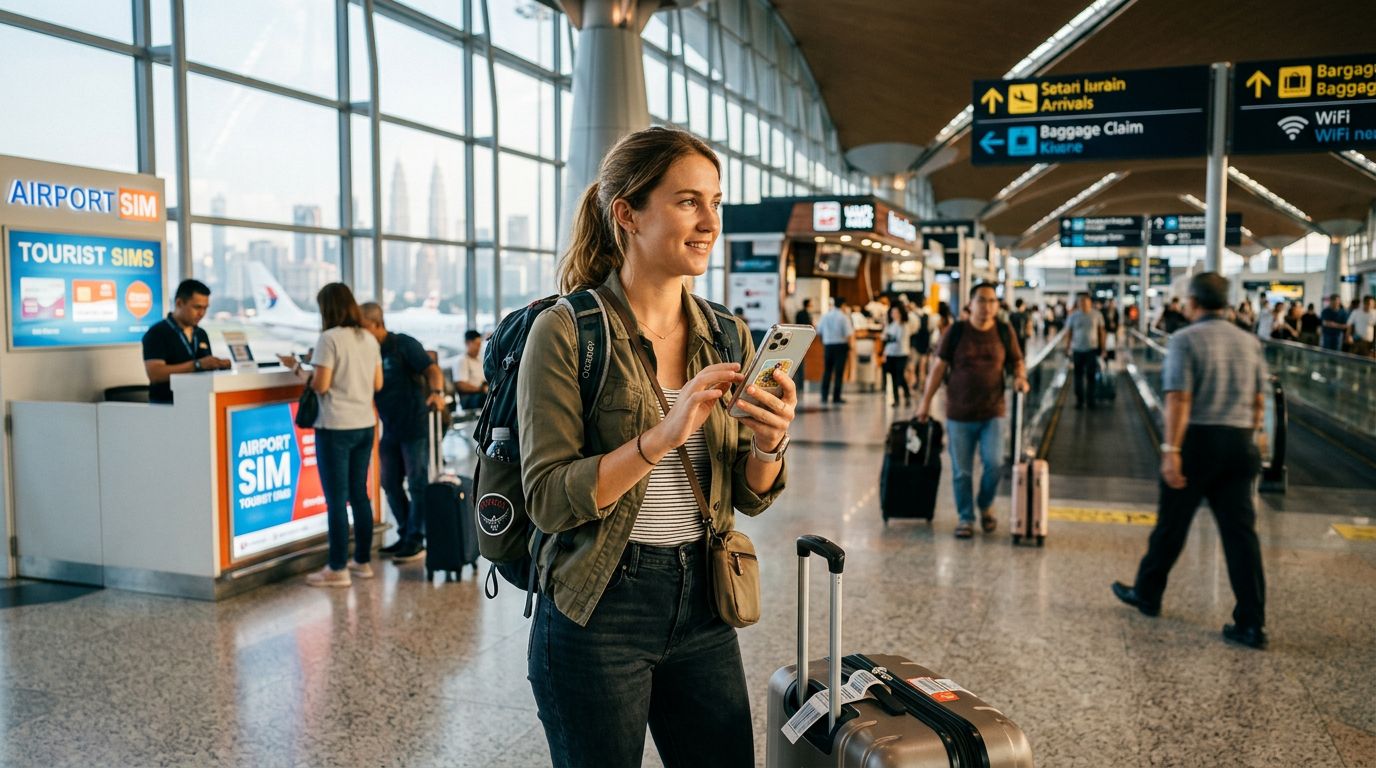
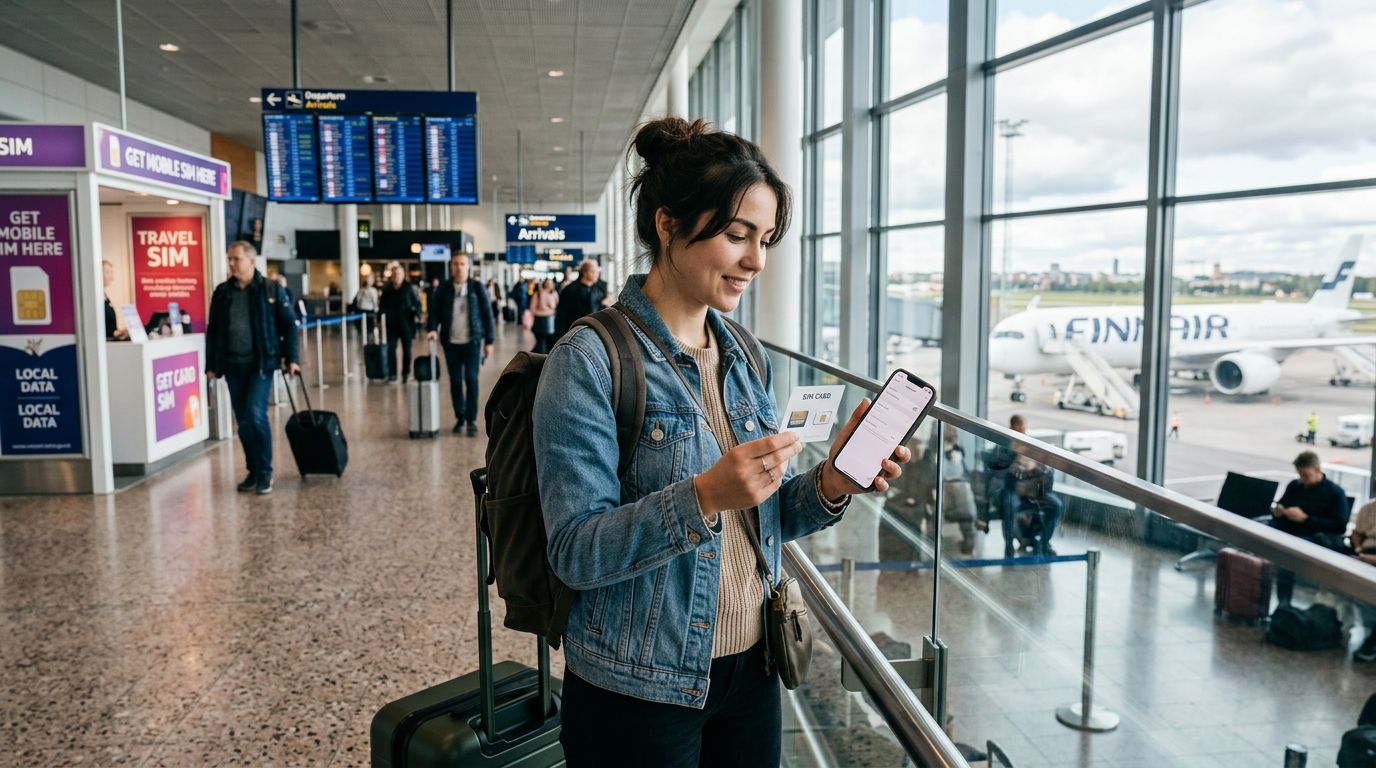
When you land in a foreign country, your first instinct is often to get connected. For years, the standard procedure for travelers has been to head straight to the nearest mobile kiosk in the arrivals hall. These airport SIM booths are highly visible, usually staffed by friendly representatives who offer to swap your physical SIM card for a local one.
There are a few perceived benefits to this approach. You get a physical card in your hand, and for those who are less tech-savvy, having someone else handle the installation can feel like a safety net. However, the reality of the airport SIM experience is often far from seamless.
First, there is the time factor. After a long-haul flight, the last thing you want to do is stand in a queue. Airport kiosks are frequently bottlenecked, especially when multiple international flights land simultaneously. You find yourself waiting in line, filling out paper forms, and waiting for the clerk to manually activate your service. This process can easily consume an hour of your arrival time.
Second, there is the physical inconvenience. You have to remove your primary SIM card, which is tiny and easily lost. If you are not careful, you might misplace your home SIM card in the chaos of your luggage, leading to significant stress when you return home and realize you cannot access your primary phone number or two-factor authentication codes.
Finally, airport kiosks are captive markets. Because you are physically present at the airport and have limited options, you are often subject to limited plan choices that may not actually suit your data needs. You are essentially paying for the convenience of location, even if the service itself is suboptimal.
The Rise of eSIM Technology
The landscape of travel connectivity has shifted dramatically with the introduction of eSIM technology. An eSIM is a digital version of a physical SIM card that is embedded directly into the hardware of your smartphone. Instead of physically swapping a card, you simply download a profile that connects your device to a local network.
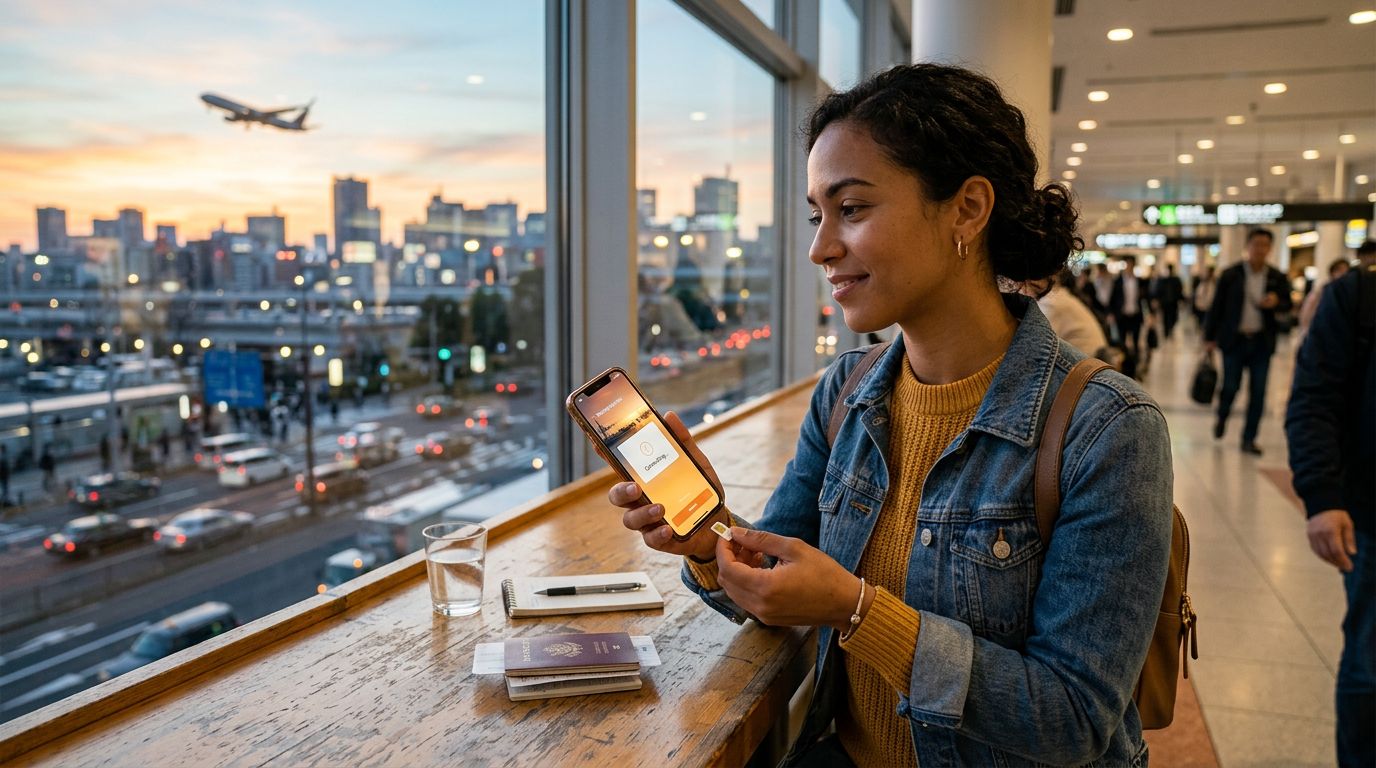
The primary advantage of using an eSIM is the ability to prepare before you even leave your house. With a provider like OneTapSIM, you can purchase and install your data plan days or weeks before your departure. Once you land, you simply toggle your settings, and your phone connects to the local network as soon as the plane touches the runway. There is no waiting in lines, no fumbling with tiny plastic cards, and no need to interact with airport staff.
Another significant benefit is the preservation of your home number. With an eSIM, your primary SIM card stays safely in your phone. You can keep your home number active for calls and texts while using the eSIM specifically for data. This allows you to continue receiving important messages or verification codes from your home bank or services without incurring exorbitant roaming fees.
Compatibility is the only real hurdle to consider. Most modern smartphones released in the last few years support this technology. If you are unsure about your device, you can check the official support pages for Apple or Google to confirm your specific model's capabilities. Once you confirm your phone is eSIM-compatible, the barrier to entry is virtually non-existent. The process is entirely digital, meaning you are not reliant on the operating hours of a physical shop or the availability of inventory at a specific airport kiosk.
Making the Right Choice for Your Travel Style
When comparing airport SIM vs eSIM for tourists, the decision often comes down to your priorities regarding time, convenience, and security.
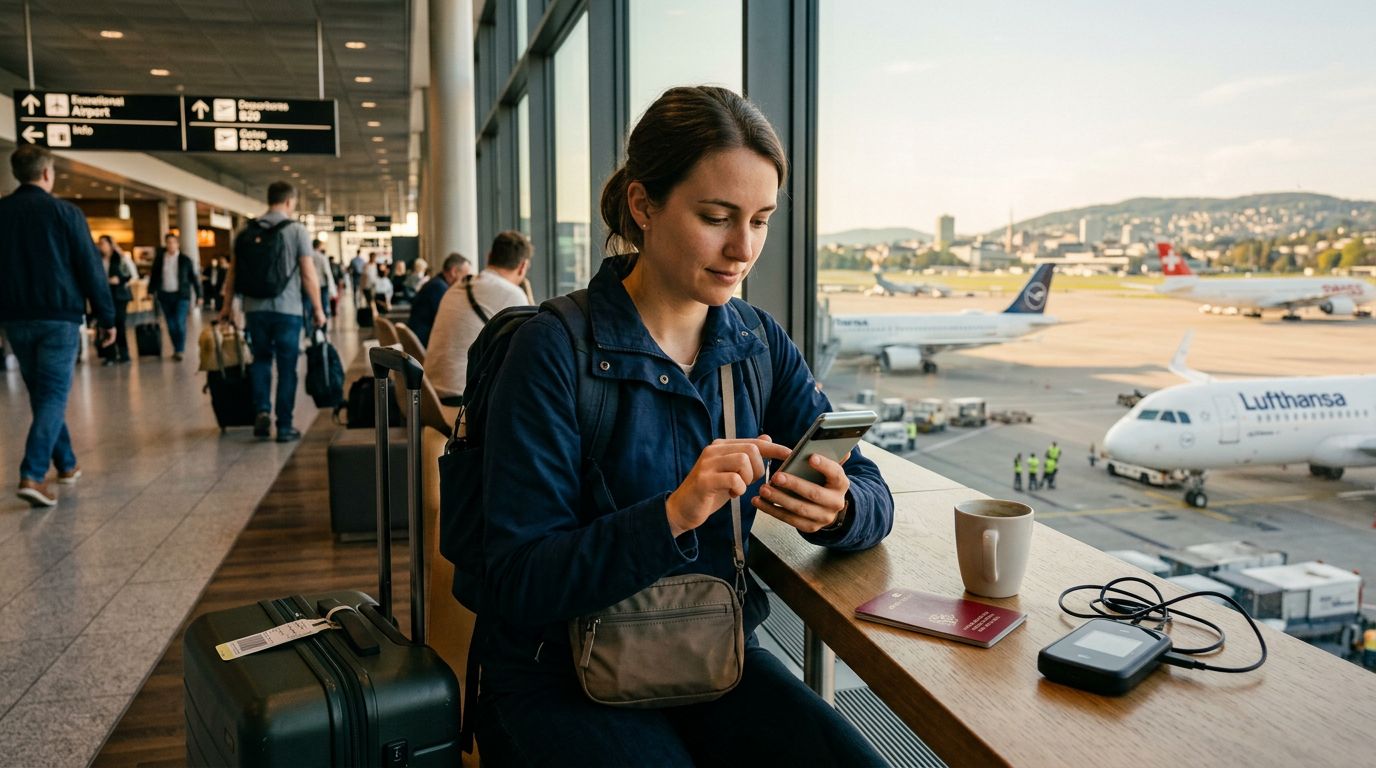
If you value efficiency, an eSIM is the clear winner. By setting up your connection in advance, you bypass the airport chaos entirely. You walk out of the terminal and are immediately ready to use navigation apps, call a ride-share service, or message your family to let them know you have arrived safely. This level of autonomy is invaluable for travelers who want to hit the ground running.
Furthermore, managing your data usage becomes much easier with a digital solution. Many eSIM platforms provide an app or a dashboard where you can monitor your consumption in real-time. If you find yourself running low on data, you can purchase a top-up instantly from your phone without having to find another store or kiosk. This flexibility is rarely available with traditional prepaid SIM cards bought at the airport.
However, some travelers still prefer the physical SIM route, perhaps because they have older devices that do not support eSIMs or because they feel more comfortable with a tangible product. If you fall into this category, you will continue to rely on those airport kiosks. Just be prepared to manage the physical risks, such as losing your home SIM card or dealing with potential language barriers when trying to understand the terms of your plan.
For the vast majority of modern travelers, the transition to eSIMs represents a smarter way to stay connected. It removes the friction from international travel and allows you to focus on your trip rather than your mobile settings. Whether you are heading off on a weekend city break or a month-long backpacking expedition, the ability to activate your cellular service with a few taps on your screen is a transformative improvement. By choosing a reliable service provider, you ensure that your connectivity is one less thing to worry about, allowing you to enjoy your destination from the moment you arrive.