Understanding the Core Differences
Choosing the right way to stay connected while traveling is a decision that impacts your itinerary, your budget, and your overall peace of mind. For years, travelers relied on physical hardware to bridge the gap between home connectivity and international roaming. Today, the debate between pocket WiFi vs eSIM for travel has become a central part of trip planning.
A pocket WiFi device, often called a mobile hotspot, is a portable router that creates a local WiFi network using a cellular signal. You carry this small piece of hardware in your bag, charge it daily, and connect your phone, tablet, or laptop to it just as you would with your home internet. It is a shared connection, meaning multiple devices can link to it simultaneously.
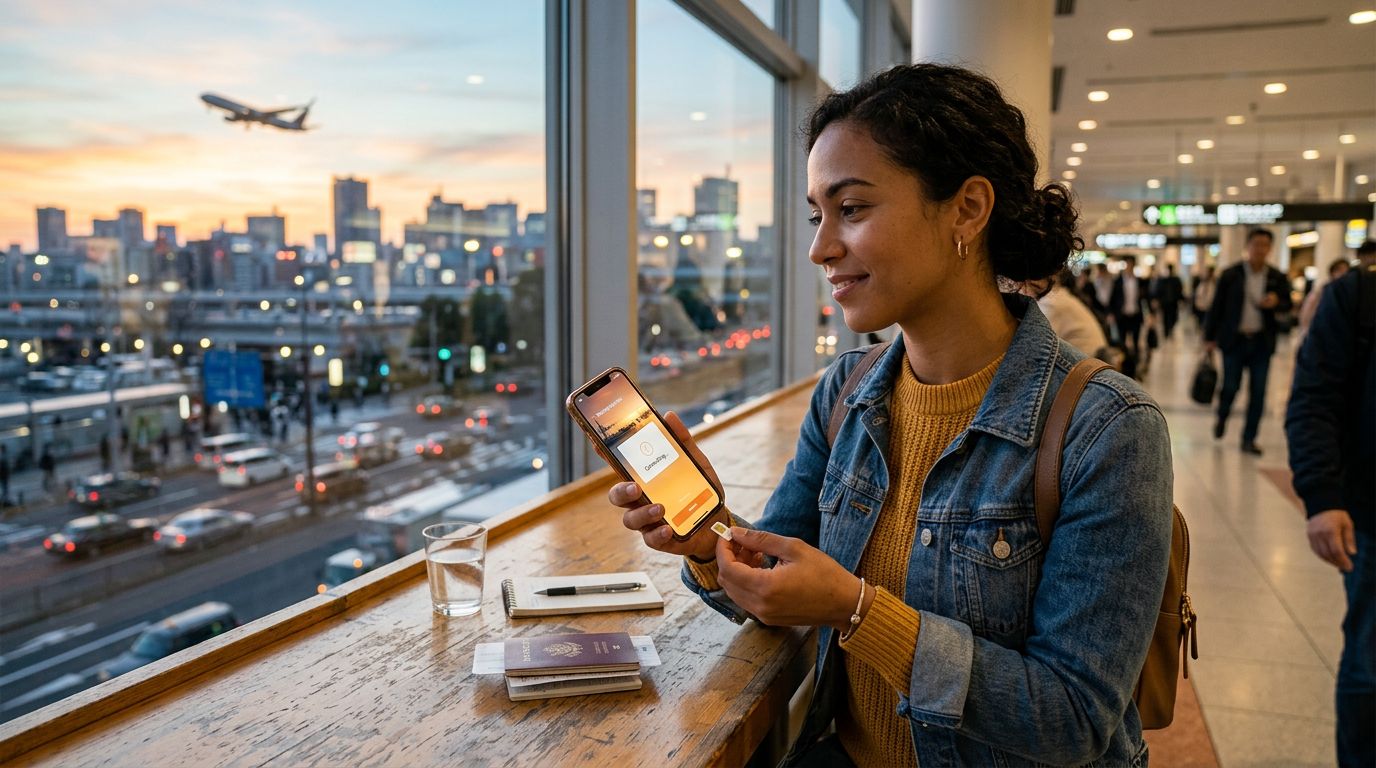
An eSIM, or embedded SIM, is a digital version of a traditional plastic SIM card. Instead of inserting a physical chip into your device, you download a data profile directly onto your phone’s internal hardware. Once activated, your phone connects directly to local cellular towers, just as if you had purchased a local SIM card at the airport. Because the technology is built into your phone, there is no extra hardware to carry, charge, or worry about losing.
The Advantages and Challenges of Pocket WiFi
The primary appeal of a pocket WiFi device is its ability to support multiple users. If you are traveling in a large group or with a family that carries several tablets and laptops, a single hotspot can serve everyone at once. It essentially acts as a private network, which can feel secure when accessing sensitive information.
However, the logistical reality of traveling with a pocket WiFi device can be burdensome. First, there is the issue of power. These devices have their own batteries, which means you must add another cable and charging brick to your packing list. If you forget to charge your hotspot overnight, you will find yourself without connectivity halfway through a day of sightseeing. Furthermore, you are responsible for the physical device. If you leave it in a taxi, drop it in water, or lose it in a crowded market, you are often liable for the cost of the hardware.
There is also the matter of connectivity logistics. You typically have to pick up the device at an airport kiosk or have it shipped to your hotel. If your flight is delayed or you arrive at an odd hour, the pickup process can become a source of stress. You are also tethered to the device physically; if you and your travel companion decide to split up for an afternoon, one person will be left without internet access unless you carry the device with you at all times.
Why eSIMs are Changing the Travel Experience
The shift toward eSIM technology, offered by providers like OneTapSIM, has streamlined the way travelers manage their digital lives abroad. The most immediate benefit is convenience. Because the process is entirely digital, you can set up your data plan before you even leave your house. As soon as your plane touches down at your destination, you can toggle your data on and start using your phone immediately.
One of the greatest advantages of using an eSIM is the lack of physical clutter. You do not need to carry an extra device, worry about charging it, or risk losing a rental unit. Your phone remains your only point of contact. This is particularly beneficial for solo travelers or those who prefer to travel light. Because the eSIM is integrated into your existing smartphone, you maintain the same user interface you are accustomed to at home.
Another factor to consider is the independence it provides. With an eSIM, your connectivity is tied to your phone, meaning you are always connected regardless of where you are or who you are with. If you are navigating a new city, using map applications, or translating languages on the fly, having a reliable, direct cellular connection is far more efficient than relying on a secondary device that might lose its signal or run out of battery.
Making the Right Choice for Your Trip
When evaluating pocket WiFi vs eSIM for travel, your specific needs should dictate the choice. If your primary goal is to provide internet access to a group of five people who are all carrying laptops and tablets, a pocket WiFi device might be the traditional choice. However, for the vast majority of modern travelers—especially those who rely on smartphones for navigation, photography, and communication—the eSIM is the superior option.
OneTapSIM provides a seamless way to manage these digital connections. By removing the need for physical hardware, you eliminate the risk of lost devices and the hassle of managing rentals. You gain the freedom to move through your destination without being tethered to a hotspot, and you avoid the common pitfalls of international roaming charges.
Security is another aspect where eSIMs excel. Because you are connecting directly to a local cellular network, you avoid the risks associated with public WiFi networks or the potential for your private hotspot device to be compromised. Your data remains encrypted through the cellular carrier’s infrastructure, providing a stable and secure connection for your essential travel apps.
Ultimately, the goal of travel is to experience new places without unnecessary friction. Carrying extra hardware is a relic of a time before digital integration became standard. By opting for an eSIM, you simplify your packing, reduce your environmental footprint, and ensure that your connectivity is as mobile as you are. Whether you are trekking through remote trails or exploring a bustling metropolis, having your data plan ready at the tap of a screen allows you to focus on the journey rather than the logistics of staying online. As you plan your next trip, consider how much weight you want to carry and how much freedom you want to enjoy. For most, the answer is to leave the extra gear behind and rely on the modern, digital efficiency of an eSIM.