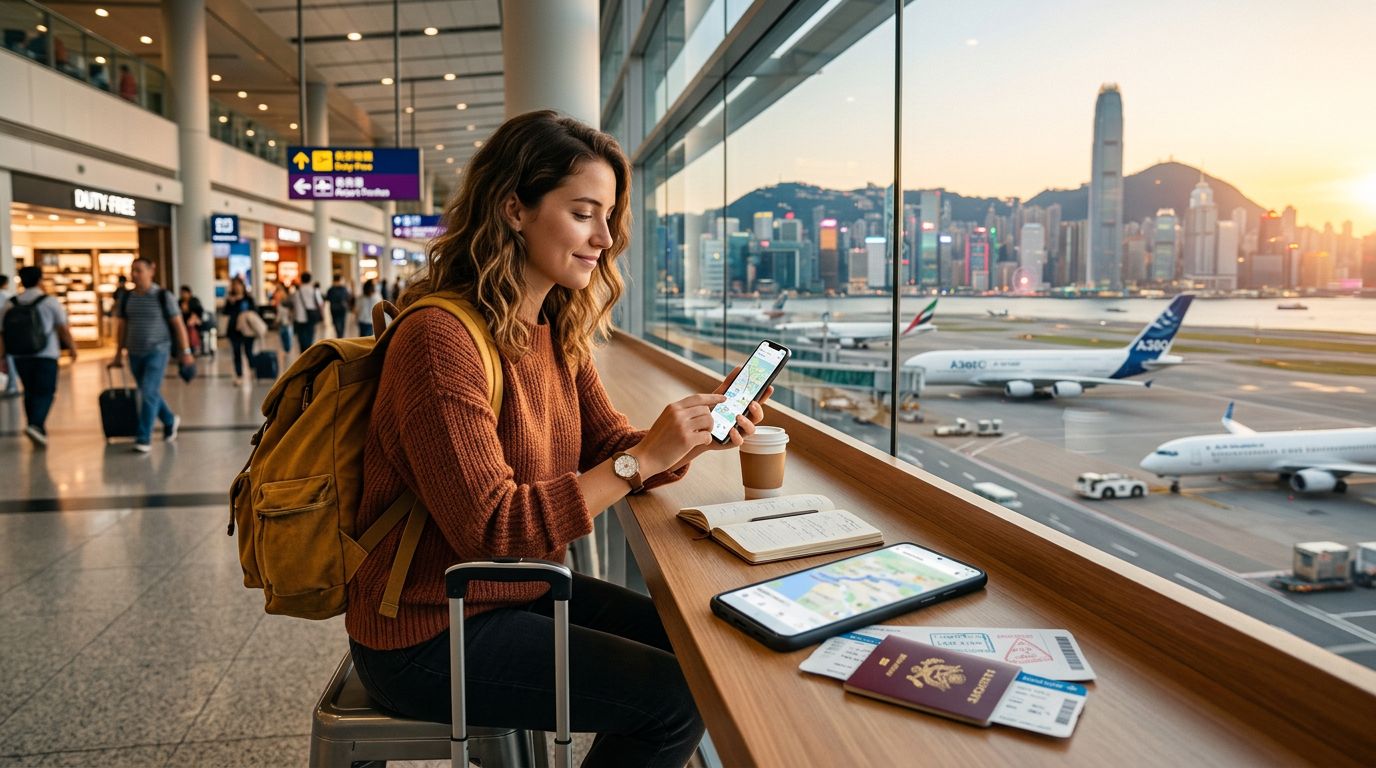
Why eSIM Technology is Changing International Travel
The way travelers stay connected abroad has undergone a significant transformation. For years, the traditional process involved hunting for local SIM card kiosks at airports, dealing with language barriers, and physically swapping out tiny plastic cards that were easily lost. Today, the best eSIM technology allows you to download a digital profile directly to your smartphone, granting you instant connectivity the moment your plane touches the tarmac.
An eSIM, or embedded SIM, is a standard industry feature built directly into the hardware of modern smartphones. Because it is digital, you no longer need to open your phone’s SIM tray or carry a collection of physical cards. Instead, you can manage your connectivity through an app or a QR code. This shift is particularly beneficial for frequent travelers who visit multiple countries in a single trip. With an eSIM, you can switch between local networks without needing to visit a physical store or wait for a courier to deliver a physical product to your hotel.
The convenience factor is the primary driver behind this shift. When you arrive in a new country, your device can automatically connect to a pre-selected network, ensuring you have access to navigation apps, ride-sharing services, and translation tools immediately. This eliminates the stress of finding a reliable Wi-Fi signal at the airport or worrying about exorbitant roaming charges from your home carrier. By choosing the right digital solution, you gain the freedom to move across borders while maintaining a consistent and reliable connection.
How to Choose the Best eSIM for Your Needs
Selecting the right provider involves evaluating several technical and practical criteria. Not all digital connectivity services are created equal, and the quality of your experience depends on network partnerships and ease of use. When searching for the best eSIM, consider the following factors to ensure you stay online without interruption.
First, check the network coverage and speed. A provider might offer a wide range of countries, but if they rely on secondary or slower networks, your experience will suffer. Look for services that partner with major, reputable mobile operators in your destination. High-speed data is essential for video calls, streaming, and uploading photos, so prioritize providers that offer 4G/LTE or 5G access.
Second, consider the installation process. The ideal experience should be seamless. OneTapSIM focuses on simplifying this technical hurdle by providing clear, step-by-step instructions that guide you through the activation process. Whether you are using an iPhone or an Android device, the installation should take only a few minutes. If a provider requires complex manual APN settings or convoluted activation steps, it may lead to frustration when you are already busy with travel logistics.
Third, evaluate the data management tools. You should be able to track your usage in real-time. Running out of data in the middle of a city where you don't speak the language can be a significant setback. A robust dashboard or app allows you to monitor your remaining balance and top up if necessary. Flexibility is key; look for plans that allow you to extend your duration or increase your data limit without having to purchase an entirely new eSIM profile.
Finally, verify device compatibility. While most modern smartphones support eSIM technology, it is always wise to check your specific model’s settings. Apple and Google provide extensive documentation on their respective support pages regarding which devices support dual-SIM functionality, which is a common requirement for travelers who wish to keep their home number active for calls while using a local eSIM for data.
Maximizing Your Connectivity Experience
Once you have selected your eSIM, there are several best practices to ensure your trip remains smooth and connected. Many travelers make the mistake of leaving their home carrier’s roaming enabled, which can lead to unexpected charges even if you are primarily using your eSIM for data.
Before you depart, ensure your phone is unlocked. Some carriers lock devices to their specific network, which prevents you from installing a third-party eSIM. Contact your home carrier well in advance to confirm your device status. Once you arrive at your destination, you can manage your cellular settings to designate your eSIM as the primary source for cellular data while keeping your home SIM for essential SMS or voice calls.
Another tip is to download offline maps and essential travel documents before you leave your home Wi-Fi. While the best eSIM will provide reliable data, having offline backups is a smart redundancy measure. If you are traveling through remote areas or regions with mountainous terrain where signal strength might fluctuate, having local maps saved to your device ensures you never lose your way.
If you are traveling as a group or a family, consider the data requirements for each individual. OneTapSIM offers various plan sizes, allowing you to tailor your data allowance to your specific habits. If you are a heavy user who relies on cloud syncing and video conferencing, opt for a higher data tier. If you primarily use your phone for maps and messaging, a smaller plan will likely suffice.
Finally, remember that your eSIM is tied to the device it is installed on. If you plan on using a secondary device, such as a tablet or a backup phone, ensure that those devices are also eSIM-compatible. By taking these small, proactive steps, you can focus on enjoying your journey rather than worrying about connectivity. The goal of modern travel technology is to make the world feel smaller and more accessible, and with the right digital tools, you can explore new destinations with complete confidence.