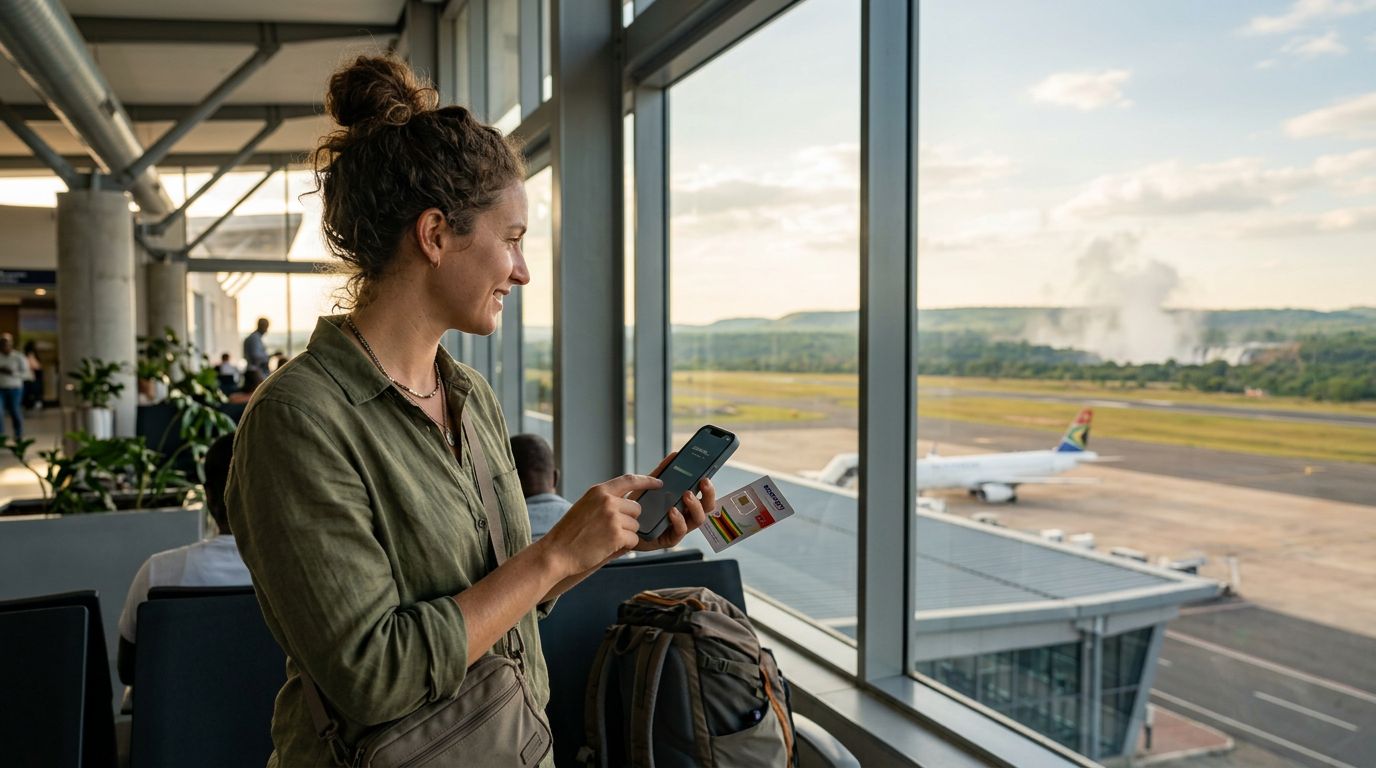
Understanding Connectivity Options in Zimbabwe
Planning a trip to Zimbabwe involves balancing the excitement of visiting Victoria Falls or exploring Hwange National Park with the practical need to stay connected. Whether you need to use GPS for navigation, share photos of your safari, or communicate with family back home, having a reliable internet connection is essential. When weighing a Zimbabwe SIM card vs eSIM, you are essentially choosing between the traditional physical approach and the modern digital alternative.
A physical SIM card has been the standard for decades. It involves purchasing a small plastic chip from a local provider, inserting it into your phone, and ensuring your device is unlocked. In Zimbabwe, this often requires visiting a physical store, presenting your passport for registration, and waiting for the activation process to complete. While this method is time-tested, it comes with logistical hurdles, particularly if you arrive late at night or land in a remote area where shops are not immediately available.
On the other hand, an eSIM—or embedded SIM—is a digital version of that physical chip. It is built directly into the hardware of modern smartphones. Instead of swapping out a physical card, you download a data profile that connects your device to a local network. This technology has gained significant traction for international travelers because it removes the need to handle small, fragile cards or manage multiple physical items in your wallet.
The Practical Differences for Travelers
When comparing these two methods, the primary considerations are convenience, security, and device compatibility. The most significant advantage of an eSIM is the ability to manage your connectivity before you even board your flight. With services like OneTapSIM, you can purchase and install your data plan while still at home. As soon as your plane touches down in Harare or Victoria Falls, you can switch on your data roaming, and your phone will automatically connect to the local network. This eliminates the frantic search for a kiosk at the airport or the frustration of dealing with language barriers during the registration process.
Physical SIM cards, while reliable, carry the risk of loss or damage. If you lose your physical SIM, you lose your connection and potentially your access to important accounts that require two-factor authentication. Furthermore, switching between your home SIM and a local Zimbabwean SIM involves physically removing the tray, which can lead to losing your home card if you are not careful.
Security is another factor to consider. Physical SIM cards are susceptible to physical theft. If your phone is stolen, the thief has immediate access to your SIM card, which can be moved to another device. An eSIM is tied to the hardware of your phone. Even if someone gains possession of your device, they cannot simply pull out the SIM card to bypass network security or use your data elsewhere.
However, it is important to check your device compatibility. While most flagship smartphones released in the last few years support eSIM technology, older models may not. You can verify your device’s capabilities through the official support pages for Apple or Google. If your device is not eSIM-compatible, a physical SIM card remains your only viable option for local connectivity.
Choosing the Right Path for Your Journey
The decision between a Zimbabwe SIM card vs eSIM often comes down to your personal travel style and the duration of your trip. If you are a light traveler who values efficiency and wants to avoid the "airport scramble," an eSIM is almost certainly the superior choice. It allows you to maintain your home number for calls or SMS if your phone supports dual-SIM functionality, while using the eSIM specifically for your data needs. This ensures you remain reachable on your primary number while enjoying high-speed internet for maps, messaging apps, and travel research.
OneTapSIM provides a streamlined experience for those who prefer the digital route. By handling the technical configuration, these services ensure that your device is ready to go the moment you arrive. This is particularly beneficial if your itinerary is packed with activities like game drives or river cruises, where you do not want to spend your limited vacation time standing in line at a mobile network operator's office.
If you are planning an extended stay in Zimbabwe, or if you are traveling to extremely remote regions where network coverage is sparse, you might find that certain local physical SIM providers offer specific regional packages that are not yet available via global eSIM platforms. In these rare cases, the local physical card might offer a slight edge in terms of specific network access. However, for the vast majority of tourists, the convenience and flexibility of an eSIM outweigh the marginal benefits of a local plastic card.
Ultimately, connectivity should be a tool that enhances your travel experience rather than a source of stress. Whether you choose the traditional path of a physical SIM card or the modern convenience of an eSIM, the goal is to ensure you have the data you need to make the most of your time in Zimbabwe. By preparing in advance and understanding how your phone interacts with local networks, you can focus on the breathtaking landscapes and vibrant culture that make Zimbabwe a world-class destination. If you decide that the digital route is the best fit for your needs, remember to confirm your phone’s compatibility and set up your profile before you depart to ensure a smooth and seamless start to your adventure.
Get an eSIM for
Plans for the destinations covered in this guide, with instant QR delivery.