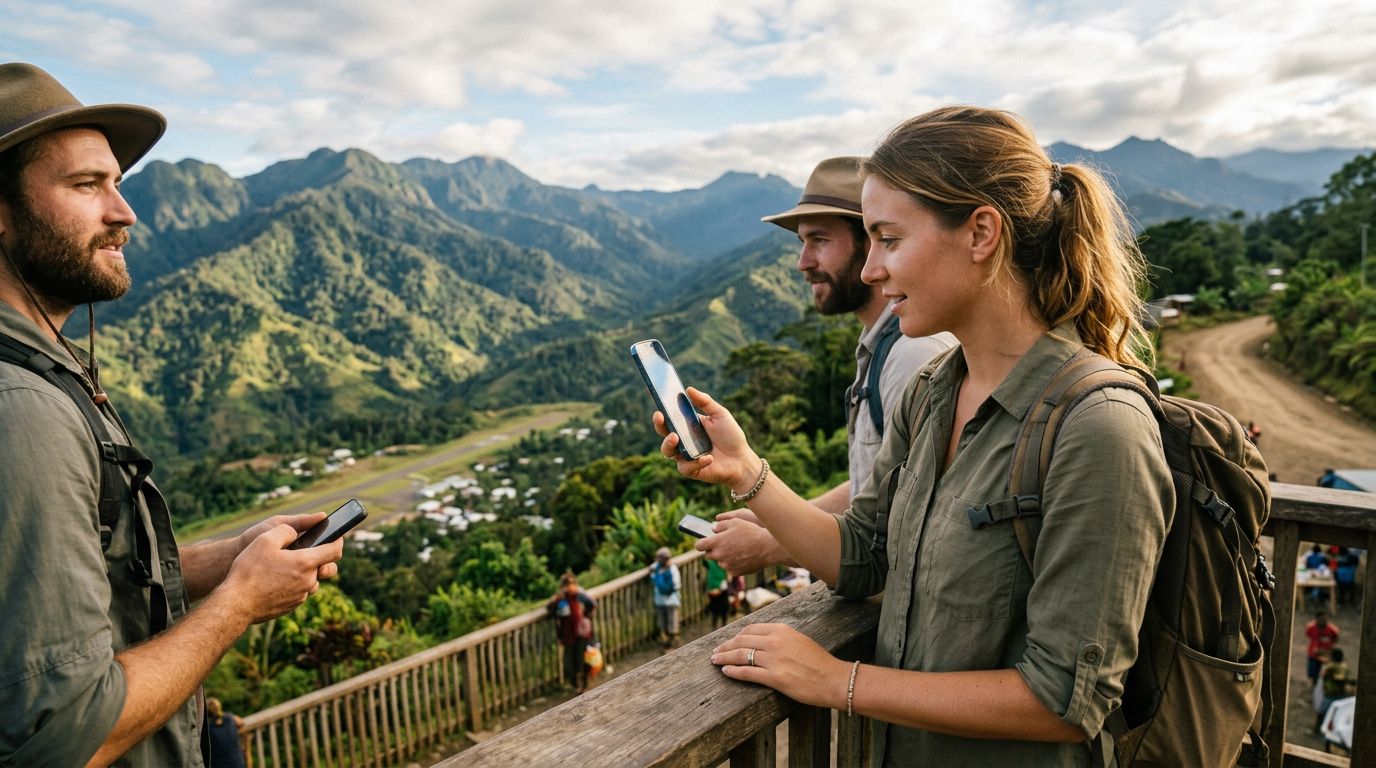
Understanding Connectivity Challenges in Papua New Guinea
Papua New Guinea is a destination of immense natural beauty, ranging from rugged mountain ranges and dense rainforests to pristine coral reefs. However, for the modern traveler, the remote nature of the terrain presents significant challenges regarding mobile connectivity. When planning a trip to this region, deciding how to stay connected is a critical step. The choice between a traditional physical SIM card and a modern eSIM can significantly impact how smoothly your trip progresses, especially when you are moving between remote provinces or trying to coordinate logistics in Port Moresby.
Traditional SIM cards have been the standard for decades. They require you to physically insert a small plastic chip into your device. In Papua New Guinea, this often means visiting a local carrier’s kiosk, providing identification, and waiting for the card to be activated. While this method is time-tested, it comes with inherent risks. You might face language barriers, long queues, or the frustration of finding that a specific shop is closed upon your arrival. Furthermore, if you lose your physical SIM card or it becomes damaged, you are effectively cut off from your digital life until you can find another retail location.
eSIM technology, by contrast, shifts the process to a digital environment. An eSIM is a virtual SIM embedded directly into the hardware of compatible smartphones. Instead of swapping physical components, you simply download a profile that connects your device to a local network. For travelers heading to Papua New Guinea, this digital-first approach removes the need to hunt for a physical store immediately after landing. By choosing a provider like OneTapSIM, you can manage your connectivity requirements before you even leave your home country, ensuring that your device is ready to connect the moment you touch down.
Comparing Convenience and Reliability
When weighing a Papua New Guinea SIM card vs eSIM, the primary consideration for most travelers is convenience. Physical SIM cards require you to manage small, fragile pieces of plastic. If you are a frequent traveler, you likely have a collection of these cards from various countries, which are easy to misplace or damage. Additionally, using a physical SIM often requires you to remove your home SIM card, which creates a risk of losing your primary contact number or failing to receive important two-factor authentication codes from your bank or email provider.
The eSIM model solves these logistical headaches. Because the eSIM is integrated into your phone’s software, you can keep your primary SIM card active for incoming calls or texts while using a secondary eSIM profile for data. This dual-SIM capability is a major advantage for travelers who need to maintain a connection to their home network while simultaneously accessing local data services for maps, translation apps, or ride-sharing.
Reliability is another factor that often tips the scales in favor of eSIMs. With a local physical SIM, you are at the mercy of the specific carrier's retail availability and the quality of the cards they have in stock. If the local network is experiencing high demand, you might spend your first few hours in the country dealing with administrative paperwork rather than exploring. An eSIM, however, is activated via a digital process. Once you arrive, your device identifies the best available network automatically. This seamless transition is particularly useful in a country like Papua New Guinea, where infrastructure can vary wildly between urban centers like Port Moresby and the more isolated highlands or coastal islands.
Practical Considerations for Your PNG Adventure
Before deciding which route to take, you must ensure your device is compatible with eSIM technology. Most modern smartphones released in the last few years support this feature, but it is always wise to check your device settings or consult manufacturer support pages to confirm that your phone is unlocked and eSIM-ready. If your device is locked to a specific carrier, you will be unable to add an eSIM profile, leaving you with no choice but to use a physical SIM card.
Another aspect to consider is the duration of your stay and your data habits. Physical SIM cards purchased locally might offer specific packages that are tailored to residents, which can sometimes be complex to navigate if you do not speak the local language or understand the billing structures. eSIM providers often offer standardized data packages designed specifically for travelers. These packages are transparent, allowing you to choose the amount of data that fits your itinerary without worrying about hidden fees or complicated top-up procedures.
If you are traveling in a group, the flexibility of eSIMs becomes even more apparent. You can set up your entire group’s connectivity before departure, eliminating the need to wait for everyone to get their physical SIM cards installed and configured. This allows you to focus on the logistics of your trip, such as booking transport or finding local guides, rather than spending your time in a mobile shop.
Finally, consider the environmental impact and the long-term utility of your choice. Physical SIM cards contribute to plastic waste, and the logistics of shipping or distributing them globally have a larger carbon footprint than the instantaneous digital delivery of an eSIM. By opting for a digital solution, you are choosing a more sustainable way to stay connected. Whether you are trekking through the Kokoda Track or visiting the vibrant markets of Mount Hagen, having a reliable data connection is essential. By comparing the Papua New Guinea SIM card vs eSIM, it becomes clear that the digital approach offers a level of ease and security that aligns better with the needs of the modern traveler. Utilizing a service like OneTapSIM allows you to bridge the gap between your home connectivity and the unique requirements of your destination, ensuring that you can document your journey, communicate with loved ones, and navigate the stunning landscapes of Papua New Guinea with complete peace of mind.
Get an eSIM for
Plans for the destinations covered in this guide, with instant QR delivery.