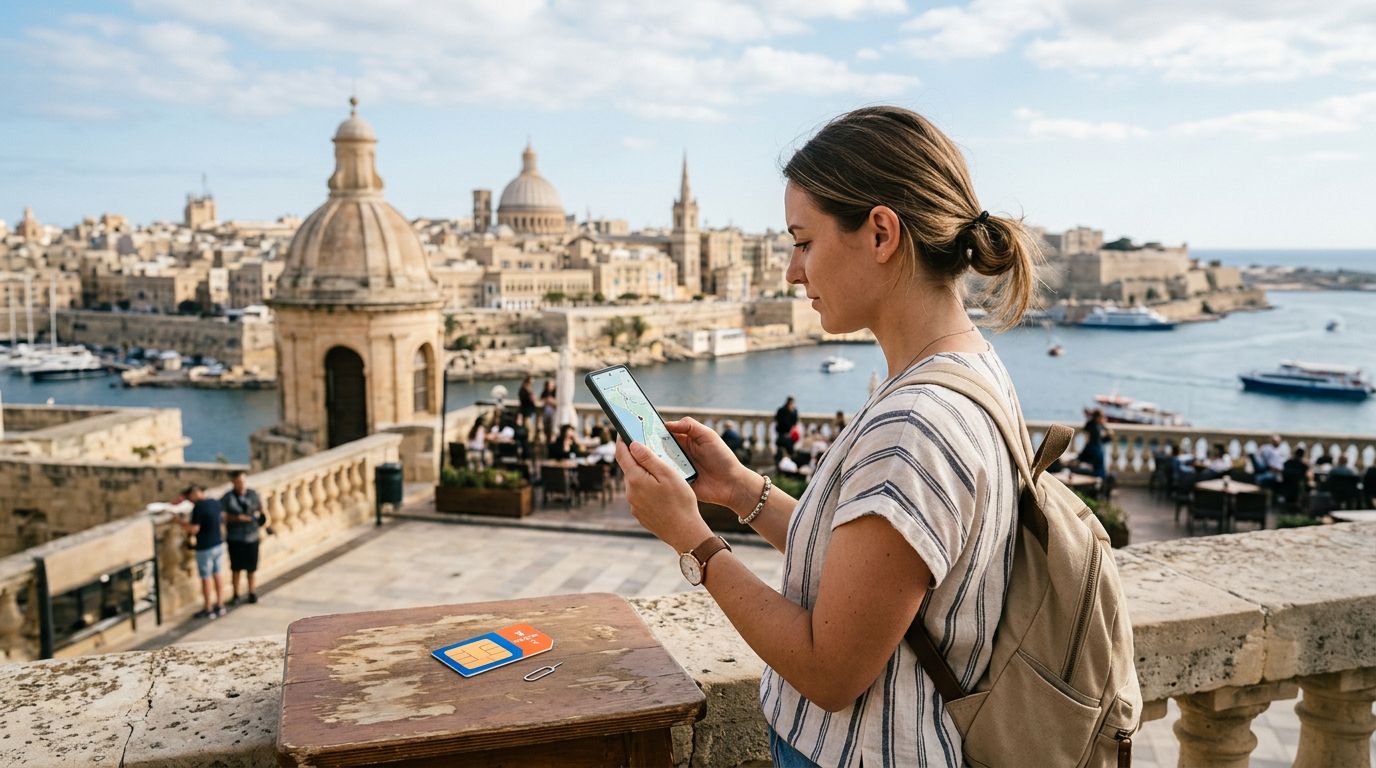
Malta is a Mediterranean gem that offers a perfect blend of rich history, stunning coastal landscapes, and vibrant city life. Whether you are wandering through the narrow, honey-colored streets of Valletta, exploring the prehistoric temples of Ħaġar Qim, or swimming in the crystalline waters of the Blue Lagoon, staying connected is essential. Having reliable internet access allows you to navigate unfamiliar routes, translate menus, share your favorite travel moments, and keep in touch with loved ones back home. For many travelers, finding the best way to get data in Malta is the first priority upon arrival.
Understanding Your Connectivity Options
When planning your trip to Malta, you will encounter several ways to access the internet. Historically, travelers relied on public Wi-Fi, local physical SIM cards, or international roaming plans provided by their home carriers. While each has its place, they come with varying degrees of convenience and reliability.
Public Wi-Fi is widely available in cafes, hotels, and main squares across the island. While it is a great resource for checking emails or looking up quick information, it is rarely a substitute for a dedicated mobile data connection. Public networks can be slow, unreliable, and often pose security risks, making them unsuitable for sensitive tasks like banking or accessing private accounts.
International roaming through your home mobile provider is often the simplest path, but it can be the most frustrating. Many providers charge exorbitant fees for data usage abroad, or they throttle your speeds to the point where basic navigation becomes difficult. Before relying on your home carrier, it is vital to check their specific international policies. Even if you have a roaming plan, you may find that the coverage is inconsistent or that the data caps are reached much faster than you anticipate.
Physical local SIM cards were once the gold standard for travelers. By purchasing a card from a local kiosk or mobile shop, you could secure a local number and data package. However, this process often involves finding a store, presenting identification, and physically swapping out your home SIM card—a tiny piece of plastic that is incredibly easy to lose or damage.
The Advantages of eSIM Technology for Malta Travel
The rise of eSIM technology has fundamentally changed how we travel. An eSIM, or embedded SIM, is a digital version of a physical SIM card. Because it is built directly into the hardware of modern smartphones, you do not need to insert or remove anything from your device. This technology allows you to download a digital profile that connects you to local networks as soon as you land.
For those wondering about the best way to get data in Malta, an eSIM offers unparalleled flexibility. You can set up your data plan before you even leave your home country. By the time your plane touches down at Malta International Airport, you can simply switch on your data roaming for the eSIM profile and be connected immediately. This eliminates the stress of searching for a mobile provider shop after a long flight or dealing with language barriers at a retail counter.
Another significant benefit is the ability to keep your primary SIM card active for calls or texts from home while using your eSIM for data. This dual-SIM functionality ensures that you remain reachable for urgent matters on your home number while enjoying the high-speed data benefits of a local or regional network. Services like OneTapSIM provide a seamless experience by offering digital plans specifically designed for travelers, ensuring that your transition to local connectivity is as smooth as possible. Since the process is entirely digital, there is no risk of losing a physical card or damaging your phone’s SIM tray.
Tips for a Seamless Connection Experience
To ensure you have the best experience with data in Malta, preparation is key. First, confirm that your smartphone is unlocked and compatible with eSIM technology. Most modern devices produced in the last few years support this feature, but it is always wise to check your device settings or the manufacturer’s support pages if you are uncertain.
Once you have confirmed compatibility, you can choose a data plan that suits your travel duration and usage habits. If you plan on streaming high-definition videos or uploading large files to social media, look for plans with generous data allowances. If your needs are more modest—focused primarily on maps, messaging, and web browsing—a smaller data package will likely suffice.
When you arrive in Malta, ensure that your data settings are correctly configured. You should designate your eSIM as the primary source for mobile data while keeping your main SIM active for voice calls if needed. If you encounter any issues, most devices allow you to toggle your roaming settings or manually select a network provider within your cellular settings menu.
It is also a good practice to manage your data usage while on the go. Use Wi-Fi at your accommodation for large downloads, such as updating apps or backing up photos. Reserve your mobile data for navigation, real-time research, and communication. By being mindful of your consumption, you can enjoy a stress-free trip without worrying about running out of data.
Ultimately, the best way to get data in Malta is the method that provides the most reliability with the least amount of friction. By opting for an eSIM, you gain the freedom to explore the island with confidence, knowing that you have a stable connection at your fingertips. Whether you are navigating the winding roads of Gozo or finding the perfect spot for a sunset dinner in Mdina, having reliable data ensures that your focus remains on the beauty of Malta rather than the logistics of staying connected. With the right digital setup, you can capture every memory and share your journey in real time, making your Maltese adventure truly unforgettable.
Get an eSIM for
Plans for the destinations covered in this guide, with instant QR delivery.