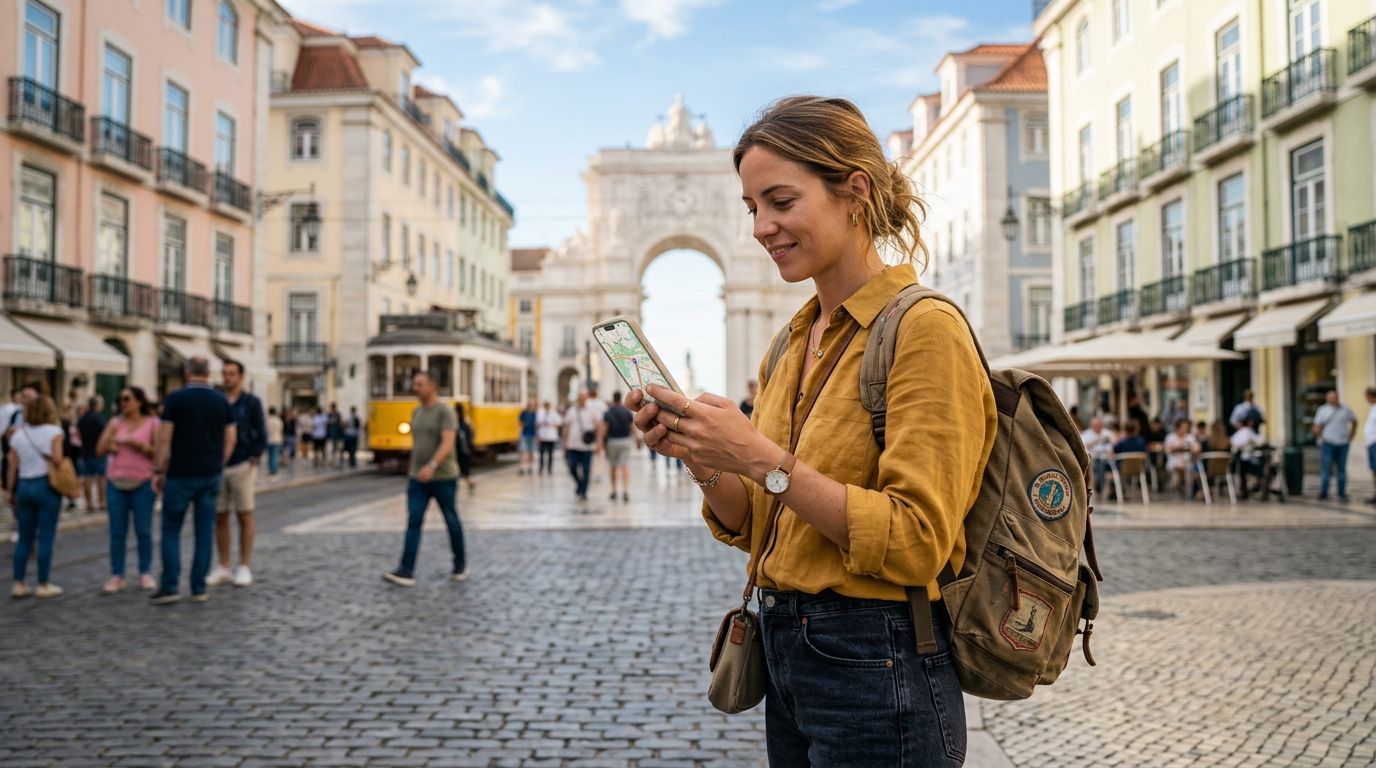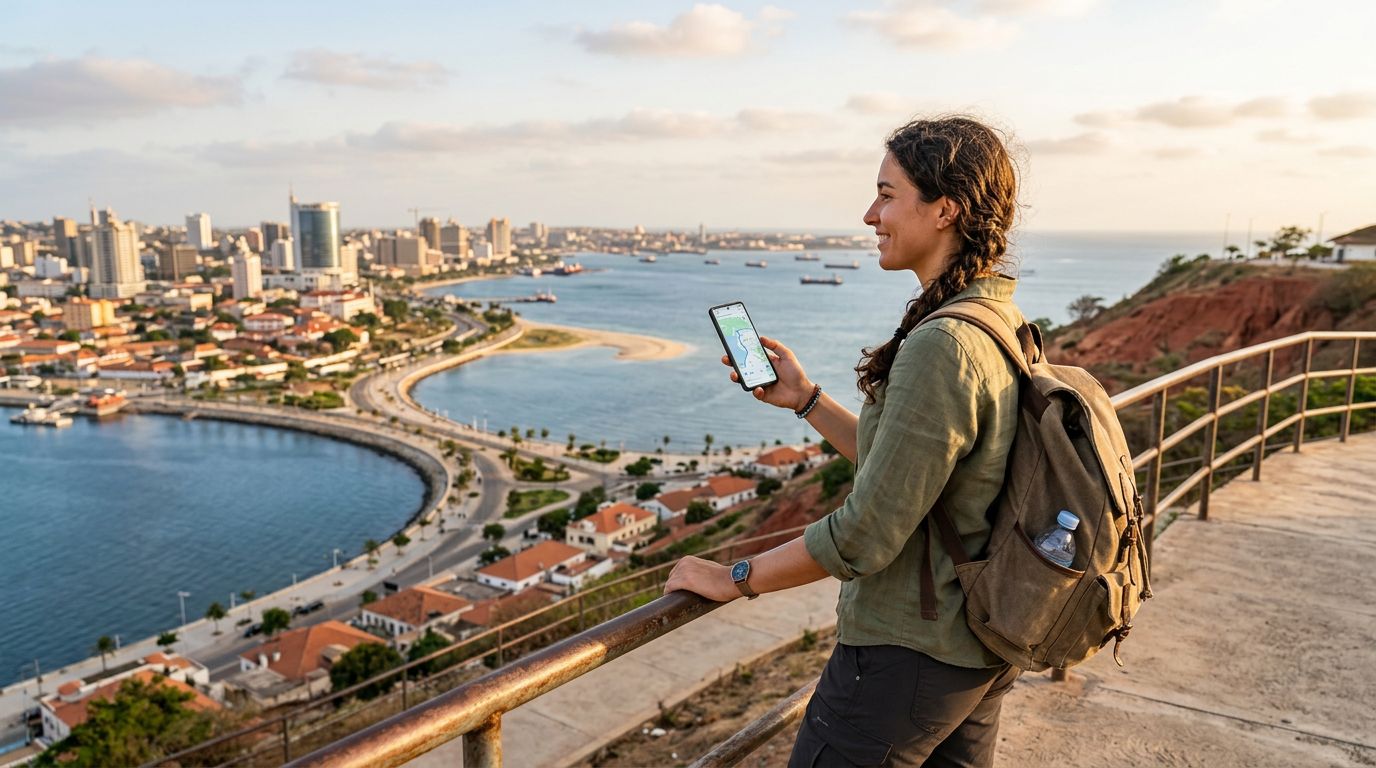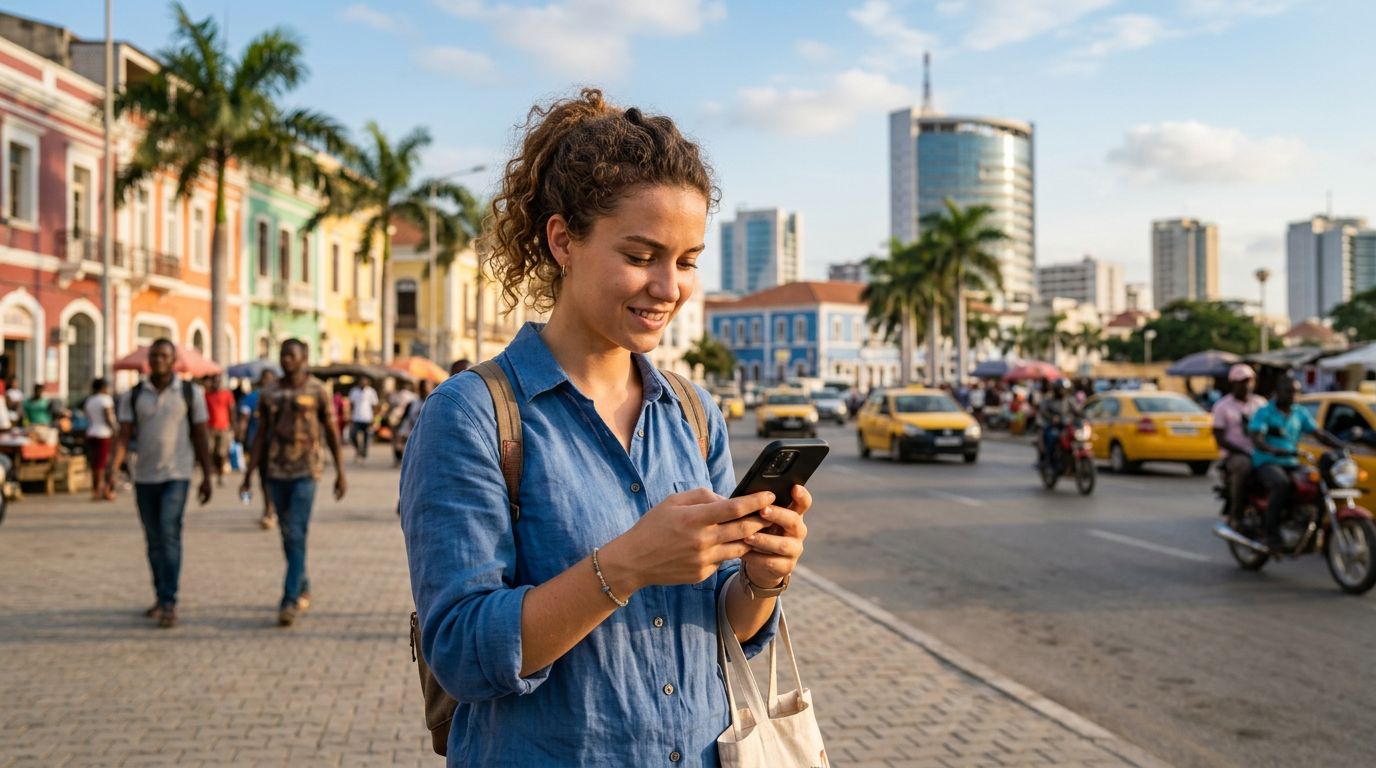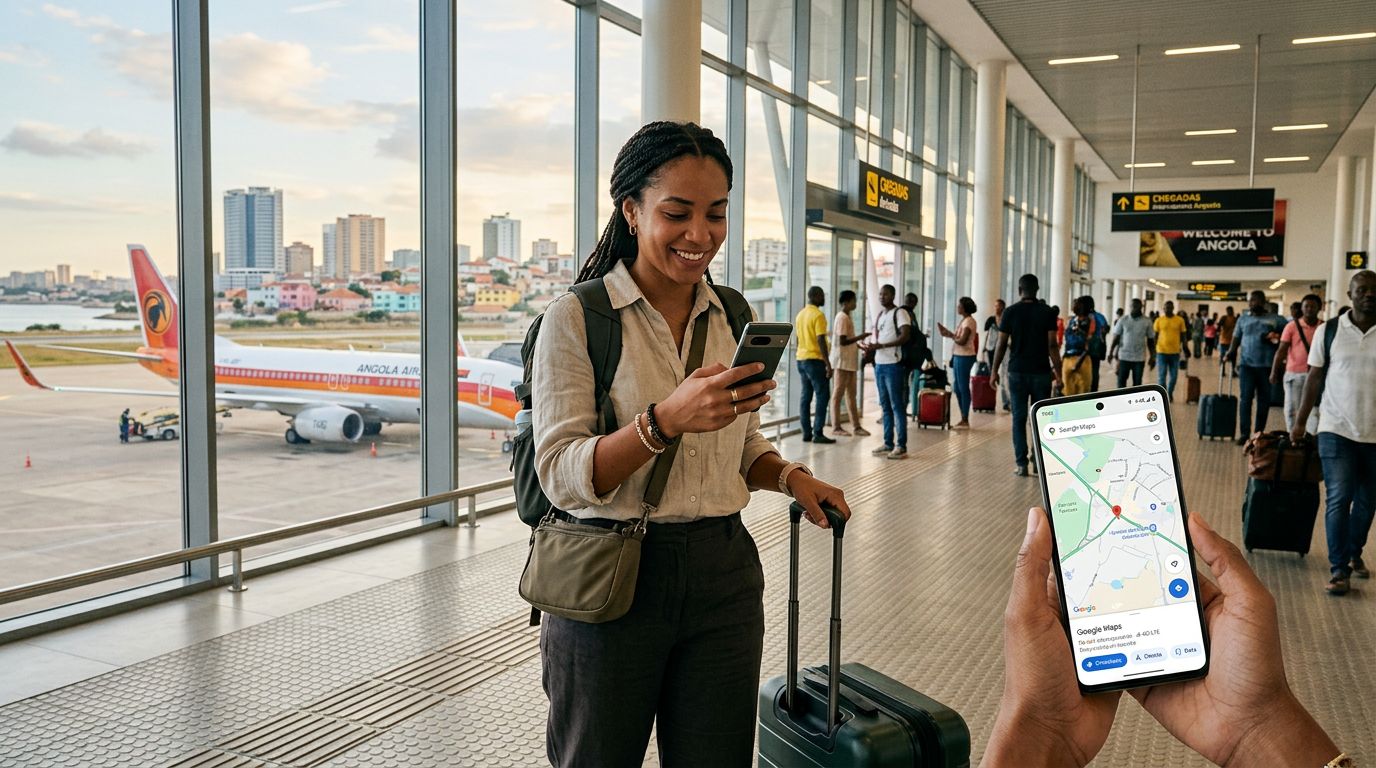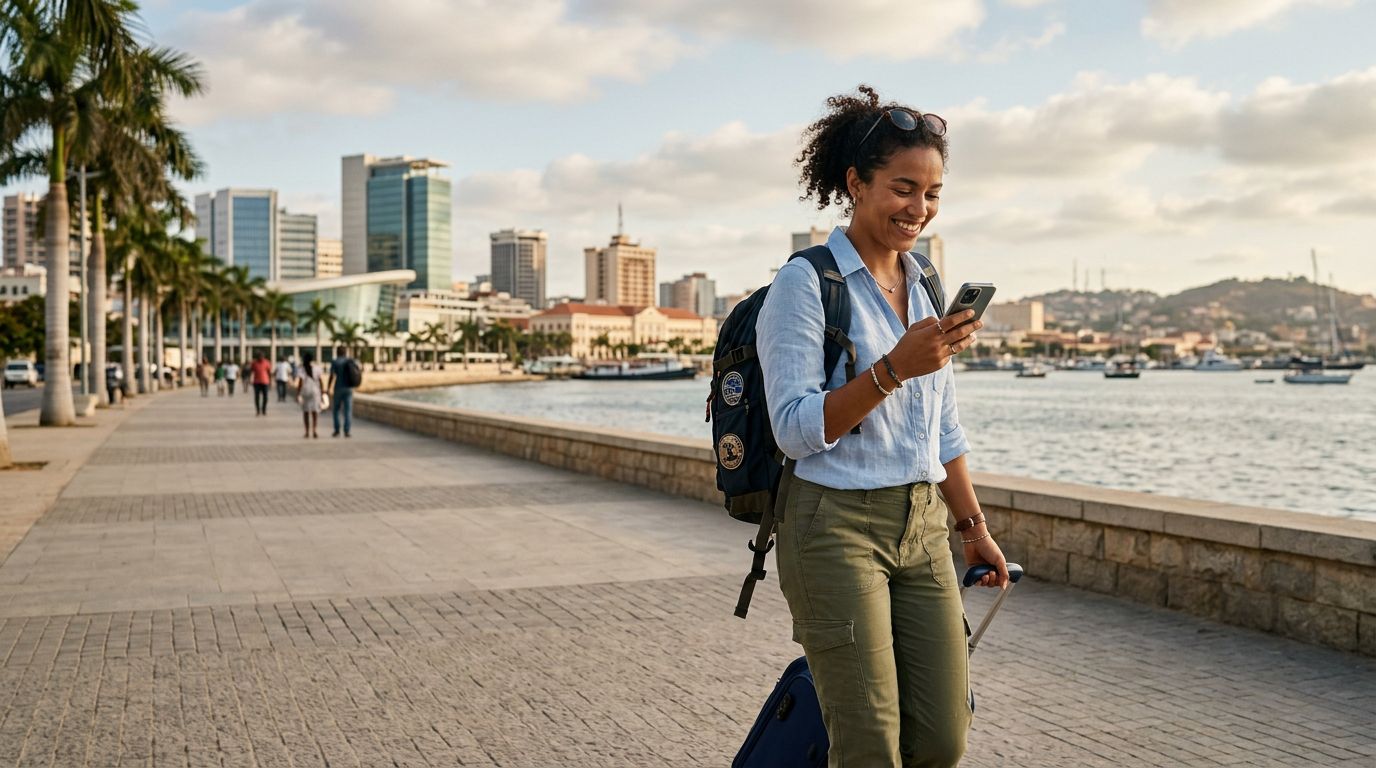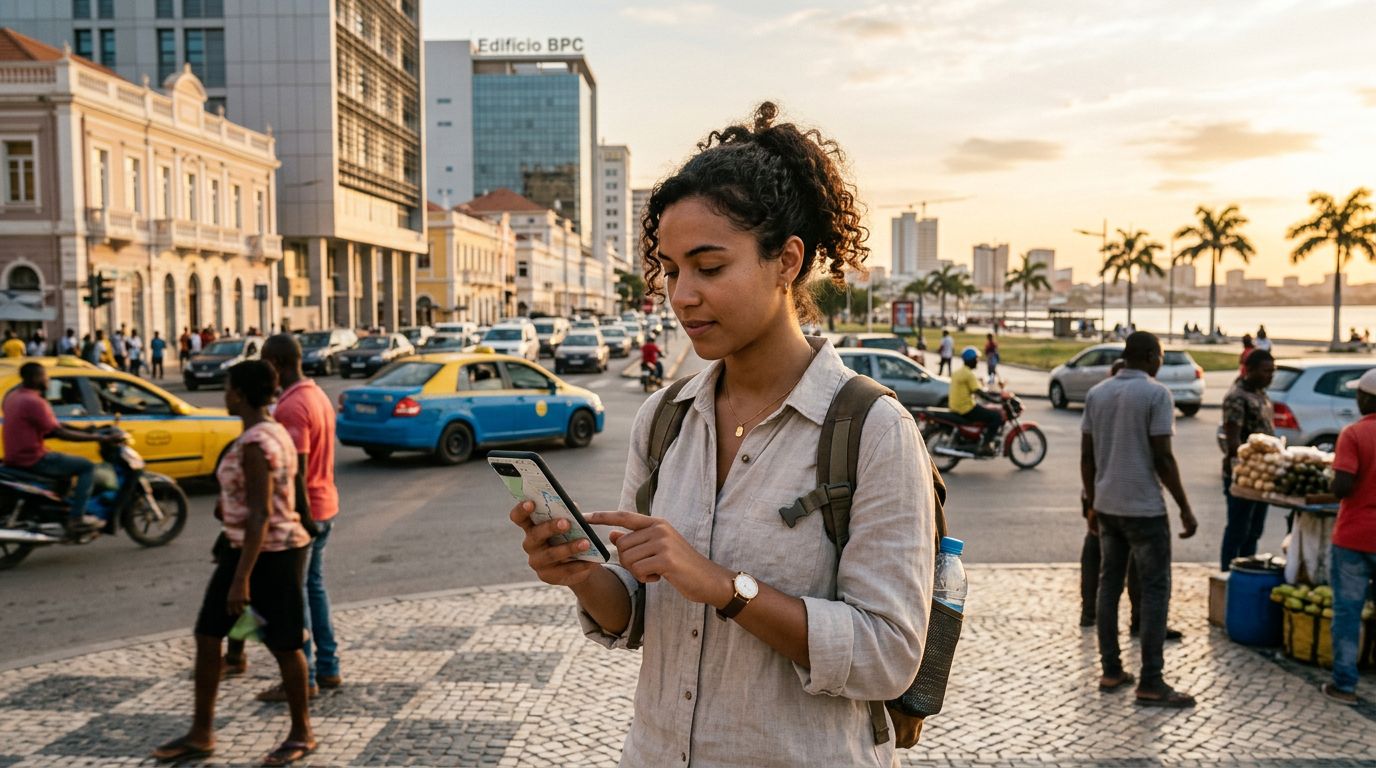
Angola is a country of immense scale and breathtaking landscapes, from the iconic red cliffs of the Kalandula Falls to the vast, arid beauty of the Namib Desert. For any traveler, the sheer size of the country means that getting from one point to another is an adventure in itself. While major urban centers like Luanda are increasingly connected, the reality of traveling through rural provinces often involves long stretches without reliable cellular coverage. This is where the combination of a reliable eSIM and a robust offline map strategy becomes essential for a stress-free journey.
Why Connectivity and Offline Maps are Essential in Angola
When you land in Angola, the immediate need for data is obvious. You need to call a ride, check your hotel reservation, or look up a local restaurant. However, relying solely on a constant cellular connection is a risky strategy for a traveler crossing diverse terrain. Signal strength can fluctuate wildly as you move away from coastal cities or major transit hubs. If you are planning to rent a car or take a bus through the interior, you will inevitably encounter "dead zones" where your smartphone will show no bars.
Using offline maps in Angola with eSIM technology is the most effective way to mitigate these gaps. By downloading your maps before you leave your hotel or a café with strong Wi-Fi, you ensure that your GPS location remains functional even when your data connection drops. Your smartphone’s internal GPS chip does not require a cellular signal to triangulate your position; it only needs the map data to be stored locally on your device.
OneTapSIM provides the connectivity you need to download these large map files quickly and efficiently. By activating your eSIM immediately upon arrival, you can pull down high-resolution map data for entire provinces while you are still in a well-connected area. This proactive approach ensures that you are never left guessing which turn to take on a dusty road in the Malanje or Huíla provinces.
Preparing Your Device for Offline Navigation
Before you set off on your Angolan expedition, a little preparation goes a long way. Most modern mapping applications allow you to select specific regions for offline use. When you are connected to a high-speed network via your OneTapSIM, take the time to download maps for the specific areas you intend to visit.
For the best experience, consider downloading a slightly larger area than you think you will need. If you are traveling from Luanda to the coast, don't just download the city; download the entire corridor along the route. This provides a safety buffer if you decide to take a spontaneous detour or if you encounter a road closure that forces you to reroute through secondary roads.
To optimize your device, check your settings to ensure that your mapping app is allowed to use cellular data. While you want to rely on offline maps, having your data enabled allows the app to provide real-time traffic updates when you do have a signal. This hybrid approach—using cached offline data for the bulk of your route and live data for traffic alerts—is the gold standard for long-distance travel in Africa. Remember to keep your device updated and ensure your operating system is running smoothly, as older software can sometimes struggle with the intensive processing required for offline map rendering.
Best Practices for a Smooth Journey
Traveling across Angola requires a balance between technology and local reality. While digital tools are invaluable, they should be treated as a supplement to your situational awareness. When you are using offline maps in Angola with eSIM, you are essentially creating a digital safety net. However, you should still keep an eye on road signs and local landmarks.
One common mistake travelers make is assuming that the shortest route suggested by a map app is the most drivable. In remote parts of Angola, a "road" shown on a digital map might be a seasonal track that is impassable during the rainy season. Always verify your route with locals or your accommodation hosts before departing. If they suggest a longer route, it is usually because it is safer or better maintained.
Battery management is another critical factor. GPS-intensive tasks drain battery life significantly faster than standard web browsing. Because you are relying on your phone for navigation, carry a high-capacity power bank. If you are driving, ensure you have a reliable car charger. By keeping your phone charged and your offline maps updated, you can explore the majestic beauty of Angola with confidence.
Finally, consider the flexibility that an eSIM offers. If you find yourself needing more data to download additional maps or to look up information about a new destination, you can manage your connectivity directly from your device settings. This level of control is particularly useful in a country where physical SIM cards can be difficult to source or register. By using OneTapSIM, you keep your home number active for emergencies while maintaining a dedicated data stream for your travels, ensuring that your digital tools are always ready when you need them most. Whether you are trekking near the coast or exploring the highlands, the combination of smart planning and reliable data will ensure your Angolan journey is memorable for all the right reasons.
Get an eSIM for
Plans for the destinations covered in this guide, with instant QR delivery.