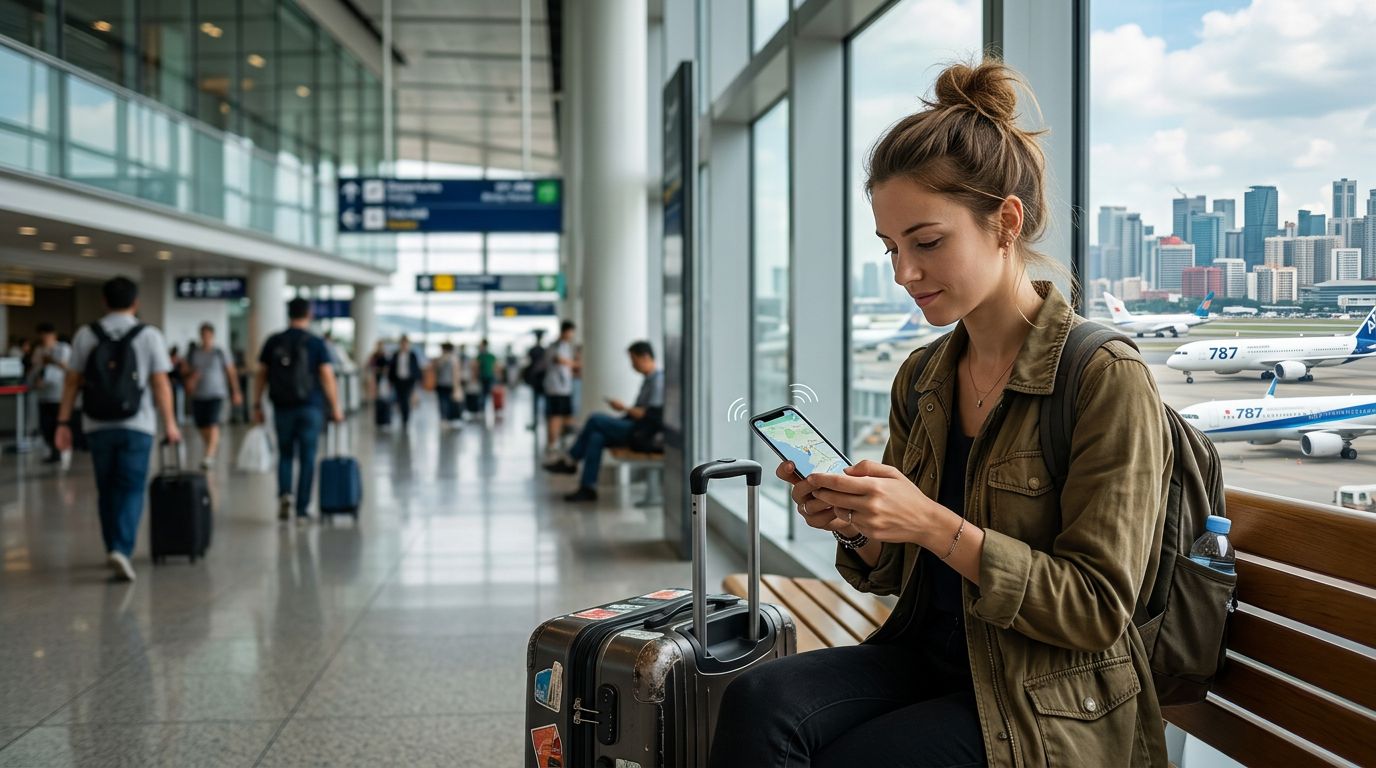
Traveling abroad brings a unique set of logistical challenges, and staying connected is usually at the top of the list. Whether you are working remotely from a cafe in Paris, uploading photos from a beach in Bali, or simply trying to find your way through a busy city using navigation apps, a reliable internet connection is essential. Many travelers are turning to travel eSIMs as their primary solution for international data. A common question that arises is whether you can use these digital SIMs to provide internet access to other devices. The short answer is yes, but understanding how it works and what factors influence your performance is key to a smooth experience.
Understanding How Hotspot Functionality Works with eSIMs
When you install a travel eSIM, your smartphone treats it just like a physical SIM card. It connects to a local cellular network in your destination country, providing you with a data allotment. Because your phone is essentially acting as a mobile modem, it has the built-in capability to share that connection with other devices, such as laptops, tablets, or even a travel companion’s phone. This feature is known as tethering or creating a personal hotspot.
From a technical perspective, the source of your data—whether it is a plastic SIM card from a local kiosk or a digital eSIM downloaded via a QR code—does not change the fundamental way your phone handles hotspot traffic. Once the eSIM is active and your data roaming is enabled, your phone’s operating system manages the connection. You can toggle the hotspot feature on through your settings menu, and your other devices will see your phone as a Wi-Fi network.
OneTapSIM provides a seamless integration process that ensures your device recognizes the eSIM as a primary data source. Because the installation is straightforward, you spend less time configuring network settings and more time ensuring your devices are connected. When you are ready to share your connection, your phone simply routes the traffic through the cellular network provided by the eSIM.
Factors That Influence Your Hotspot Performance
While sharing a hotspot is technically simple, the quality of your connection can vary based on several variables. Being aware of these factors will help you manage your expectations and troubleshoot issues if your connection feels slow.
The most significant factor is the network coverage of the local provider associated with your eSIM. Even if you have a strong signal, the actual data throughput depends on the local infrastructure. In dense urban areas, you might experience high-speed 5G or 4G LTE, while remote or rural locations might force your phone to drop to slower network standards. Since your hotspot shares the bandwidth your phone receives, any congestion on the local tower will be reflected in the speed of your tethered devices.
Another important consideration is the hardware limitations of your phone. Your device must manage both the cellular signal and the Wi-Fi broadcast simultaneously. Older smartphones may struggle to maintain a stable hotspot connection for multiple devices, leading to overheating or battery drain. Furthermore, the distance between your laptop and your phone matters. Wi-Fi signals degrade over distance, so keeping your devices in close proximity will yield better results.
Battery life is a practical concern when using your phone as a hotspot. Sharing data is an energy-intensive task. It requires the cellular radio to work harder to maintain a two-way stream of data while simultaneously broadcasting a Wi-Fi signal. If you plan to work from a laptop for several hours using a hotspot, it is highly recommended to have a portable power bank or a wall charger nearby.
Finally, keep in mind that data usage is cumulative. When you are browsing on your phone, you are the only one consuming data. When you connect a laptop, you might inadvertently trigger background updates, cloud synchronization, or high-resolution video streaming, all of which consume your data allowance much faster than mobile-optimized web browsing. Always check your settings to ensure your laptop is set to a "metered connection" if your operating system supports it, which helps prevent automatic software updates from exhausting your data.
Best Practices for Managing Your Travel Data
To make the most of your travel eSIM, a little bit of preparation goes a long way. Before you leave for your trip, ensure your device is unlocked and compatible with eSIM technology. You can verify this by checking the official documentation from your phone manufacturer, such as the support pages provided by Apple or Google.
Once you arrive at your destination and activate your OneTapSIM, monitor your usage periodically. Many modern smartphones have built-in data trackers that show exactly how much data has been consumed by the hotspot feature versus your phone’s internal apps. This transparency helps you adjust your habits if you notice you are burning through your data faster than anticipated.
If you are traveling with others, it is often better to have everyone purchase their own eSIM rather than relying on a single hotspot. This provides redundancy; if one person loses their connection or runs out of data, the rest of the group remains unaffected. However, if you are a solo traveler carrying multiple devices, using a hotspot is an excellent way to maintain a professional workflow without needing to hunt for public Wi-Fi networks, which are often insecure and unreliable.
Security is another vital aspect of sharing your connection. Always ensure your personal hotspot is protected with a strong, unique password. Public Wi-Fi networks are notorious for security vulnerabilities, and while your cellular connection is generally more secure, an open hotspot allows anyone nearby to potentially connect to your network. By setting a robust password and using WPA3 or WPA2 encryption in your hotspot settings, you protect your devices from unauthorized access.
In summary, sharing a hotspot with a travel eSIM is a reliable and convenient way to stay connected while moving through different countries. By understanding how your phone manages this traffic, being mindful of your data consumption, and taking steps to secure your connection, you can maintain a productive and stress-free experience regardless of your location. Whether you are checking emails in a hotel room or looking up directions on a tablet in a park, your eSIM acts as a versatile bridge to the internet, keeping you connected throughout your journey.