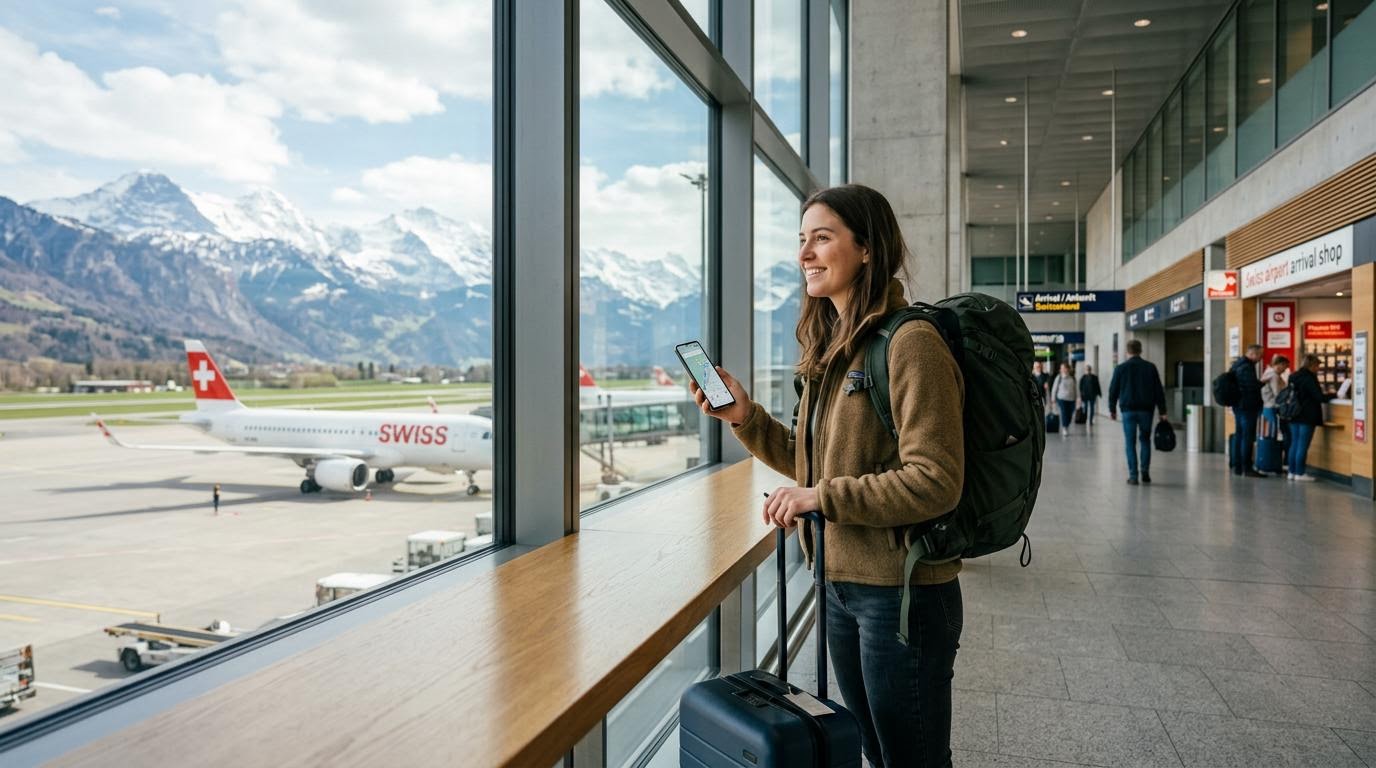
The Connectivity Challenge in Switzerland
Switzerland is a dream destination for travelers, offering everything from the snow-capped peaks of the Alps to the pristine shores of Lake Geneva. However, staying connected while moving between mountain villages, bustling cities like Zurich, and remote hiking trails can be a logistical hurdle. When planning your trip, you will inevitably face the choice between traditional carrier roaming and modern eSIM technology.
Most travelers are familiar with traditional roaming. You land at the airport, turn on your phone, and your home carrier automatically connects you to a local partner network. While this is undeniably convenient in terms of setup, it often comes with significant drawbacks. Many home carriers apply restrictive policies to international data usage, leading to throttled speeds or unexpected service interruptions. Furthermore, relying on your home plan means you are tethered to their specific coverage agreements, which might not be the most robust options available within Swiss borders.
On the other hand, an eSIM—an embedded SIM card—allows you to switch to a local provider digitally. Instead of swapping out a physical plastic card, you download a profile directly to your device. This technology has changed how we approach international travel, providing a way to access local data rates and reliable network infrastructure without the baggage of a home carrier’s roaming terms. For a country like Switzerland, where high-speed connectivity is essential for navigation, translation apps, and sharing your journey, choosing the right method is critical.
Comparing Roaming and eSIM Performance
When evaluating roaming vs eSIM for Switzerland vacation planning, the primary differences lie in network priority, transparency, and hardware independence. Traditional roaming often routes your data traffic through your home country’s servers. This process, known as "hairpinning," can cause noticeable latency. If you are trying to upload a video of your train ride through the Bernese Oberland or video call family from a cafe in Lucerne, this latency can lead to a sluggish experience.
An eSIM, by contrast, provides a direct connection to local Swiss towers. Because you are essentially using a local data profile, your traffic is treated as domestic traffic by the network. This results in faster ping times and more consistent throughput. Since Switzerland boasts some of the most advanced telecommunications infrastructure in the world, using an eSIM allows you to tap into that high-quality network at its full potential.
Another factor to consider is the ease of management. With traditional roaming, you are often at the mercy of your carrier’s automated systems. If your data stops working, troubleshooting can involve long wait times with customer support back home. With a service like OneTapSIM, the management is handled through a streamlined interface designed specifically for travelers. You know exactly how much data you have, and you are not risking a massive bill shock upon your return. The digital nature of the eSIM also means you can keep your primary SIM active for essential calls or texts while dedicating the eSIM exclusively to your data needs, ensuring you never lose access to your home number for urgent matters.
Practical Considerations for Your Swiss Trip
Switzerland is a country that relies heavily on digital tools. From checking the SBB Mobile app for train schedules to using augmented reality tools for identifying mountain ranges, your smartphone will be your most important travel companion. Because of this, reliability is non-negotiable.
When using roaming, you are often restricted to the specific networks your home provider has a contract with. If that network has a dead zone in a specific valley, you are out of luck. eSIM providers often partner with multiple local carriers, which can offer a broader range of coverage. This is particularly important in Switzerland, where the terrain can make signal propagation difficult. Having the flexibility to maintain a stable connection while moving through tunnels or remote mountain passes is a significant advantage.
Installation is also a major point of differentiation. For those using modern devices, setting up an eSIM is a straightforward process. You simply scan a QR code or follow the instructions provided by your service provider to activate the profile. You can even set this up before you leave home, meaning the moment your plane touches down at Zurich or Geneva airport, you are already connected. There is no need to hunt for a physical SIM kiosk in the arrivals hall or deal with the language barriers that can sometimes occur when trying to purchase a local physical SIM card in person.
If you are concerned about compatibility, most modern smartphones manufactured in the last few years support this technology. You can check your device settings to confirm if your phone is carrier-unlocked and eSIM-ready. Once you have confirmed compatibility, the process of switching to a local data profile becomes a permanent part of your travel toolkit.
Ultimately, the choice comes down to how much you value control and performance. Traditional roaming is designed for simplicity at the cost of performance and price transparency. eSIM technology is designed for the modern traveler who wants to treat their phone like a local device, ensuring that they can navigate, explore, and document their Swiss vacation without worrying about connectivity limitations. By opting for a dedicated travel eSIM, you move away from the restrictive policies of home carriers and gain the freedom to explore Switzerland with a reliable, high-speed connection in your pocket. Whether you are navigating the streets of Bern or hiking the trails near Zermatt, having a dedicated data solution ensures that your trip remains smooth, connected, and stress-free.
Get an eSIM for
Plans for the destinations covered in this guide, with instant QR delivery.