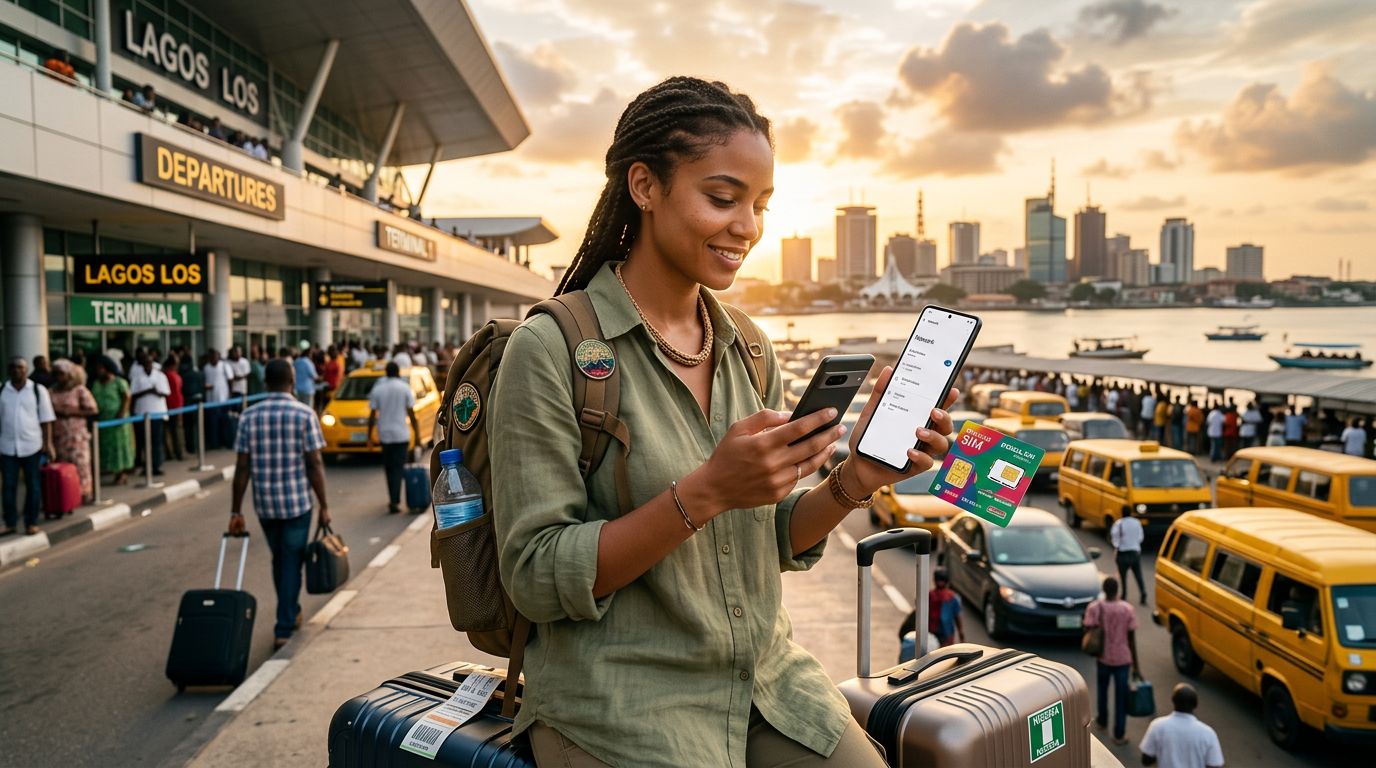
Traveling to Nigeria offers a vibrant experience, from the bustling markets of Lagos to the cultural richness of Abuja. Whether you are visiting for business or leisure, staying connected is essential for maps, communication, and managing your itinerary. When deciding how to access data, you will likely compare a traditional physical Nigeria SIM card vs eSIM options. Understanding the pros and cons of each will help you choose the most efficient method for your journey.
Traditional Physical SIM Cards in Nigeria
The standard method for tourists arriving in Nigeria has long been the physical SIM card. Upon landing at Murtala Muhammed International Airport or visiting a local mobile network operator store in the city, you can purchase a local chip. This involves presenting your passport, completing registration forms, and having your device configured by a local representative.
Physical SIM cards are widely available and offer a reliable way to get a local phone number. If you are staying for an extended period or need a local number for frequent calls to local businesses or government offices, this is a functional choice. However, the process comes with significant logistical hurdles. You must physically visit a store, wait in queues, and navigate the mandatory biometric registration process required by Nigerian regulations.
Furthermore, you must handle the physical card carefully. Swapping your home SIM card for a local one creates the risk of losing your original chip, which is often tiny and easy to misplace. If your phone is locked to your home carrier, you may also find that a local physical SIM card will not work at all, leaving you without connectivity until you resolve the device locking issue with your home provider.
The Advantages of eSIM Technology
An eSIM, or embedded SIM, is a digital version of a physical SIM card that is built directly into your smartphone’s hardware. Instead of inserting a plastic chip, you activate your mobile plan through a digital profile. This technology has revolutionized travel connectivity by removing the need for physical hardware swaps.
The primary benefit of an eSIM is convenience. You can set up your data plan before you even board your flight. By using a service like OneTapSIM, you can download your profile and activate it as soon as you land, ensuring you have internet access the moment you step off the plane. This eliminates the need to hunt for a kiosk at the airport or wait in line at a mobile store after a long flight.
Security is another major advantage. Because an eSIM is digital, there is no risk of losing a physical card or damaging the SIM tray of your phone. Your home SIM card stays safely inside your device, allowing you to keep your primary number active for important SMS messages or calls, while the eSIM handles your data needs in the background. This dual-SIM capability allows you to manage both your home and travel connections simultaneously without the stress of juggling plastic cards.
Comparing the Two Options for Your Trip
When evaluating the Nigeria SIM card vs eSIM debate, consider the length of your stay and your technical comfort level. A physical SIM card is often preferred by those who require a local Nigerian phone number for extensive voice calling or those who are staying for several months. If you are on a long-term contract or need to interact heavily with local services that require a local mobile number for verification, the traditional route remains a viable, albeit cumbersome, choice.
However, for the vast majority of travelers, the eSIM is the superior option. It provides immediate connectivity, avoids the need for store visits, and keeps your primary phone number active for emergencies or two-factor authentication from your home bank. Most modern smartphones support eSIM functionality, and the setup process is typically as simple as scanning a QR code or following a few prompts in your phone settings.
If you are concerned about compatibility, you can check your device settings to see if it is eSIM-capable. Most flagship phones released in the last few years support this technology. If you are unsure, you can consult the official support pages for your device manufacturer, such as those provided by Apple or Google, to verify your specific model's capabilities.
Using a service like OneTapSIM allows you to manage your data usage effectively. You can monitor your consumption and avoid the hidden costs often associated with international roaming packages from your home carrier. By choosing an eSIM, you gain the freedom to move through Nigeria with a reliable connection, allowing you to use ride-sharing apps, navigate with satellite maps, and stay in touch with family without the frustration of managing physical hardware.
Ultimately, the choice comes down to how much you value your time and convenience. While the traditional SIM card is a time-tested method, it requires manual effort and local bureaucracy. The eSIM provides a modern, streamlined solution that fits the needs of a traveler who wants to land and go. By preparing your connectivity in advance, you ensure that your focus remains on your experience in Nigeria rather than on the logistics of your mobile service. If your device supports it, an eSIM is almost certainly the most efficient path to staying connected throughout your trip.
Get an eSIM for
Plans for the destinations covered in this guide, with instant QR delivery.