Understanding Connectivity Challenges in Kiribati
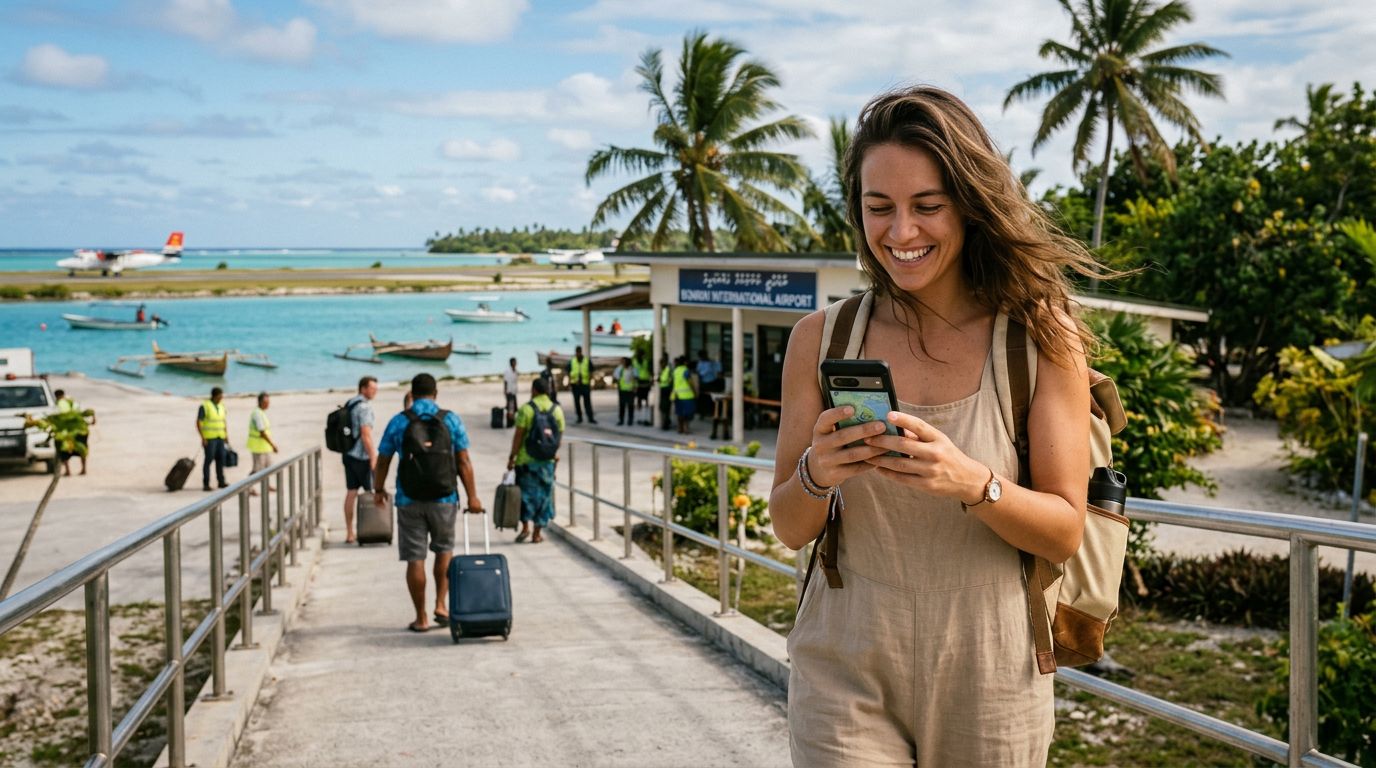
Kiribati is a remote and beautiful nation spread across the central Pacific Ocean. Because of its unique geography, staying connected while traveling here is significantly different from visiting a major metropolitan area in Europe or North America. The infrastructure is limited, and the telecommunications landscape is dominated by a single primary provider. When you arrive at Bonriki International Airport or any of the outer islands, your ability to access maps, translate local phrases, or share your experiences depends entirely on how you choose to handle your mobile data.
For most international travelers, the choice boils down to two main options: purchasing a physical Kiribati SIM card upon arrival or utilizing a digital eSIM. While physical cards have been the standard for decades, they come with logistical hurdles that can be frustrating after a long flight. You must locate a retail outlet, wait in line, present your passport for registration, and physically swap out your home SIM card—which carries the risk of losing your original chip.
An eSIM, by contrast, is a digital version of a SIM card that is embedded directly into your phone’s hardware. It allows you to activate a mobile data plan without needing to handle a physical piece of plastic. For a destination as remote as Kiribati, where retail infrastructure is not always readily accessible to tourists, the convenience of having your connectivity pre-configured before you even touch down is a significant advantage.
Comparing Physical SIM Cards and eSIMs
When evaluating a Kiribati SIM card vs eSIM for tourists, the primary factors are convenience, reliability, and security. A physical SIM card requires you to find a local vendor. In Kiribati, these shops may have limited operating hours, and you might find yourself without service for the first few hours or even days of your trip if you arrive outside of business hours or on a weekend. Furthermore, the process of swapping SIM cards is physically tedious and carries a small but real risk of damaging your phone’s SIM tray or losing your home SIM card in the process.
An eSIM offers a streamlined experience. Because the technology is software-based, you can purchase and install your plan through a provider like OneTapSIM before you leave home. As soon as your plane lands and you turn off airplane mode, your phone connects to the local network automatically. This eliminates the need to hunt for a store or struggle with language barriers at a kiosk.
Security is another often-overlooked benefit. By using an eSIM, you keep your primary SIM card safely inside your phone at all times. This prevents the common issue of misplacing your home SIM card while traveling. Additionally, managing your data usage is often easier through an app or a digital dashboard provided by your eSIM service, rather than relying on USSD codes or text-based account management systems that can be difficult to navigate if you are unfamiliar with the local carrier's interface.
Practical Considerations for Your Kiribati Trip
Before deciding on your connectivity method, you must ensure your device is compatible. Most modern smartphones manufactured in the last few years support eSIM technology. You can verify your device's capabilities by checking the settings menu on your phone or by consulting the manufacturer’s support pages. If your phone is carrier-locked, you will need to contact your home provider to have it unlocked before you can use an eSIM or a local physical SIM from another carrier.
One of the most important aspects of traveling to Kiribati is acknowledging that network coverage can be inconsistent, especially as you move away from the main island of Tarawa. Because the local infrastructure relies on satellite and microwave links, data speeds may not match what you are accustomed to in larger countries. This makes it even more important to have a reliable connection method that does not require manual troubleshooting.
If you opt for a local physical SIM, be prepared for the registration process. Many countries now require identity verification for all mobile users, and Kiribati is no exception. This means you will need to have your passport ready and be prepared to fill out paperwork at the point of sale. If you prefer to avoid this administrative burden, an eSIM service often simplifies the activation process by handling the necessary digital credentials on your behalf.
When you choose to use an eSIM, you are essentially choosing a more efficient way to manage your travel logistics. By setting up your connection ahead of time, you free up your arrival time to focus on the immediate beauty of the islands rather than administrative tasks. Whether you are visiting for the world-class fishing, the unique cultural heritage, or the remote island atmosphere, having a stable data connection allows you to look up information, stay in touch with family, and navigate the islands with confidence.
As you plan your itinerary, consider how much data you typically use. If you are a light user who only needs data for occasional messaging and light web browsing, a smaller eSIM package is often sufficient. If you plan on uploading photos or using data-heavy applications, you may want to monitor your usage closely. Regardless of your data needs, the shift toward eSIM technology is making travel to remote destinations like Kiribati much more accessible. By removing the physical barriers to connectivity, you can spend less time worrying about your phone settings and more time enjoying the unique environment of the Pacific. Always ensure your software is updated and your device is fully charged before you start your journey to ensure the smoothest possible activation of your digital plan.
Get an eSIM for
Plans for the destinations covered in this guide, with instant QR delivery.