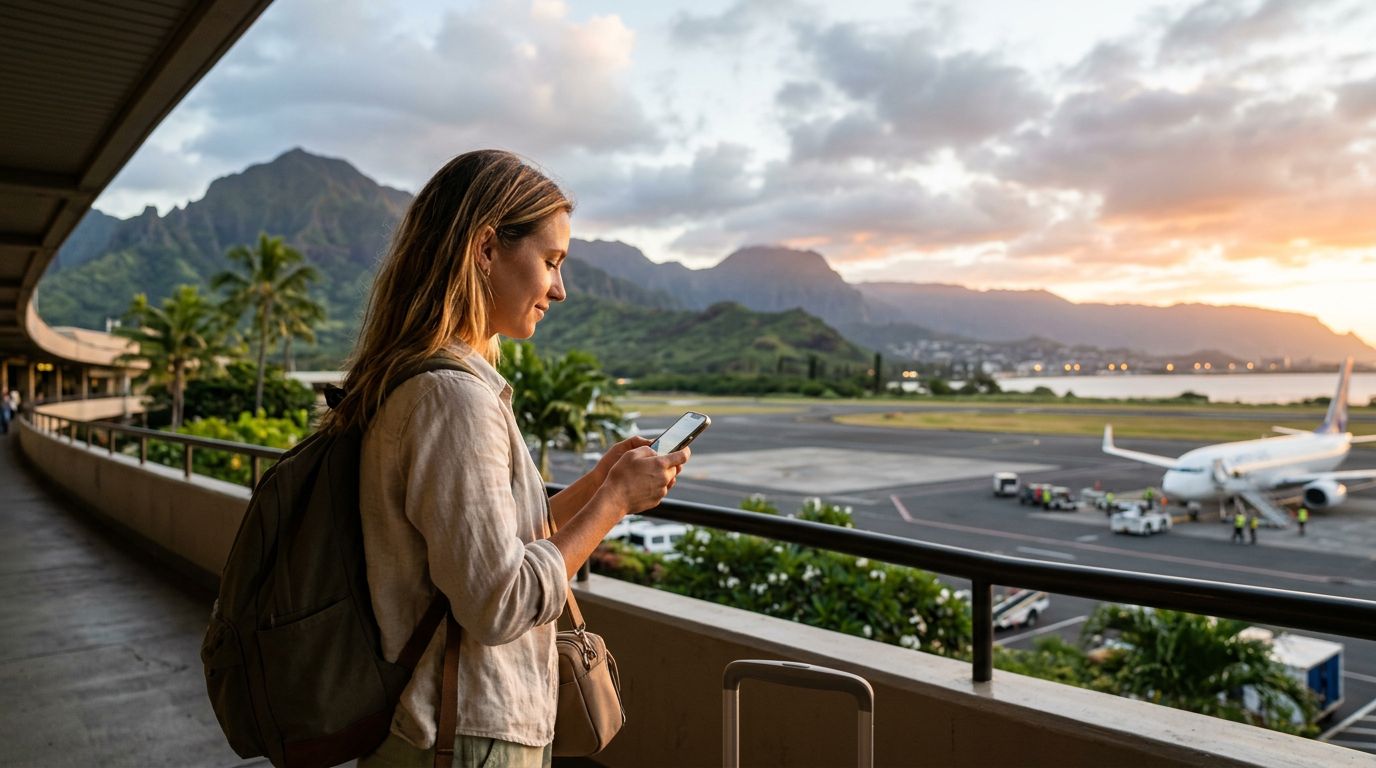
The Status of Hawaii and What It Means for Your Trip
Travelers often find themselves asking: is Hawaii a U.S. state? The answer is a definitive yes. Hawaii became the 50th state of the United States on August 21, 1959. Because it is a fully integrated part of the country, traveling to Hawaii from the mainland United States is significantly different from traveling to other Pacific destinations. You do not need a passport if you are a U.S. citizen, and you do not need to go through international customs or immigration upon arrival.
For many travelers, this status brings a sense of comfort. You are operating within the same legal, political, and financial framework as the rest of the country. However, the geographic reality of Hawaii is that it is an archipelago located over 2,000 miles from the U.S. mainland. This distance creates a unique set of logistical considerations, particularly when it comes to staying connected. While you are technically "at home" in terms of national borders, the remote nature of the islands means that your standard domestic mobile plan might not always provide the seamless experience you expect.
Understanding that Hawaii is a U.S. state helps set expectations for your visit. You will find that the infrastructure, emergency services, and general amenities mirror those found in any other state. Whether you are visiting the bustling streets of Honolulu or the quiet shores of Kauai, you are on American soil. This simplifies many aspects of travel, but it does not remove the need to plan for reliable communication. Even in a domestic setting, connectivity can fluctuate depending on whether you are exploring remote volcanic landscapes or relaxing in a resort town.
Staying Connected While Island Hopping
Because Hawaii is a U.S. state, many travelers assume their existing phone plan will work perfectly without any adjustments. While this is often true for major domestic carriers, the reality of island terrain can sometimes lead to unexpected coverage gaps. Dense tropical forests, deep mountain valleys, and the vast distances between islands can occasionally strain local signals. For those who rely on GPS for navigating rental cars, checking into local experiences, or keeping in touch with family, having a stable data connection is essential.
This is where modern technology, such as an eSIM from OneTapSIM, becomes a valuable tool for the savvy traveler. Even if you are a domestic traveler, having a secondary data source can ensure that you are never left without a map or a way to look up local information. If your primary carrier experiences a dead zone in a remote part of the Big Island or on the Road to Hana, having a digital backup allows you to switch data sources instantly without needing to swap physical cards.
The convenience of an eSIM lies in its ability to be activated remotely. You can set up your data plan before you even board your flight. By the time you land at Daniel K. Inouye International Airport, your device is already prepared to connect to the best available local network. This eliminates the stress of searching for a retail store or worrying about roaming settings once you arrive. For international travelers visiting Hawaii, the benefits are even more pronounced, as an eSIM provides a cost-effective way to access local data speeds without relying on expensive international roaming packages from a home provider.
Practical Tips for Your Hawaiian Adventure
Beyond the question of whether Hawaii is a U.S. state, travelers should focus on the practicalities of island living to ensure a smooth trip. Hawaii is a place of immense natural beauty, but it is also a place that requires respect for the environment and local culture. Because you are within the United States, you will find that standard electrical outlets, currency, and language are all familiar. However, the pace of life—often referred to as "island time"—is something that visitors are encouraged to adopt.
When planning your itinerary, consider the unique geography of the islands. Each island has its own personality. Oahu is the hub of activity, home to the state capital and famous landmarks like Pearl Harbor and Waikiki Beach. Maui is known for its diverse landscapes, ranging from the volcanic crater of Haleakalā to the lush, winding roads of the eastern coast. The Big Island offers a look at active volcanic activity, while Kauai is famous for its dramatic cliffs and lush greenery.
To make the most of your time, utilize technology to manage your logistics. Download offline maps for areas where you anticipate limited cellular signal, and keep your communication devices charged. If you are using a service like OneTapSIM, ensure your phone is compatible with eSIM technology before you depart. Most modern smartphones support this feature, but it is always a good idea to check your device settings or the manufacturer's support pages to confirm compatibility.
Remember that while Hawaii is a U.S. state, it has a distinct history and culture that predates its statehood. Engaging with local history at museums, respecting the land by staying on marked trails, and supporting local businesses are all ways to be a responsible traveler. The islands are fragile ecosystems, and being a mindful visitor helps preserve them for future generations.
Finally, do not let the fear of being disconnected dampen your spirits. While it is important to have a reliable data connection for safety and navigation, Hawaii is also a place to disconnect from the noise of daily life. Use your connectivity to manage the logistics of your trip, but leave enough room in your schedule to put the phone away and enjoy the sunset over the Pacific. Whether you are there for a week or a month, knowing that you are within the borders of the U.S. provides a layer of security, but the spirit of the islands is what will truly make your trip memorable. By preparing your mobile connectivity in advance, you ensure that your focus remains on the experience rather than the technical hurdles of travel.
Get an eSIM for
Plans for the destinations covered in this guide, with instant QR delivery.