Connectivity in the Land of the Incas: Does eSIM Work in Peru?
Traveling to Peru is a dream for many. Whether you are planning to hike the Inca Trail to Machu Picchu, explore the vibrant culinary scene in Lima, or wander through the colonial streets of Cusco, staying connected is essential for a smooth journey. If you are wondering, "does eSIM work in Peru?", the short answer is a definitive yes. Modern travelers are increasingly moving away from physical plastic SIM cards in favor of eSIM technology, which offers a seamless way to access mobile data without the hassle of swapping cards at the airport.
An eSIM, or embedded SIM, is a digital version of a traditional SIM card. It is built directly into your smartphone’s hardware. Instead of physically inserting a chip, you simply download a profile that connects your device to a local network. For travelers heading to South America, this technology has changed the way we approach international roaming. By choosing an eSIM, you avoid the high costs often associated with your home carrier’s roaming plans and bypass the inconvenience of finding a local store upon arrival.
OneTapSIM provides a reliable solution for those who want to land in Lima or Cusco and start using their data immediately. Because the setup happens digitally, you can have your connection ready before your plane even touches the runway. This ensures that you can pull up your ride-sharing app, check your hotel reservation, or look up directions to your first destination the moment you step off the aircraft.
Why Choose an eSIM for Your Peruvian Adventure?
The primary advantage of using an eSIM in Peru is convenience. When you land at Jorge Chávez International Airport, you are often greeted by long lines at local kiosks. While local physical SIMs are an option, they require you to provide identification, wait for activation, and physically handle tiny pieces of hardware that are easy to lose. With an eSIM, the entire process is handled through your device settings.
Coverage is another critical factor. Peru’s geography is diverse, ranging from the arid coastal deserts to the high-altitude Andes and the dense Amazon rainforest. While connectivity in major cities like Lima, Arequipa, and Cusco is generally robust, rural areas can be challenging. An eSIM provider that partners with multiple local network operators often provides the best chance of maintaining a signal. OneTapSIM focuses on providing stable data connections by utilizing established local infrastructure, which helps you stay reachable even as you move between different regions of the country.
Furthermore, using an eSIM allows you to keep your primary phone number active for calls or SMS if your device supports dual-SIM functionality. You can continue to receive important messages from home while using your eSIM specifically for mobile data. This dual-approach is arguably the most efficient way to manage communication while traveling. It prevents the anxiety of missing critical notifications while ensuring you have the high-speed data necessary for navigation, translation apps, and sharing your travel experiences on social media.
Before you travel, it is vital to ensure your device is compatible. Most flagship smartphones released in the last few years support eSIM technology. You can verify this by checking your device’s settings menu or by referring to the official manufacturer support pages from companies like Apple or Google. If your phone is unlocked and supports eSIM, you are ready to enjoy the benefits of a digital connection.
Tips for a Seamless Experience in Peru
To make the most of your connectivity, preparation is key. First, ensure that your phone is carrier-unlocked. If your device is locked to a specific service provider, it will not be able to accept an eSIM from a different source, regardless of the technology. You can usually confirm your phone's status by contacting your home carrier or checking the network settings on your device.
Once you have confirmed compatibility, the installation process is straightforward. With OneTapSIM, you receive instructions that guide you through adding the eSIM profile to your device. It is recommended to perform this installation while you are still at home or in a location with a stable Wi-Fi connection. This prevents any issues that might arise from trying to download a data profile over a spotty airport connection.
When you arrive in Peru, you may need to toggle your data settings to ensure your phone is using the eSIM for internet traffic. Most modern phones allow you to label your SIMs, so you can easily distinguish between your "Home" SIM and your "Travel" eSIM. If you find that your data is not working immediately upon landing, a simple restart of your device usually forces the phone to scan for the new network and register correctly.
Keep in mind that while data speeds in cities are excellent, the rugged terrain of the Andes can occasionally cause signal drops. This is a common occurrence for all mobile users in the region, regardless of the provider. Planning your day with offline maps—which can be downloaded in advance—is a smart practice for any traveler in Peru. By combining the flexibility of an eSIM with a few offline resources, you can enjoy the peace of mind that comes with being connected without being tethered to a physical card.
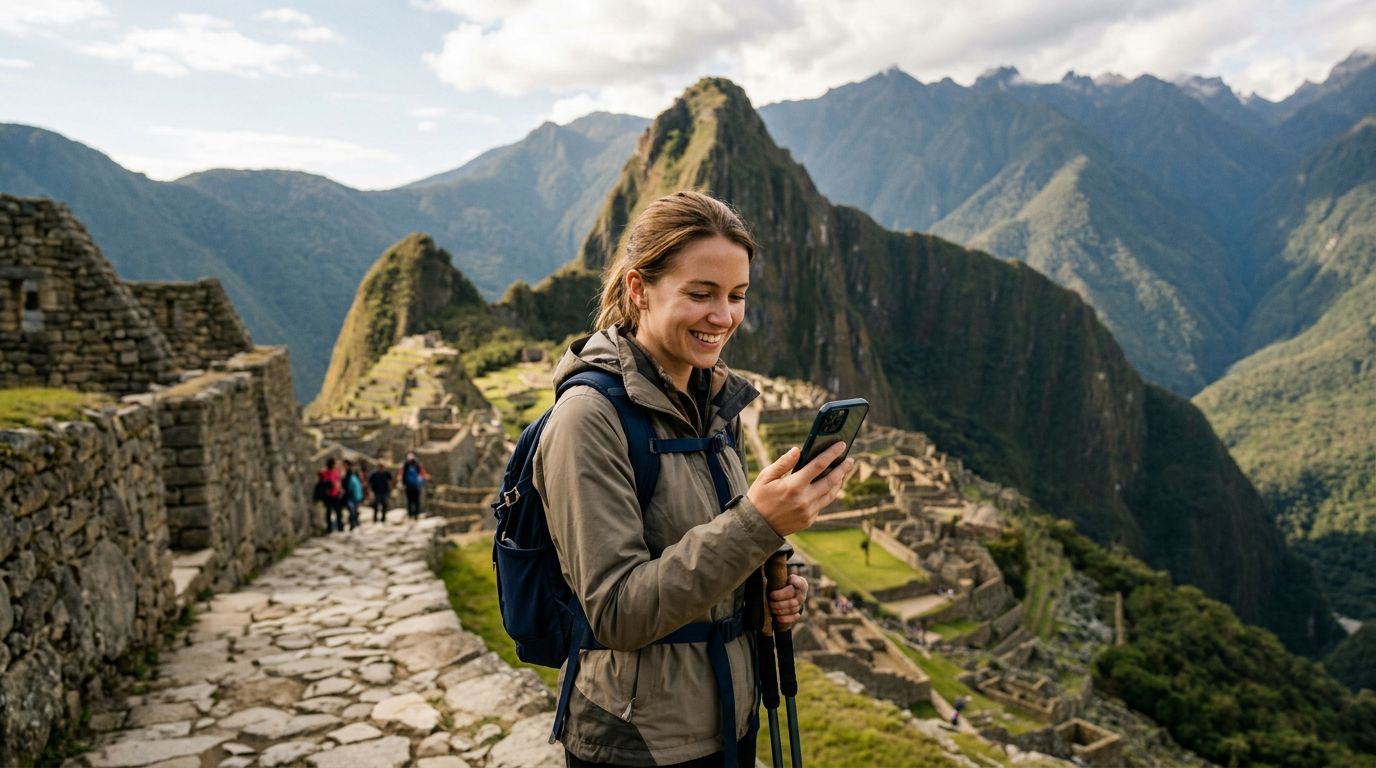
Ultimately, the shift toward eSIM technology is about removing barriers to travel. By eliminating the need to search for a local shop or worry about losing a tiny piece of plastic, you can spend more time focusing on the sights, sounds, and culture of Peru. Whether you are capturing photos of the sunrise at Machu Picchu or navigating the bustling markets of Cusco, having a reliable data connection through a service like OneTapSIM ensures that you are always just a few taps away from the information you need. As you prepare for your trip, take a moment to set up your digital connection, and you will be well-equipped to experience all that this incredible country has to offer.
Get an eSIM for
Plans for the destinations covered in this guide, with instant QR delivery.