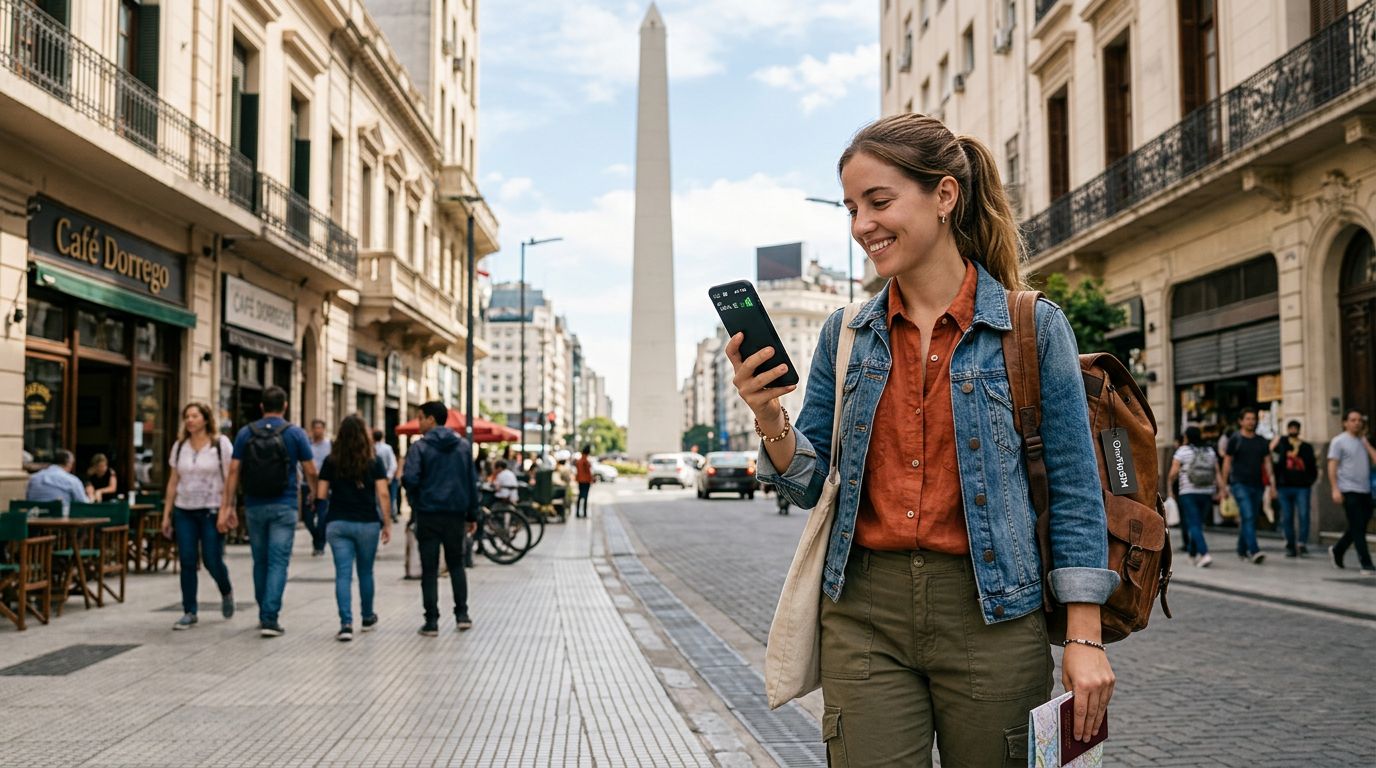
Argentina is a land of dramatic contrasts, from the thunderous roar of Iguazu Falls to the desolate, wind-swept beauty of Patagonia and the vibrant, tango-filled streets of Buenos Aires. As you prepare for your journey to this South American gem, staying connected is likely at the top of your checklist. Whether you need to navigate transit, translate menus, or share your experiences with friends and family back home, having a reliable internet connection is essential. If you are wondering, "does eSIM work in Argentina," the answer is a resounding yes. Modern digital SIM technology has made it easier than ever to stay online without the hassle of physical cards.
Understanding eSIM Technology for Your Argentina Trip
An eSIM, or embedded SIM, is a digital version of the traditional plastic SIM card you are likely accustomed to. Instead of inserting a physical chip into your phone, you download a data profile directly to your device. This technology is built into most modern smartphones, allowing you to switch between networks or activate a local data plan with just a few taps.
For travelers visiting Argentina, the primary advantage of an eSIM is convenience. You no longer need to hunt for a local kiosk upon arrival at Ezeiza International Airport or struggle with language barriers while trying to purchase a physical SIM card from a local carrier. With a service like OneTapSIM, you can set up your connectivity before you even board your plane. Once you land and turn off airplane mode, your phone connects to the local network automatically, providing you with immediate access to maps, ride-sharing apps, and messaging services.
To use an eSIM, your smartphone must be carrier-unlocked. This means your home provider has cleared your device to work with other networks. If you purchased your phone through a mobile contract, it might be locked; checking this with your provider before your departure is a crucial step. You can verify your device compatibility by checking the official support pages for Apple or Google to ensure your specific model supports eSIM functionality.
Why Choose an eSIM Over Traditional Roaming
Many travelers default to their home mobile carrier’s international roaming packages because they seem like the easiest path of least resistance. However, roaming can be notoriously unpredictable and expensive. Furthermore, roaming often routes your data traffic back through your home country, which can lead to significant latency—making websites load slowly and video calls feel choppy.
By contrast, using an eSIM provides a local-like experience. When you use an eSIM, your device connects to local Argentinian cellular towers directly. This results in faster speeds and a more stable connection, which is vital when you are trekking through remote regions or trying to find your way through the winding streets of San Telmo.
Another major benefit is the ability to keep your primary number active. Many dual-SIM devices allow you to keep your home SIM card in the phone for calls and SMS while using the eSIM exclusively for data. This ensures you can still receive important two-factor authentication codes from your bank or urgent messages from home, all while enjoying the high-speed data provided by your travel eSIM. OneTapSIM simplifies this process by providing clear, step-by-step instructions for installation, ensuring that your transition from your home network to the local Argentinian network is seamless.
Tips for Staying Connected Throughout Argentina
Argentina is a vast country, and network coverage can vary significantly depending on your location. While major cities like Buenos Aires, Córdoba, and Mendoza offer excellent 4G and 5G coverage, more remote areas—such as the high-altitude deserts of the Northwest or deep within the national parks of Patagonia—may have limited signal.
To maximize your connectivity, keep these practical tips in mind:
First, download offline maps. While your eSIM will provide great coverage in urban centers, having a backup map of the specific regions you plan to visit is a smart safety measure. Apps like Google Maps allow you to download large areas for offline use, ensuring you can find your way even if you wander into a dead zone.
Second, manage your data usage. Even with a generous data plan, it is good practice to monitor your consumption. Disable automatic app updates and high-resolution video backups to cloud services while you are on cellular data. You can save these tasks for when you are back at your hotel or a café with reliable Wi-Fi.
Third, keep a portable power bank handy. Using GPS, taking photos, and maintaining a constant cellular connection can drain your battery faster than usual. Having a backup power source ensures that your phone—and your connection to the internet—stays alive during long bus rides or full days of sightseeing.
Finally, remember that the quality of your connection is tied to the local infrastructure. In Argentina, major providers have spent years building out robust networks. By using a reputable eSIM provider, you are essentially tapping into those same high-quality networks used by locals. If you find yourself in a particularly remote area, try to move to higher ground or toward a main road, as signal strength can be affected by the rugged topography of the Andes or dense forest cover.
Staying connected in Argentina does not have to be a source of stress. By opting for an eSIM, you gain the freedom to explore the country on your own terms. You can look up restaurant reviews, translate signs, and navigate public transit with confidence, knowing that your digital connection is as flexible as your travel itinerary. Whether you are sipping wine in a vineyard or watching the sunset over a glacier, having the right tech setup ensures that you remain connected to what matters most. With the ease of installation and the reliability of local network access, your journey through Argentina will be smoother, smarter, and more enjoyable.
Get an eSIM for
Plans for the destinations covered in this guide, with instant QR delivery.