The Reality of Connectivity Upon Arrival in Fiji
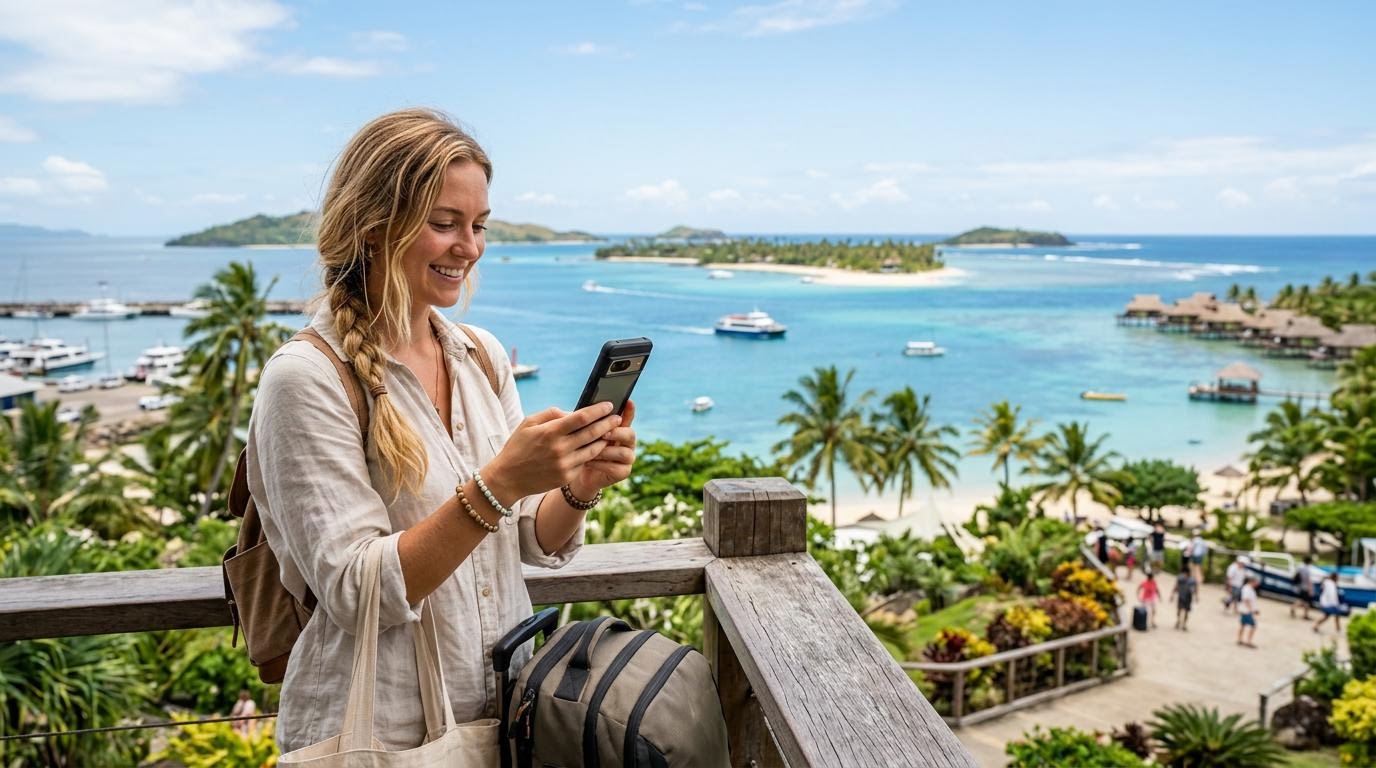
Stepping off the plane in Nadi or Suva, the tropical air hits you immediately, followed quickly by the realization that you need to stay connected. Whether you are planning to share photos of the Mamanuca Islands or need to pull up your hotel reservation, having a reliable internet connection is a priority. Many travelers find themselves standing in the arrivals hall, debating whether to head straight to a local mobile carrier kiosk or rely on a digital solution like an eSIM.
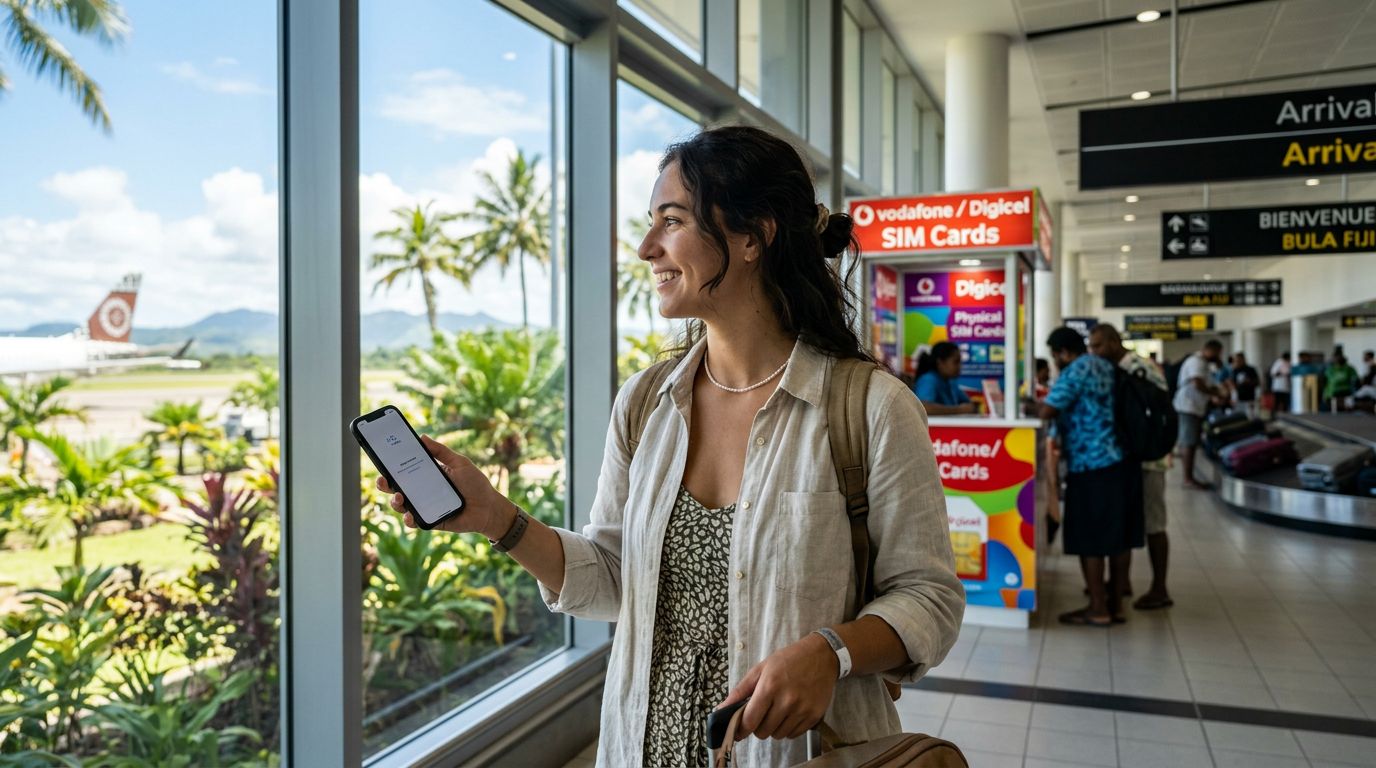
The traditional method involves hunting for a physical SIM card at the airport. You might see queues forming at the booths of local providers like Vodafone Fiji or Digicel. While these kiosks are convenient in terms of physical proximity, they often come with logistical hurdles. You have to remove your existing SIM card, find a safe place to store it so it does not get lost, and wait for the staff to register your details and activate the service. This process can be time-consuming, especially if a flight has just landed and the kiosks are crowded.
On the other hand, an eSIM allows you to bypass the physical exchange entirely. Because it is a digital version of a standard SIM card, it is embedded directly into your phone’s hardware. For travelers comparing airport SIM vs eSIM in Fiji, the primary difference lies in the friction of the setup. An eSIM is typically activated before you even leave home or while you are still connected to the airport Wi-Fi, meaning you have service the moment your wheels touch the tarmac.
Comparing Convenience and Reliability
When you choose to buy a physical SIM card at the airport, you are at the mercy of the kiosk's operating hours and stock levels. If you arrive on a late-night flight or during a busy holiday period, you might find the kiosks closed or the lines prohibitively long. Furthermore, you are physically handling small, fragile components. If you have ever fumbled with a tiny SIM card tray while juggling luggage, you know how stressful that can be.
eSIM technology removes the risk of losing your home SIM card. Because you do not need to open your phone’s SIM tray, your original card stays safely tucked away inside your device. This is a significant advantage for those who want to keep their primary number active for receiving important texts or calls while using a separate data plan for their Fiji adventures.
OneTapSIM provides a streamlined approach to this experience. By selecting your plan ahead of time, you receive a digital installation profile. This means you are not reliant on the physical inventory of a specific airport shop. Instead of waiting for a clerk to manually register your passport and set up your device, you follow a simple digital installation process. This reliability is especially valuable when you are exhausted from a long flight and just want to reach your resort or hotel as quickly as possible.
Another factor to consider is the coverage quality. Both physical SIMs and eSIMs in Fiji generally utilize the same local network infrastructure. The difference is not in the signal strength itself, but in the ease of switching between providers if one fails. With an eSIM, you can often manage your connectivity settings through your phone’s operating system menus, whereas a physical SIM requires you to physically swap hardware if you decide to change providers.
Tips for a Seamless Digital Transition
Before you decide on your connectivity strategy, ensure your device is compatible. Most modern smartphones support eSIM technology, but it is always wise to verify your specific model's capabilities through your manufacturer’s official support pages. If your phone is locked to a specific carrier, you will need to contact your home provider to have it unlocked before you travel. Without an unlocked device, neither a physical SIM nor an eSIM will function, regardless of where you purchase it.
Installation is usually straightforward. Once you have purchased your eSIM, you will typically receive a QR code or an activation code. You simply navigate to your cellular settings, select the option to add a new plan, and scan the code. Your phone will then download the necessary data to connect to the local Fiji networks. This process takes only a few minutes and can be completed while you are still in your home country.
For those who prefer the peace of mind that comes with having everything ready before takeoff, OneTapSIM offers a user-friendly interface that simplifies the setup process. By handling the technical configuration beforehand, you avoid the common pitfalls of airport kiosks, such as language barriers or technical glitches during the manual activation process.
When you arrive in Fiji, your phone will automatically detect the local network once you enable your eSIM data roaming. It is a seamless transition that allows you to focus on your trip rather than your technology. Whether you are heading to the Coral Coast for snorkeling or staying in Nadi for a quick stopover, having your connectivity sorted in advance allows you to use GPS, translation apps, and ride-sharing services the moment you exit the terminal.
Ultimately, the choice between an airport SIM and an eSIM comes down to your personal preference for spontaneity versus preparation. While airport SIMs offer a tangible, traditional experience, the digital efficiency of an eSIM provides a level of convenience that is increasingly preferred by modern travelers. By opting for a digital solution, you save time, reduce the risk of hardware loss, and ensure that your connection to the world is as fluid as your travel plans.
Get an eSIM for
Plans for the destinations covered in this guide, with instant QR delivery.