The Strategic Advantage of Dual SIM Technology
For professionals who frequently cross borders, staying connected is not just a convenience; it is a fundamental requirement for maintaining productivity. The traditional reliance on physical roaming or swapping out local SIM cards at airport kiosks has become an outdated practice. Modern smartphones now support Dual SIM technology, allowing users to maintain two active lines simultaneously. By utilizing a primary line for home-based calls and a secondary, digital line for local data, business travelers can ensure they remain reachable while avoiding the pitfalls of expensive international roaming agreements.
Using dual SIM for business travel allows you to keep your personal or home-country number active for essential two-factor authentication, bank alerts, and urgent calls from colleagues, while dedicating a separate eSIM profile to high-speed data. This separation is vital. When your phone manages two connections, it intelligently routes traffic based on your settings. You can designate your home SIM for voice and SMS, while forcing your device to use the data-only eSIM for maps, email synchronization, and video conferencing. This configuration eliminates the risk of missing a critical work call while ensuring you never lose your connection to navigation tools or cloud-based documents.
The transition to eSIM technology has simplified this process significantly. Unlike physical SIM cards that require a specific tray and a small tool to swap, an eSIM is a digital profile that resides within the device’s hardware. Providers like OneTapSIM allow users to provision these profiles remotely, meaning you can have your connectivity ready before your plane even touches the runway. This level of preparation is the hallmark of an efficient business traveler who prioritizes reliability over last-minute logistics.
Optimizing Device Settings for Seamless Connectivity
Once you have your eSIM installed, the success of your business trip depends on how you configure your device. Both iOS and Android operating systems have refined their dual SIM management interfaces to be highly intuitive, but they require a specific setup to function correctly.
On an iPhone, you can label your SIMs, such as "Primary" and "Travel," to avoid confusion. The most important setting to manage is "Cellular Data Switching." If you are traveling, it is generally recommended to turn this feature off. If left on, your phone might attempt to use your home SIM for data if the local network signal is weak, which could trigger automatic roaming charges from your domestic carrier. By locking your data usage to your travel eSIM, you maintain complete control over your expenses and connectivity.
For those using Android devices, the settings are similarly robust. You can specify which SIM is the default for data and which is the default for calls. Many business travelers prefer to set their home SIM to "Ask every time" for calls, or simply keep it active for incoming calls only. This prevents accidental outgoing calls that might be routed through a roaming connection.
When you use OneTapSIM, the installation process is designed to integrate directly into these native settings. Because the eSIM functions as a native data source, your phone treats it as if it were a local provider. This means your apps, such as Slack, Microsoft Teams, or Zoom, will operate as if you were sitting in your home office, even if you are thousands of miles away. The stability of a dedicated data line is far superior to relying on public Wi-Fi networks, which are often insecure and prone to congestion in hotel lobbies or conference centers.
Security and Efficiency for the Modern Professional
Security remains a primary concern for business travelers handling sensitive information. Public Wi-Fi networks are notorious entry points for cyber threats, and relying on them to access corporate servers is a risk many companies can no longer afford. When you use your own dedicated data connection through a travel eSIM, you are accessing the internet via a private cellular network. This adds a layer of encryption and security that public hotspots simply cannot match.
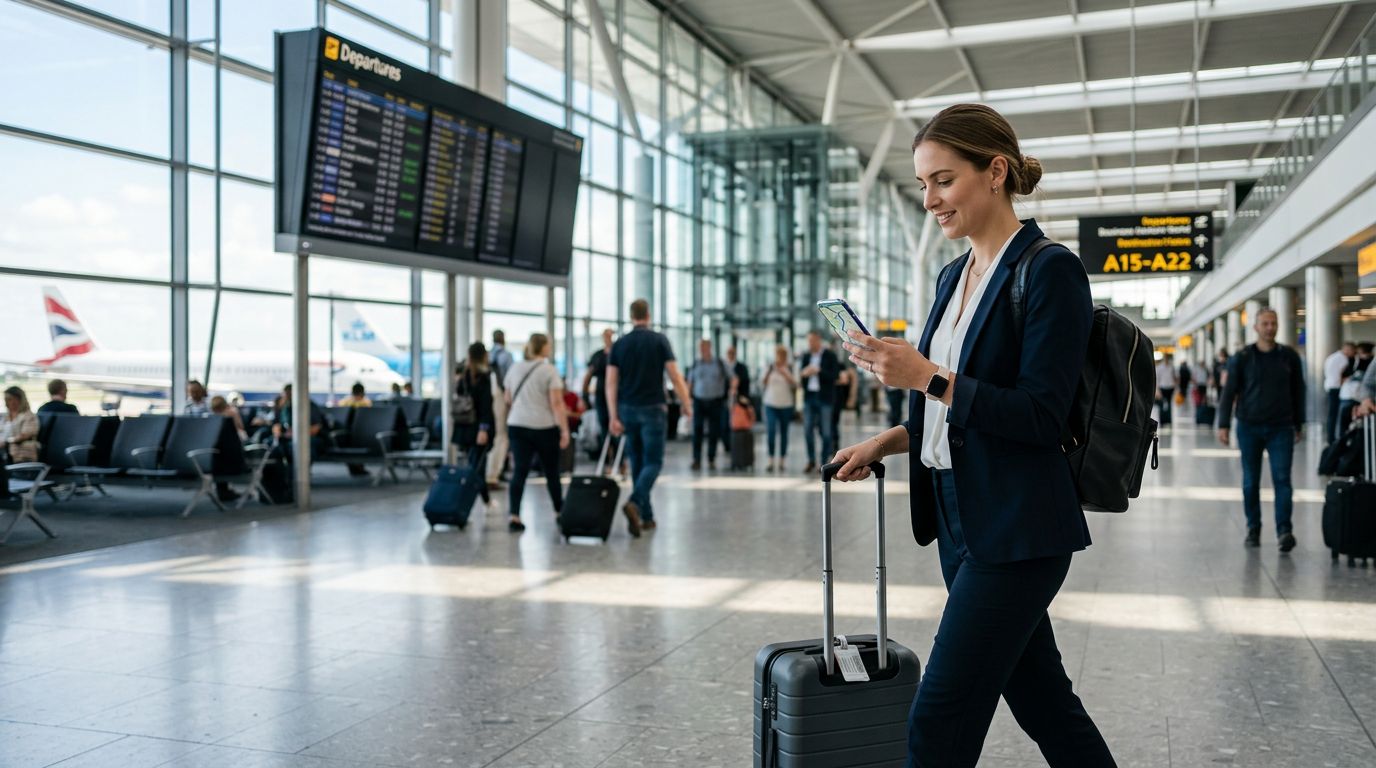
Furthermore, the efficiency gains are substantial. When you arrive in a new country, your phone connects to the local network automatically. There is no need to search for a SIM card vendor, wait in a queue, or worry about whether the local card will fit your device. You can step off the plane, turn on your device, and immediately access your email or join a scheduled conference call. This seamless transition is essential for maintaining a professional image. If you are arriving for a high-stakes meeting, the last thing you want is to be distracted by technical difficulties or a lack of internet access.
Managing connectivity across multiple countries is also simplified with this approach. If your business trip involves visiting three different countries in one week, you can manage your data profiles within your phone’s settings without ever touching a physical card. You can pre-install multiple eSIMs and simply toggle them on or off as you cross borders. This flexibility is particularly useful for consultants or sales professionals who operate across regional territories.
By adopting a proactive approach to mobile connectivity, you shift the focus from managing logistics to focusing on your business objectives. Using dual SIM for business travel is about more than just avoiding roaming fees; it is about creating a reliable, secure, and professional environment that travels with you. Whether you are checking market trends, updating a presentation, or coordinating with your team back home, having a stable data connection ensures that your performance remains consistent regardless of your physical location. With the combination of modern hardware and reliable eSIM services, the challenges of international connectivity become a non-issue, allowing you to focus entirely on the work at hand.