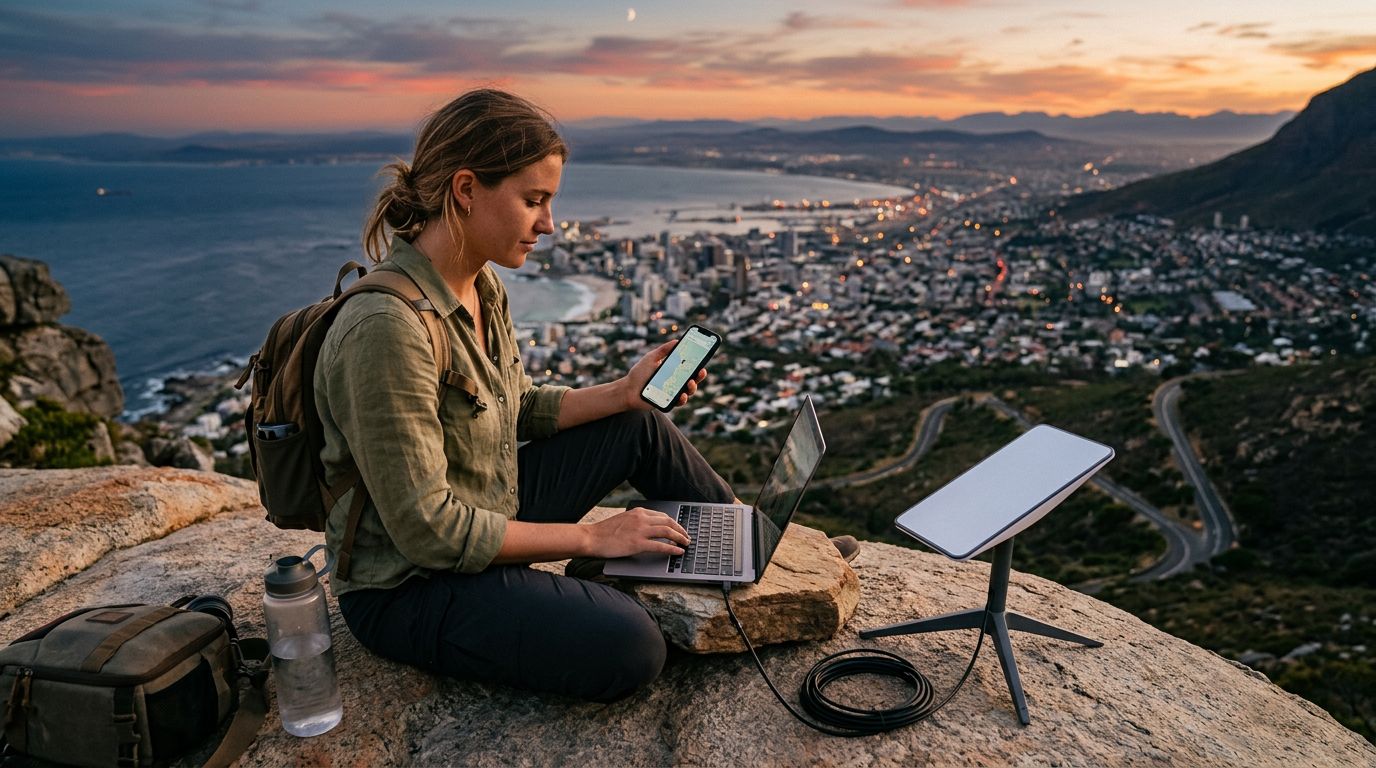
The Rise of Satellite Internet for Remote Work
The dream of working from anywhere has shifted from a theoretical possibility to a standard lifestyle for thousands of professionals. While coffee shops and co-working spaces provide reliable infrastructure, the true appeal of the digital nomad lifestyle often lies in reaching remote locations—mountain cabins, secluded beaches, or off-grid campsites. Historically, these locations meant sacrificing connectivity. The introduction of the Starlink Mini has fundamentally altered this equation, offering high-speed satellite internet in a portable form factor that fits inside a backpack.
For those who rely on video conferencing, cloud-based project management tools, and constant communication, the Starlink Mini provides a level of independence previously reserved for industrial-grade satellite equipment. It functions by connecting directly to a constellation of low-earth orbit satellites, bypassing the need for local fiber or cable infrastructure. This makes it an ideal companion for long-term stays in rural areas where terrestrial internet service providers are either non-existent or unreliable.
However, relying solely on satellite hardware comes with its own set of logistical challenges. Power consumption, clear sky visibility, and setup time are factors that require careful planning. While the hardware is compact, it is not a "plug and play" solution for every scenario. It requires a stable power source and a clear view of the northern or southern sky, depending on your hemisphere. For nomads who move frequently, the hardware is a significant piece of gear to manage, transport, and protect.
Balancing Satellite Hardware with Mobile Connectivity
While the Starlink Mini excels at providing a dedicated, high-bandwidth connection for a home base or a stationary camp, it is not always the most efficient tool for short-term travel or transit. Moving between countries or cities every few days makes the setup and teardown of satellite equipment cumbersome. This is where a hybrid approach to connectivity becomes essential for the modern nomad.
Mobile data remains the most versatile way to stay connected while in motion. Whether you are navigating a new city, checking transit schedules, or handling urgent emails while on a train, cellular data provides instant access without the need for bulky hardware. Integrating a travel eSIM, such as OneTapSIM, allows you to maintain a reliable cellular connection the moment you land in a new country. By using an eSIM, you avoid the physical hassle of swapping local SIM cards or hunting for kiosks in airports.
The strategy for a successful nomad setup involves using the Starlink Mini for intensive tasks—like hosting webinars or uploading large media files—while relying on eSIM technology for daily mobility. When you are moving through transit hubs or exploring urban centers, your phone acts as the primary connection point. This layered approach ensures that you are never left without a signal, regardless of whether you are in a remote forest or the center of a bustling metropolis.
Optimizing Your Digital Nomad Toolkit
Building a robust connectivity stack requires more than just hardware; it requires a strategy for redundancy. Even the most advanced satellite systems can face interference from extreme weather, dense forest canopy, or hardware malfunctions. If your primary satellite connection drops, having a secondary, independent source of internet is not just a convenience—it is a professional necessity.
Many nomads now carry a dual-SIM setup on their smartphones. By keeping a primary line for local calls and a travel eSIM for data, you create a fail-safe. If your satellite dish is obstructed or you are in a location where the satellite footprint is limited, you can immediately switch your laptop’s tethering source to your cellular data. This transition is seamless if your devices are properly configured.
When preparing your devices, ensure your operating system is updated to support the latest network protocols. For users of Apple devices, checking the settings on support.apple.com can help you manage your cellular data usage and ensure your hotspot functionality is optimized. Similarly, users of Android devices can find helpful configuration guides on support.google.com to ensure that background data usage does not drain your mobile plan while you are relying on tethering.
The Starlink Mini is undoubtedly a significant advancement for those who prioritize remote work in unconventional locations. It removes the barrier of distance, allowing professionals to maintain high-speed connections in places that were once considered "dead zones." Yet, the most successful nomads are those who do not rely on a single point of failure. By combining the high-capacity throughput of satellite internet with the agility and convenience of an eSIM, you create a resilient network that supports your work regardless of your physical coordinates.
As you plan your next destination, evaluate the local infrastructure. If you are heading to a remote area, prioritize your satellite setup. If you are planning a multi-city tour, prioritize the ease of an eSIM. By understanding the strengths of each technology, you can maintain a professional standard of connectivity that keeps you productive, reachable, and stress-free throughout your journey. The goal is to spend less time troubleshooting your internet connection and more time enjoying the freedom that remote work provides.