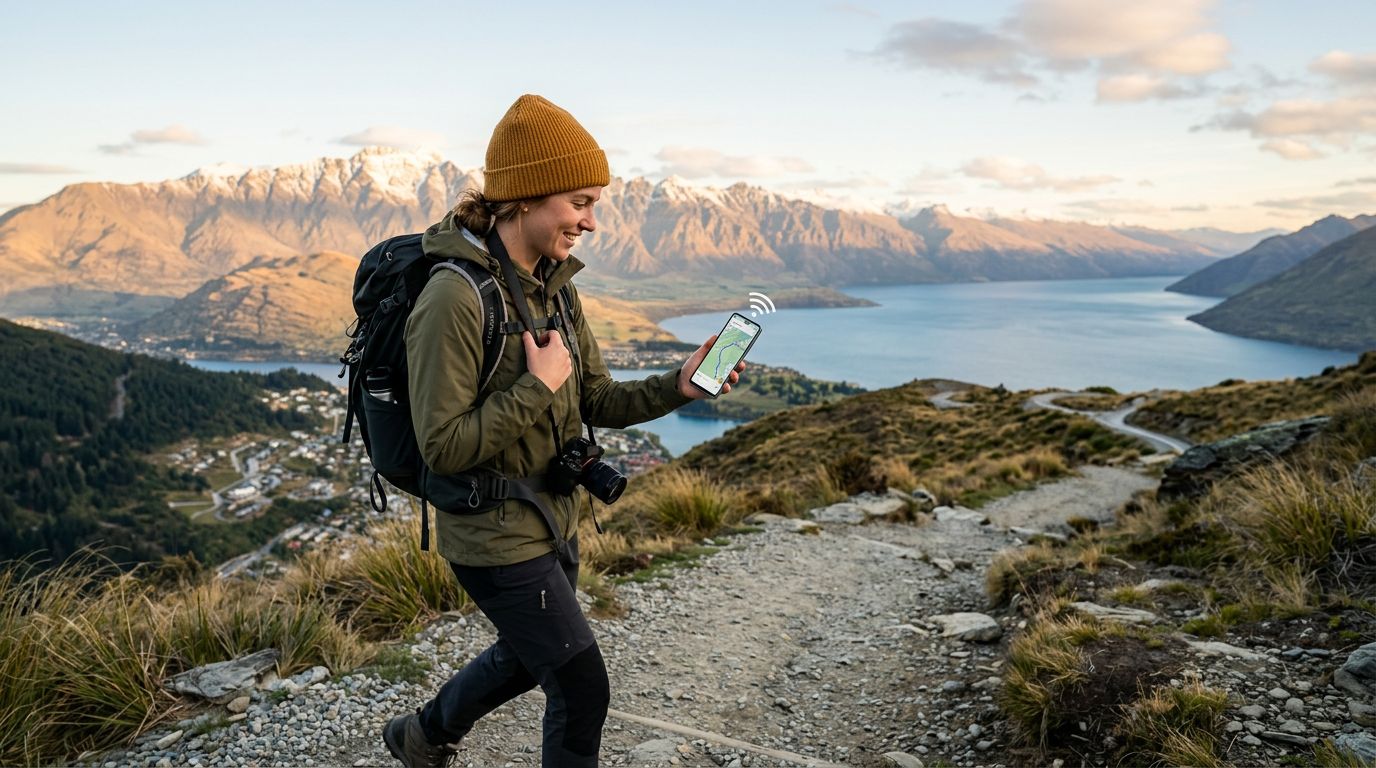
Planning a trip to New Zealand involves a lot of logistics, from booking campervans to deciding which hiking trails to conquer. One of the most critical decisions you will make is how to stay connected. Whether you are navigating the winding roads of the South Island or sharing photos from the top of a mountain, having reliable internet is essential. When comparing pocket WiFi vs eSIM for New Zealand, travelers often find themselves weighing convenience against tradition.
Understanding the Differences in Connectivity
A pocket WiFi device, also known as a mobile hotspot, is a small, portable router that creates a local WiFi network using a cellular signal. You carry the device with you, and your phone, tablet, and laptop connect to it just as they would to a home network. Because it is a separate piece of hardware, it requires its own battery management and physical security. You must ensure it is charged, keep it close to your devices, and be careful not to lose it or leave it behind in a rental car or cafe.
An eSIM, or embedded SIM, is a digital version of a traditional physical SIM card. It is built directly into the hardware of modern smartphones. Instead of swapping out a tiny plastic chip, you simply scan a QR code or follow an installation process to activate a data plan directly on your phone. Because the technology is integrated into your device, there is no extra hardware to carry, no bulky batteries to charge, and no risk of losing a separate device. OneTapSIM offers this technology to streamline the process, allowing travelers to activate their connection before they even land at Auckland or Christchurch airport.
The Practicality of Travel in New Zealand
New Zealand is a country defined by vast landscapes and remote beauty. If you are planning a road trip, you will likely spend hours driving between destinations. A pocket WiFi device can be useful if you are traveling in a large group and need to share a single connection among several people. However, this creates a "tethering" issue: if the person carrying the pocket WiFi walks away from the group to grab a coffee or take a photo, the rest of the group loses connectivity.
With an eSIM, your connection is tied to your phone. As long as your phone is with you, you have data. This is particularly beneficial for solo travelers or couples who might want to split up occasionally. Furthermore, New Zealand’s mobile coverage is excellent in urban areas but can be spotty in deep valleys or remote alpine regions. Because an eSIM utilizes the local cellular networks directly, it provides the same coverage quality as a local resident would experience. You do not have to worry about the signal strength of a third-party hotspot device; you are tapping into the primary network infrastructure directly.
Another logistical advantage of the eSIM is the elimination of the pickup and return process. With pocket WiFi, you often have to arrange for the device to be shipped to your hotel or picked up at a rental counter upon arrival. At the end of your trip, you are responsible for returning the device, which can be a stressful task when you are rushing to catch a flight. An eSIM removes this friction entirely. You can set it up from the comfort of your home, and it activates the moment your plane touches down in New Zealand.
Performance, Compatibility, and Battery Life
When choosing between these options, consider the impact on your hardware. A pocket WiFi device is essentially another gadget that needs to be managed. You need to pack an extra charging cable, a power bank, and the device itself. If you forget to charge it overnight, you will find yourself without internet in the middle of a scenic drive. Additionally, these devices can get quite hot during heavy use, which is a concern during the warm New Zealand summer months.
eSIM technology is much more efficient. Since it uses your phone’s internal antenna, you are only managing the battery life of one device. While using data does consume battery, modern smartphones are designed to manage cellular connectivity efficiently. If you are worried about battery drain, you can easily toggle your data off when you are not actively using it or rely on offline maps for navigation.
Before choosing an eSIM, it is important to ensure your device is compatible. Most smartphones released in the last few years support eSIM technology. You can verify your phone’s capability by checking your device settings or visiting the official support pages for your phone manufacturer. If your device is unlocked and eSIM-ready, the setup process is seamless. OneTapSIM provides clear instructions to ensure that your transition to a digital plan is simple and quick, allowing you to focus on your itinerary rather than troubleshooting hardware.
Ultimately, the choice comes down to your personal travel style. If you are traveling with a large family or a group that requires multiple laptops to be connected simultaneously, a pocket WiFi device might feel like a familiar solution. However, for the vast majority of modern travelers—especially those who prefer to travel light and avoid the hassle of managing extra equipment—the eSIM is the superior choice. It offers a cleaner, more reliable, and more convenient way to stay connected while exploring the stunning landscapes of New Zealand. By opting for a digital solution, you remove the unnecessary weight from your backpack and the mental load of managing a rental device, leaving you free to enjoy the journey.
Get an eSIM for
Plans for the destinations covered in this guide, with instant QR delivery.