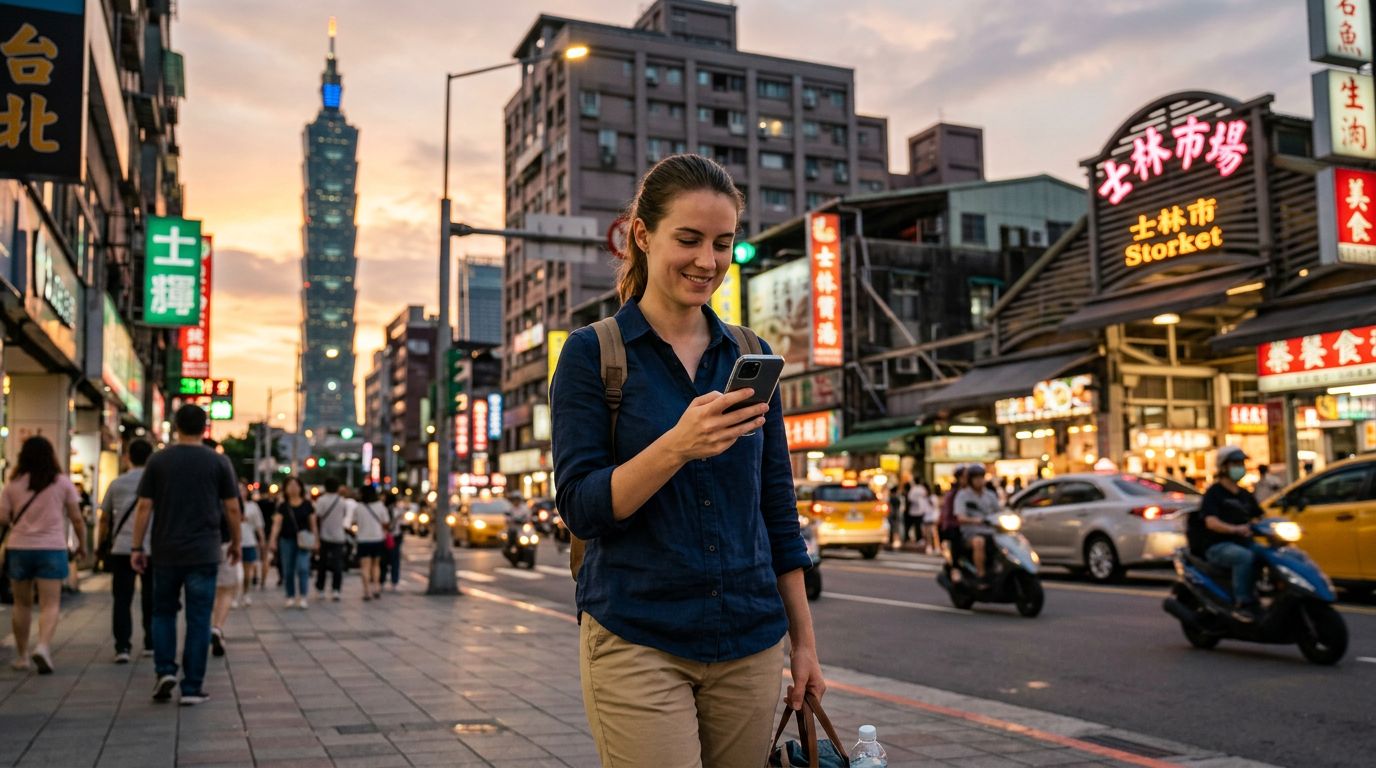
Understanding Your Connectivity Needs in Taiwan
Taiwan is a destination that demands constant connectivity. From the bustling night markets of Taipei where you need to look up food reviews, to the winding mountain roads of Alishan where GPS is essential for safe navigation, your smartphone is your most important travel companion. However, the convenience of constant access often comes with the hidden stress of monitoring your data consumption. When you are roaming on a standard plan from your home carrier, a single background update or a high-definition video call can lead to unexpected service throttling or significant connectivity issues.
The primary challenge for travelers is that data usage is rarely static. You might spend a morning uploading photos of Taipei 101 to social media, followed by an afternoon of heavy map usage while exploring the narrow alleys of Jiufen. Managing mobile data usage in Taiwan requires a shift in how your device interacts with the network. Instead of relying on a rigid plan that might not account for your specific travel habits, adopting a flexible eSIM solution allows you to maintain control. By using a service like OneTapSIM, you can monitor your consumption in real-time, ensuring that you are never caught off guard while trying to find your next train connection or checking the status of a local flight.
Practical Strategies for Data Optimization
Before you even touch down at Taoyuan International Airport, you should configure your device to be "data-aware." Most modern smartphones are designed to sync, update, and back up data automatically whenever a connection is established. While this is helpful at home, it can be a silent drain on your travel data allowance.
Start by auditing your background app refresh settings. On both iOS and Android devices, you can restrict which applications are permitted to pull data while they are not actively in use. Prioritize essential tools like map applications, translation software, and your OneTapSIM dashboard, while disabling background access for social media platforms, cloud storage services, and non-essential news aggregators. This simple adjustment often reduces total data consumption by a significant margin without impacting your actual ability to use the phone.
Another effective strategy involves managing your media settings. Many platforms default to high-definition video playback or auto-playing content as you scroll. Adjusting these settings within the apps themselves to favor "data saver" modes or lower resolution playback can make a substantial difference. Furthermore, consider downloading offline maps for the specific regions you plan to visit in Taiwan. Google Maps allows you to save large areas for offline use, which means you can navigate the streets of Tainan or Kaohsiung without relying on a continuous cellular signal. By combining these proactive device settings with the reliable coverage provided by an eSIM, you create a buffer that keeps you connected for the duration of your trip without the constant anxiety of hitting a data wall.
Leveraging eSIM Technology for Better Control
The shift toward eSIM technology has fundamentally changed how travelers manage mobile data. Traditional physical SIM cards were often cumbersome to swap and easy to lose, but an eSIM integrates directly into your device's hardware. This means you can manage your connectivity via software, which is particularly useful when you are moving between different cities in Taiwan.
OneTapSIM offers a streamlined approach to this process. Because the eSIM is digital, you can activate your plan the moment you arrive, or even set it up before you leave your home country. This eliminates the need to hunt for local kiosks or deal with language barriers when trying to purchase a physical card at the airport. More importantly, the digital nature of the service provides transparency. You can easily track how much data you have utilized throughout your stay, allowing you to adjust your usage patterns if you notice you are burning through your allowance faster than anticipated.
If you find that your itinerary changes—perhaps you decide to extend your stay in the Taroko Gorge or add an extra day of shopping in Ximending—you can manage your data needs with greater flexibility than traditional roaming. By keeping your primary SIM card active for essential calls or SMS while routing your data traffic through your OneTapSIM eSIM, you maintain a clear separation between your home communication and your travel data requirements. This dual-SIM configuration is the gold standard for modern travel. It ensures that you remain reachable for work or family emergencies while keeping your high-speed data usage isolated and manageable.
Ultimately, the goal of managing your mobile data is to ensure that technology serves your travel experience rather than distracting from it. When you are standing in front of a majestic temple or enjoying a bowl of authentic beef noodle soup, the last thing you want to be doing is troubleshooting a connectivity issue or worrying about a data cap. By preparing your device settings before you travel and utilizing a reliable, transparent eSIM service, you gain the freedom to enjoy Taiwan to its fullest. Connectivity should be invisible and reliable, acting as a bridge to your experiences rather than a barrier to your enjoyment. With the right preparation and the right tools, you can explore the island with total confidence, knowing that your digital footprint is fully under your control.