Understanding Your Connectivity Needs in Italy
Italy is a country that demands exploration, from the winding canals of Venice to the ancient ruins of Rome and the sun-drenched cliffs of the Amalfi Coast. While you are busy capturing photos of historic architecture or searching for the best local trattoria, your smartphone is working in the background. Managing mobile data usage in Italy is essential to ensure you stay connected without unexpected interruptions or the stress of running out of data when you need it most.
Many travelers arrive in Italy assuming their home mobile plan will cover them seamlessly. However, roaming charges can accumulate quickly, and relying solely on public Wi-Fi can be risky. Public networks in cafes or train stations are often unsecured, leaving your personal information vulnerable. Furthermore, finding a reliable signal in remote areas or historic stone buildings can be a challenge. By taking control of your data habits before you land, you can focus on the experience rather than your signal bars.
The first step in managing your data is to assess what you actually need. Are you a heavy user who streams high-definition video on the train, or do you primarily use your phone for navigation, translation apps, and quick social media updates? Most travelers find that a balanced approach—using data for essential services while offloading non-essential tasks—is the most effective way to maintain connectivity throughout their trip.
Proactive Data Management Strategies
Effective data management begins with your device settings. Modern smartphones are designed to sync, update, and back up data automatically, which can consume significant amounts of bandwidth without you realizing it. Before you start your Italian journey, take a few minutes to adjust your phone’s configuration to prioritize essential connectivity.
Start by reviewing your background app refresh settings. Many applications continue to pull data even when you are not actively using them. By restricting background activity, you prevent these apps from silently draining your data allowance. Similarly, check your app store settings to ensure that automatic updates are only permitted when connected to a stable Wi-Fi network. This simple change prevents your phone from downloading large system updates while you are out exploring the streets of Florence.
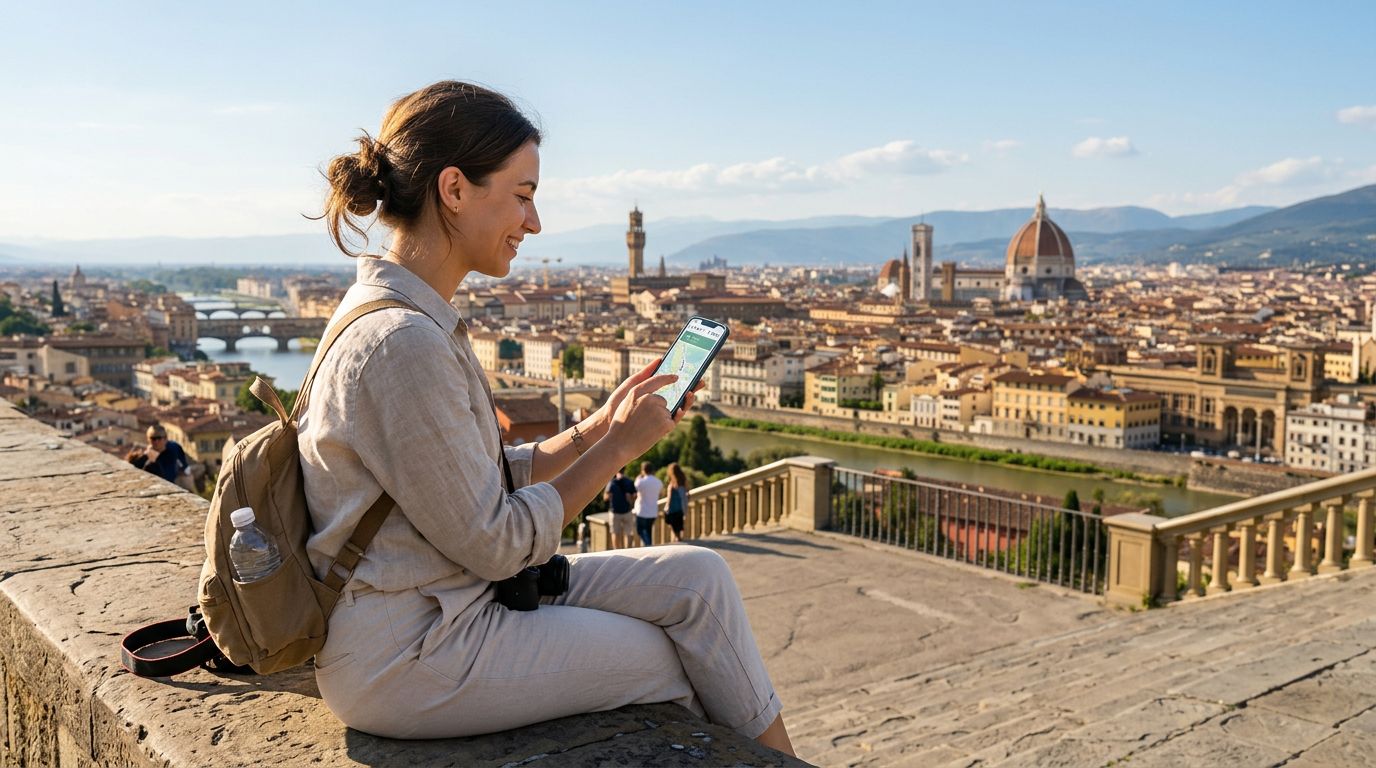
Navigation is often the highest data consumer for travelers. While Google Maps is an invaluable tool for finding your way, you can significantly reduce your data usage by downloading offline maps. Before leaving your accommodation, download the map of the city or region you plan to visit that day. This allows you to search for locations and get directions without relying on a constant cellular connection.
Streaming services are another major culprit. If you plan on listening to music or podcasts during long train rides between cities, download your content beforehand. Most streaming platforms offer an offline mode that allows you to enjoy your media without burning through your mobile data. By shifting from a streaming-first mindset to a pre-downloading approach, you can stretch your data much further.
Leveraging Modern eSIM Technology
When traditional roaming options become complicated or expensive, many travelers turn to eSIM technology as a more flexible alternative. An eSIM allows you to activate a local data plan directly on your device without the need to swap physical SIM cards. This is particularly useful in Italy, where you can maintain your primary number for calls and texts while using a dedicated data plan for your internet needs.
OneTapSIM provides a streamlined way to manage this process. By selecting a data plan tailored to the duration of your trip, you gain the freedom to use your phone as you would at home, without the anxiety of roaming fees. Because the eSIM is digital, you can set it up before you even leave your home country, ensuring that you have a connection the moment you step off the plane.
The beauty of using an eSIM for managing mobile data usage in Italy lies in the control it provides. You can easily monitor your usage through your device settings, allowing you to see exactly which apps are consuming the most data. If you find yourself approaching your limit, you can adjust your usage habits in real time. This transparency is a significant advantage over traditional roaming, where usage data is often delayed and billing is opaque.
Furthermore, using a dedicated travel data plan reduces the strain on your primary carrier’s infrastructure. You can designate your eSIM as your primary source for cellular data while keeping your home SIM active only for essential voice calls or SMS verification codes. This separation of services ensures that you are never completely cut off from your home contacts while enjoying the convenience of high-speed local data.
Best Practices for Public and Private Networks
While having a personal mobile data plan is the most reliable way to stay connected, you will likely encounter various Wi-Fi networks throughout your trip. Knowing how to integrate these into your data management strategy is key.
When you are at your hotel or a reputable cafe, using Wi-Fi is a great way to save your mobile data for when you are on the move. However, always prioritize security. Avoid accessing sensitive accounts, such as online banking or private email, while connected to open public Wi-Fi. If you must use these services, ensure you are using a secure connection or your mobile data.
It is also helpful to keep an eye on your device's data usage statistics throughout your trip. Most smartphones provide a breakdown of data consumption by app. Checking this once every few days allows you to identify if a specific application is behaving unexpectedly. For instance, if you notice a photo-sharing app has consumed a large amount of data, you can adjust its settings to prevent it from uploading high-resolution images until you are back on a secure Wi-Fi connection.
Remember that Italy is a country meant to be experienced in person. While staying connected is important for logistics, translation, and sharing memories, try to balance your screen time with the reality of your surroundings. By setting up your device correctly, opting for an efficient data solution like OneTapSIM, and being mindful of your habits, you can enjoy a seamless travel experience. Whether you are navigating the historic streets of Rome or relaxing on the coast, you will have the peace of mind that comes with reliable connectivity and total control over your digital footprint.