Connectivity Options for Travelers in Nicaragua
Planning a trip to Nicaragua often involves balancing the desire for off-the-grid adventure with the practical need to stay connected. Whether you are planning to surf the breaks in San Juan del Sur, hike the volcanoes near León, or explore the colonial architecture of Granada, having reliable internet access is essential for maps, translation apps, and keeping in touch with family.
Many travelers wonder, does eSIM work in Nicaragua? The short answer is yes. eSIM technology is fully functional in the country, provided your device is compatible and unlocked. Unlike traditional physical SIM cards that require you to visit a local kiosk, present your passport, and swap out tiny plastic chips, an eSIM allows you to activate a mobile data plan digitally. This is particularly useful in a country where finding a reliable mobile shop in remote areas can be challenging.
When you arrive in Nicaragua, you have a few ways to manage your connectivity. You can purchase a local physical SIM card from a provider, rely on hotel Wi-Fi, or opt for an eSIM. For many modern travelers, the eSIM has become the preferred choice because it allows you to maintain your primary phone number for calls and texts while using a dedicated data plan for your travels. This dual-SIM capability ensures that you do not miss important messages from home while enjoying high-speed data on the ground.
How to Check Your Device Compatibility
Before you commit to a digital plan, you must ensure your smartphone supports eSIM technology. Most flagship smartphones released within the last several years are equipped with an eSIM chip. If you are using an iPhone or a recent Android device, you likely have this capability.
To verify if your iPhone is ready, you can check the settings menu under the cellular or mobile data section. If you see an option to "Add eSIM" or "Add Cellular Plan," your device is compatible. Similarly, Android users can check their network or connection settings to see if there is an option to add a SIM profile. It is also important to ensure your phone is carrier-unlocked. If your device is locked to a specific home carrier, it will not accept an eSIM from a third-party provider, regardless of its technical capability.
If you are unsure about your specific model, you can consult the official support pages for Apple or Google to see a list of compatible devices. Once you confirm that your phone is unlocked and supports eSIM, you are ready to proceed with selecting a data plan. Using a service like OneTapSIM allows you to manage this process before you even board your flight, ensuring that you have a connection the moment your wheels touch down in Managua.
Advantages of Using an eSIM in Nicaragua
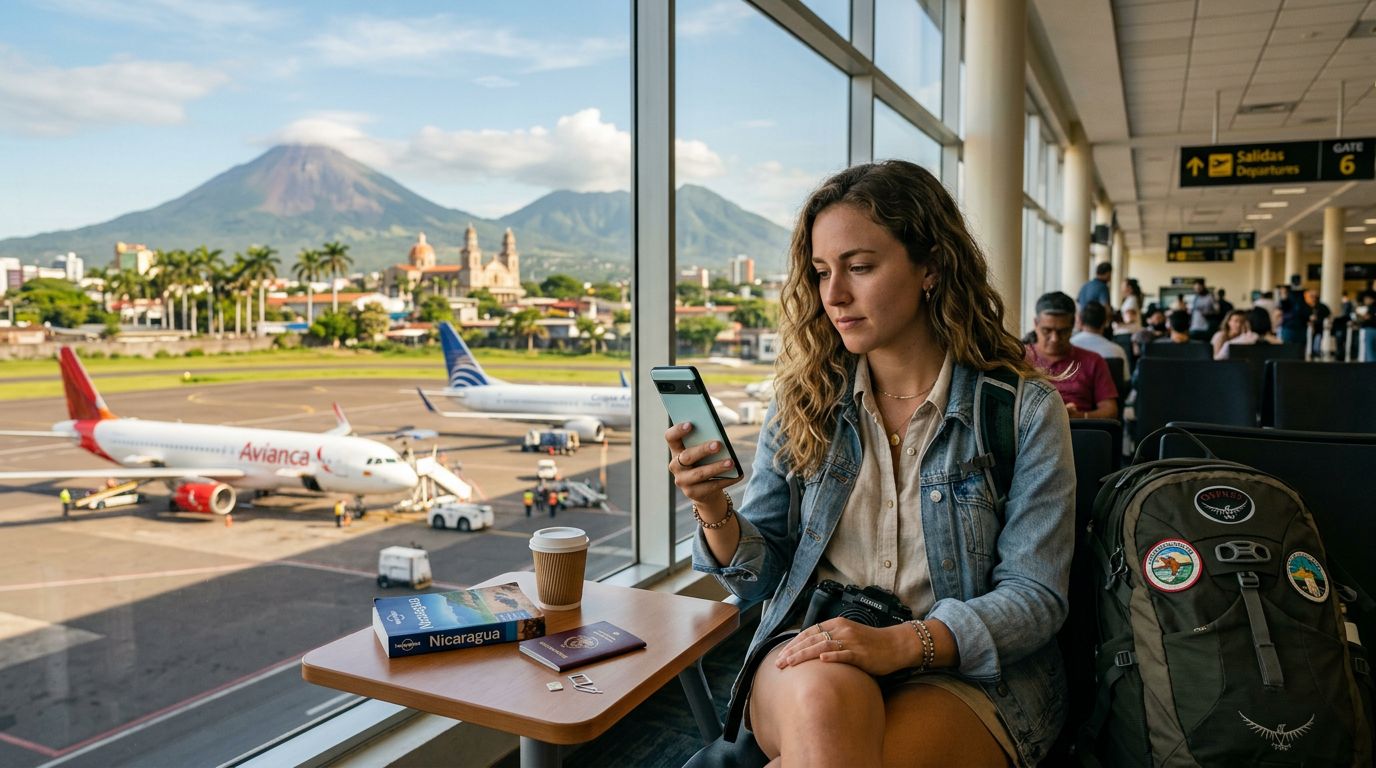
The primary benefit of using an eSIM in Nicaragua is convenience. When you land at Augusto C. Sandino International Airport, you often face long lines at customs and immigration. The last thing you want to do is spend additional time searching for a mobile provider booth, waiting for a clerk to register a physical SIM card, and fumbling with a paperclip to eject your existing SIM tray.
With an eSIM, you can purchase and install your plan before you leave home. As soon as you land, your phone will automatically switch to the local network partner, providing you with data access immediately. This is invaluable for calling an airport taxi, checking your accommodation address, or looking up directions to your first destination.
Another significant advantage is security. By using a reputable eSIM provider, you avoid the need to handle physical SIM cards, which are easy to lose or damage. Furthermore, you do not have to hand over your personal identification documents to third-party vendors at a local kiosk. Your data usage is managed through your device, and you can easily monitor your consumption to ensure you do not run out of data during your trip.
Reliability is also a key factor. While Nicaragua has made significant strides in mobile infrastructure, coverage can vary between urban centers and rural regions. eSIM providers typically partner with multiple local carriers, which often gives you a more stable connection than if you were restricted to a single local network. If one network signal is weak in a remote area, your device is often better equipped to maintain a connection through the roaming agreements established by your eSIM provider.
Tips for Managing Your Data While Traveling
Once you have your eSIM set up, managing your data usage will help you stay connected throughout your entire trip. Even with a generous data plan, it is wise to be mindful of how your apps consume bandwidth. For instance, high-definition video streaming and automatic cloud backups are the biggest culprits for rapid data depletion.
To maximize your plan, adjust your phone settings to restrict background data usage for non-essential apps. You can also download offline maps for the specific regions of Nicaragua you plan to visit. Google Maps allows you to save large areas for offline use, which is a lifesaver when you are traveling through the mountainous regions of the north or the dense forests of the Caribbean coast where cellular signals might be intermittent.
If you find yourself running low on data, many providers allow you to top up your plan remotely through their website or app. This flexibility means you are never truly disconnected. Whether you are navigating the streets of Managua or relaxing on a beach in the Corn Islands, having a reliable data connection through an eSIM ensures that you can focus on your journey rather than worrying about your technical setup. By preparing your device ahead of time, you can enjoy the vibrant culture, stunning landscapes, and rich history of Nicaragua with the peace of mind that comes from being reliably connected.
Get an eSIM for
Plans for the destinations covered in this guide, with instant QR delivery.