Understanding eSIM Technology for Your Kenyan Adventure
Traveling to Kenya offers a wealth of experiences, from the sprawling savannahs of the Maasai Mara to the bustling, vibrant streets of Nairobi. As you prepare for your journey, ensuring reliable mobile connectivity is a top priority. Many travelers ask, "does eSIM work in Kenya?" The answer is a resounding yes. eSIM technology has become the standard for modern international travel, allowing you to stay connected without the hassle of physical SIM cards.
An eSIM, or embedded SIM, is a digital version of the traditional plastic card you are likely accustomed to. Because it is built directly into the hardware of your smartphone, it eliminates the need to open your device’s SIM tray or risk losing a tiny piece of plastic while in transit. For travelers visiting Kenya, this means you can switch to a local network profile as soon as you land, ensuring your GPS, messaging apps, and translation tools are ready to go the moment you step off the plane.
Kenya has a robust telecommunications infrastructure, and major local providers support eSIM functionality. By choosing a service like OneTapSIM, you can pre-configure your connectivity before you even leave home. This preparation ensures that you are not searching for a kiosk at the airport or struggling with language barriers when trying to purchase a physical card. Instead, you arrive with a digital profile ready to activate, providing a seamless transition from your home network to a reliable local connection.
Why eSIM is the Preferred Choice for Kenya Travel
The traditional method of acquiring a SIM card in a foreign country often involves long queues at airport kiosks, the need to provide physical identification documents, and the inconvenience of swapping out your primary SIM card. If you lose your home SIM card during this process, it can lead to significant stress and potential security risks. Using an eSIM removes these obstacles entirely.
When you use OneTapSIM, you maintain your primary number for essential services like banking alerts or two-factor authentication, while the eSIM handles your data needs. This dual-SIM capability is a significant advantage for travelers. You can keep your home line active for incoming calls or SMS if necessary, while your data-heavy tasks—such as uploading photos of your safari or checking maps—are routed through the local Kenyan network via your eSIM.
Furthermore, the environmental impact of eSIMs is worth noting. By moving away from plastic cards and the packaging required to distribute them, you are making a more sustainable choice for your travels. The digital nature of the product also means that if your travel plans change or you decide to extend your stay, you can manage your connectivity settings directly from your device. This flexibility is essential when moving between different regions in Kenya, where network coverage can vary, and having a reliable data source is the difference between a smooth trip and a logistical headache.
How to Check Your Device Compatibility
Before you finalize your travel plans, it is important to verify that your smartphone supports eSIM technology. Most flagship devices released in the last few years are compatible, but it is always best to check your specific model. You can verify this by visiting the official support pages for your device manufacturer, such as the resources provided by Apple or Google.
To check on an iPhone, navigate to your settings menu and look for the "Cellular" or "Mobile Data" section. If you see an option to "Add eSIM" or "Add Cellular Plan," your device is ready to go. On Android devices, the process is similar; look under "Network & Internet" or "Connections" to find the SIM manager settings. If your device is unlocked and eSIM-compatible, you are ready to set up your OneTapSIM profile.
Once you have confirmed compatibility, the setup process is straightforward. You will typically receive a QR code or a set of activation details. By scanning this code or entering the information manually, your phone will download the necessary network credentials. This process does not require a physical connection to a local tower until you arrive in Kenya. Once you land in Nairobi, Mombasa, or any other destination, you simply toggle your eSIM line to "On" in your settings, and your device will automatically connect to the local network.
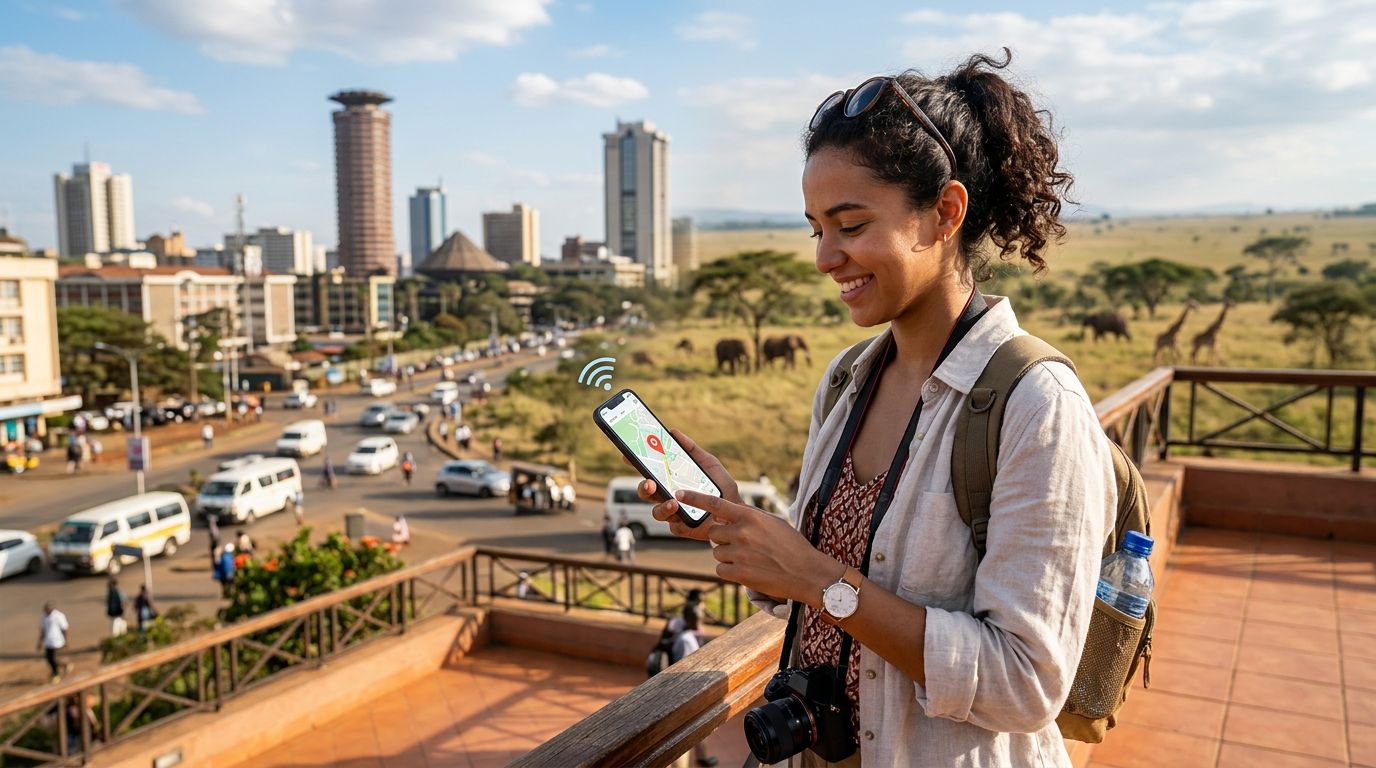
This level of control puts the power of connectivity in your hands. Whether you are navigating the urban landscape of Nairobi or exploring the remote wilderness, having a pre-configured eSIM ensures that you are never left without a map or a way to reach out to your contacts. By planning ahead and choosing a reliable provider, you can focus on the sights and sounds of Kenya rather than worrying about your mobile data status. As you finalize your itinerary, remember that a stable internet connection is the foundation of a modern, stress-free travel experience.
Get an eSIM for
Plans for the destinations covered in this guide, with instant QR delivery.