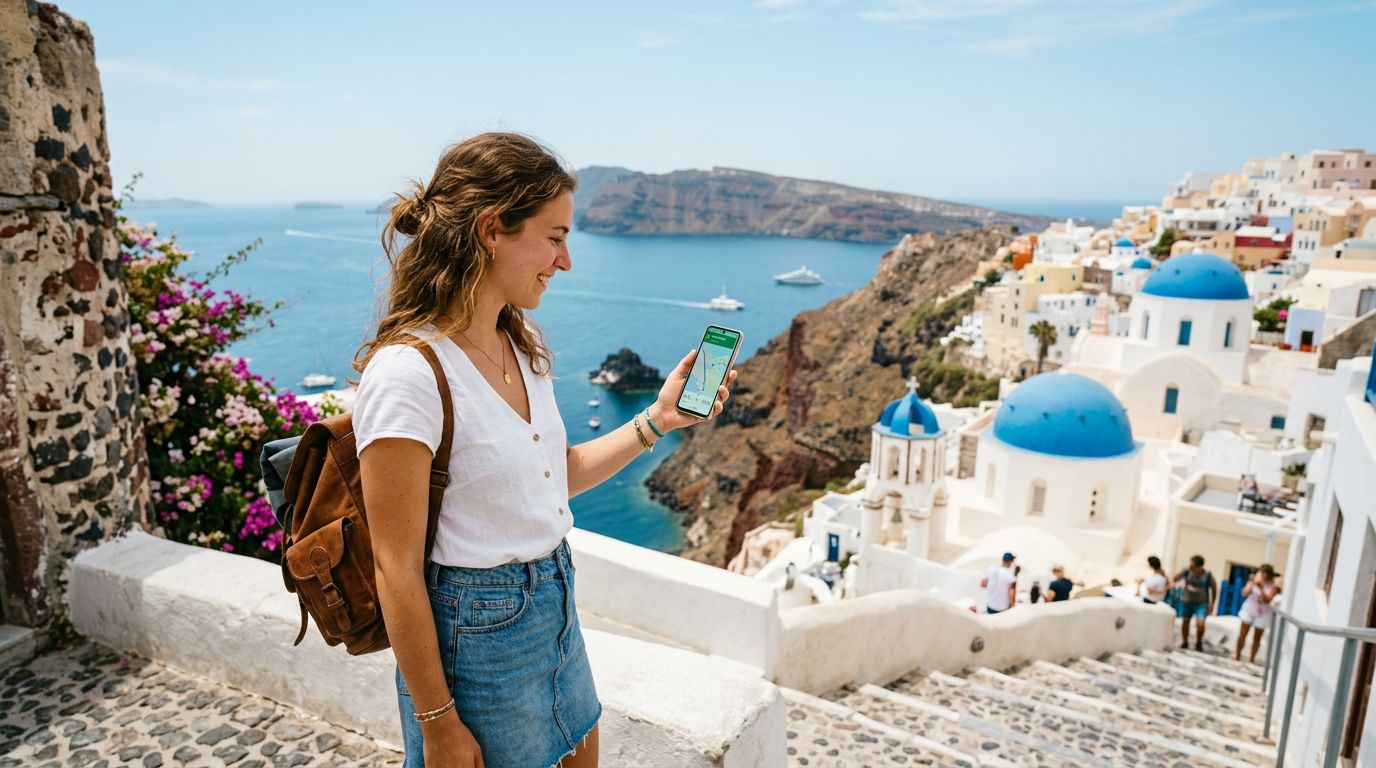
Understanding eSIM Technology for Your Greek Getaway
Planning a trip to Greece involves balancing the excitement of visiting ancient ruins, island hopping in the Cyclades, and enjoying Mediterranean cuisine with the practical necessity of staying connected. Travelers often wonder about the most efficient way to access mobile data while abroad. The short answer to the question "does eSIM work in Greece?" is a definitive yes. Greece has a robust digital infrastructure, and its major telecommunications providers fully support eSIM technology.
An eSIM, or embedded SIM, is a digital version of the traditional physical SIM card. Instead of inserting a small plastic chip into your device, you download a digital profile that activates your mobile data plan. This technology is becoming the standard for international travelers because it eliminates the need to visit a local store upon arrival or deal with the risk of losing a tiny physical card.
For most modern smartphones, the process is seamless. As long as your device is carrier-unlocked and eSIM-compatible, you can switch between your home provider and a local Greek data plan with just a few taps in your settings. This allows you to keep your primary number active for essential calls or texts while using a dedicated data eSIM for maps, translation apps, and social media updates.
Why eSIMs Are the Preferred Choice for Greece Travel
The primary advantage of using an eSIM in Greece is convenience. When you land at Athens International Airport or arrive at a ferry terminal, you do not want to spend your valuable vacation time hunting for a mobile shop or waiting in line to purchase a physical SIM card. With an eSIM, you can manage your connectivity from your hotel room or even while waiting for your luggage.
Another significant benefit is the ability to maintain dual connectivity. Many travelers worry that by switching SIM cards, they will lose access to their primary phone number, which is often linked to banking apps, two-factor authentication, or important work contacts. With an eSIM, you can keep your physical SIM card inside your phone for calls and SMS, while designating the eSIM as your primary source for mobile data. This setup ensures you stay reachable for emergencies while enjoying high-speed internet throughout your travels.
Reliability is also a key factor. When you choose a reputable provider like OneTapSIM, you are essentially tapping into the same high-quality local networks that residents use. Whether you are exploring the narrow streets of Plaka, hiking in the mountains of Crete, or relaxing on a beach in Santorini, you can expect consistent coverage. Because OneTapSIM partners with established infrastructure providers, you avoid the common pitfalls of public Wi-Fi, such as slow speeds, limited range, and potential security vulnerabilities.
Finally, managing your data usage becomes much easier. You can track your consumption directly through your phone’s settings, ensuring you do not run out of data at an inconvenient moment. If you find yourself using more data than expected, adding a new plan is a straightforward process that does not require physical hardware changes.
How to Set Up and Use Your eSIM in Greece
Before you depart, it is important to confirm that your device is compatible. Most smartphones released in the last few years support eSIM functionality. You can verify this by checking your phone’s settings menu under the cellular or mobile data section. If you see an option to "Add eSIM" or "Add Cellular Plan," your device is ready to go.
The setup process typically involves scanning a QR code or entering details provided by your eSIM service. With OneTapSIM, the process is streamlined to ensure you can get online as quickly as possible. Once you purchase your plan, you will receive instructions on how to install the profile. It is generally recommended to install the eSIM while you are still at home or connected to a stable Wi-Fi network. This way, the moment you land in Greece, you can simply toggle the eSIM on in your settings and begin using data immediately.
When you arrive in Greece, your phone will automatically search for the local network partner associated with your eSIM. If it does not connect instantly, you may need to ensure that "Data Roaming" is toggled on for the eSIM profile. Do not worry—this will not incur extra charges from your home carrier, as the eSIM acts as a local data connection.
It is also worth noting that battery life can be impacted by constant network searching. If you are traveling to remote islands or rural areas where signal strength might fluctuate, your phone may use more power to maintain a connection. To optimize your battery, you can turn off background app refresh for non-essential applications and download offline maps for the areas you plan to visit.
By opting for an eSIM, you are choosing a modern, efficient, and reliable way to stay connected. It removes the friction of international travel, allowing you to focus on the beauty and history of Greece rather than the logistics of your mobile connection. Whether you are navigating the metro in Athens or looking up ferry schedules for the Aegean, having reliable data at your fingertips makes for a much smoother and more enjoyable travel experience.
Get an eSIM for
Plans for the destinations covered in this guide, with instant QR delivery.