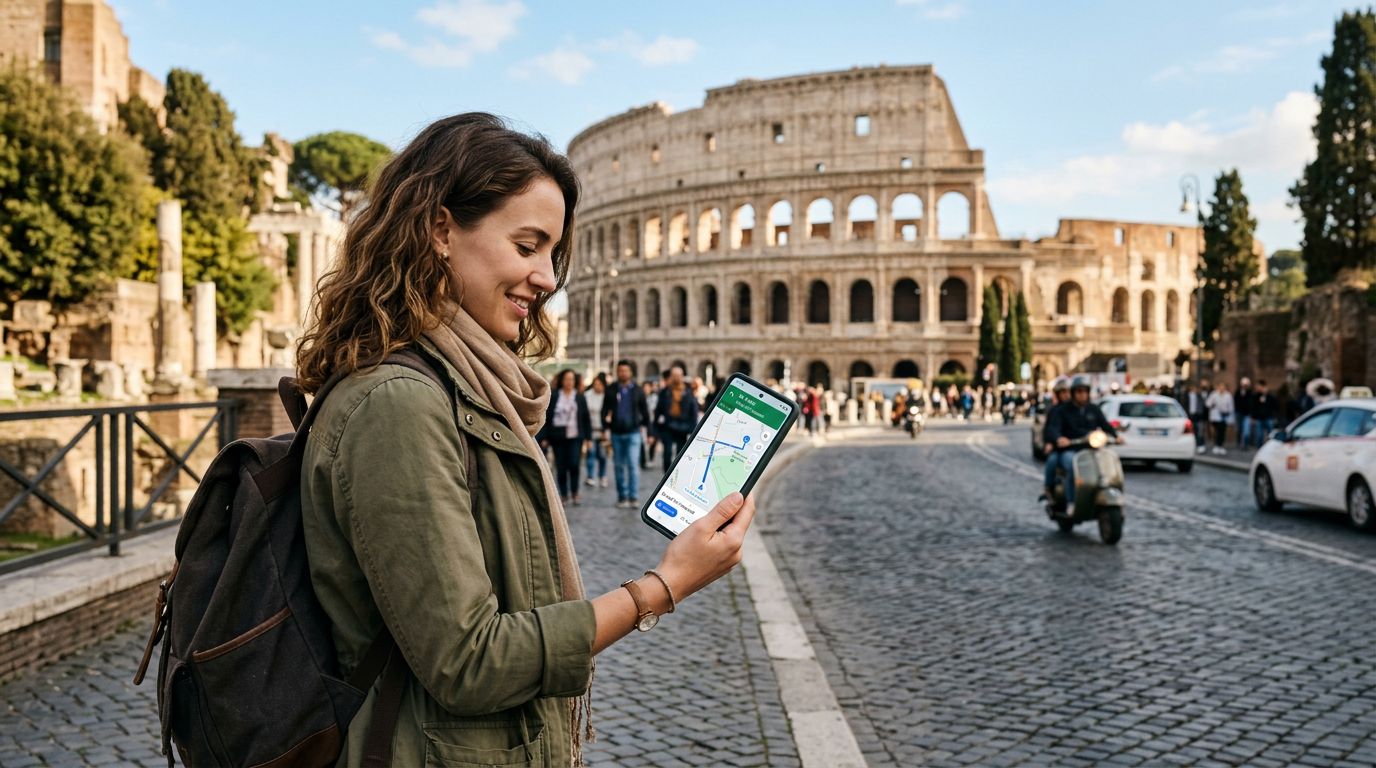
Understanding How GPS Works on Your Smartphone
When you travel to a new city, the ability to pull up a map and find your way to a hidden cafe or a historic landmark is essential. A common question travelers ask is, "can I use GPS with an eSIM?" To understand the answer, it is important to distinguish between cellular data and GPS technology.
GPS, which stands for Global Positioning System, relies on a network of satellites orbiting the Earth. Your smartphone contains a dedicated GPS receiver chip that communicates directly with these satellites to determine your precise coordinates. This process happens independently of your cellular network. Because your phone’s internal hardware handles the satellite communication, you do not need a physical SIM card or even a cellular signal to receive location data from the sky.
However, while your phone can "see" where you are on the globe without a network connection, the maps themselves are a different story. If you open a navigation app without any data connection, you might see a blue dot floating on a blank grid. To see the roads, traffic updates, transit lines, and business details, your phone needs to download map data from the internet. This is where an eSIM becomes a vital travel companion. By providing a reliable data connection, your eSIM ensures that your navigation apps have the information they need to display the world around you in real-time.
The Role of eSIMs in Seamless Navigation
An eSIM provides the cellular data necessary to bridge the gap between your phone’s raw GPS coordinates and the visual interface of your maps application. When you use a service like OneTapSIM, you are essentially ensuring that your device stays connected to local networks as you move through different countries.
Without an active data plan, you are forced to rely on pre-downloaded offline maps. While offline maps are a useful backup, they lack the dynamic features that make travel convenient. For example, offline maps cannot show you live traffic jams, road closures, or accidents that might delay your journey. They also struggle to provide real-time updates for public transportation schedules, which are frequently subject to change.
With an eSIM, your device downloads map tiles, business reviews, and traffic data on the fly. This allows you to search for "restaurants near me" or "fastest route to the airport" and receive results that reflect the current situation on the ground. Because OneTapSIM offers a streamlined activation process, you can land at your destination, activate your data plan, and have full navigation capabilities before you even leave the airport terminal. This eliminates the stress of trying to find a public Wi-Fi hotspot just to look up the address of your hotel or a ride-sharing pickup point.
Optimizing Your Device for Travel Navigation
To ensure your navigation experience is as smooth as possible, there are a few settings and habits you should adopt when using an eSIM for travel. First, ensure that your location services are toggled on for your specific navigation apps. You can check these settings in your phone’s privacy menu to ensure that apps like Google Maps or Apple Maps have permission to access your location while you are using them.
Battery management is another critical factor. Using GPS, combined with a high-brightness screen and constant data usage, can drain your battery faster than normal usage. To mitigate this, consider carrying a portable power bank. Additionally, if you are in an area with a weak cellular signal, your phone may work harder to maintain a connection, which also consumes extra power. By using a reputable eSIM provider, you increase the likelihood of maintaining a stable connection, which can actually help your phone manage its battery life more efficiently by reducing the need for the device to constantly hunt for a signal.
If you are worried about data consumption, most modern navigation apps allow you to adjust your settings to be more efficient. You can choose to download specific regions for offline use while you are connected to a stable Wi-Fi network at your hotel. This way, you use your eSIM data primarily for live updates, such as traffic rerouting or searching for new destinations, rather than downloading the entire map of a city. This hybrid approach—combining the reliability of an eSIM for live data with the efficiency of offline maps—is the gold standard for modern travelers.
Finally, remember that your eSIM is a digital tool that works alongside your phone’s hardware. As long as your device is compatible with eSIM technology, you can enjoy the same high-quality navigation performance you are used to at home. Whether you are walking through the winding streets of a historic European capital or driving through a sprawling metropolis, having a consistent data connection through OneTapSIM ensures that your GPS coordinates are always matched with the most accurate, up-to-date map information available. By preparing your device before you depart, you can focus on the journey ahead rather than worrying about getting lost in an unfamiliar place.
Get an eSIM for
Plans for the destinations covered in this guide, with instant QR delivery.