Choosing Your Connectivity Strategy in Vietnam
Vietnam is a country of incredible contrasts, where bustling metropolises like Ho Chi Minh City blend seamlessly with the serene landscapes of Sapa and the limestone karsts of Ha Long Bay. Whether you are planning to navigate the winding streets of Hanoi, book a Grab ride to a local night market, or share your travel photos on social media, having a reliable internet connection is essential.
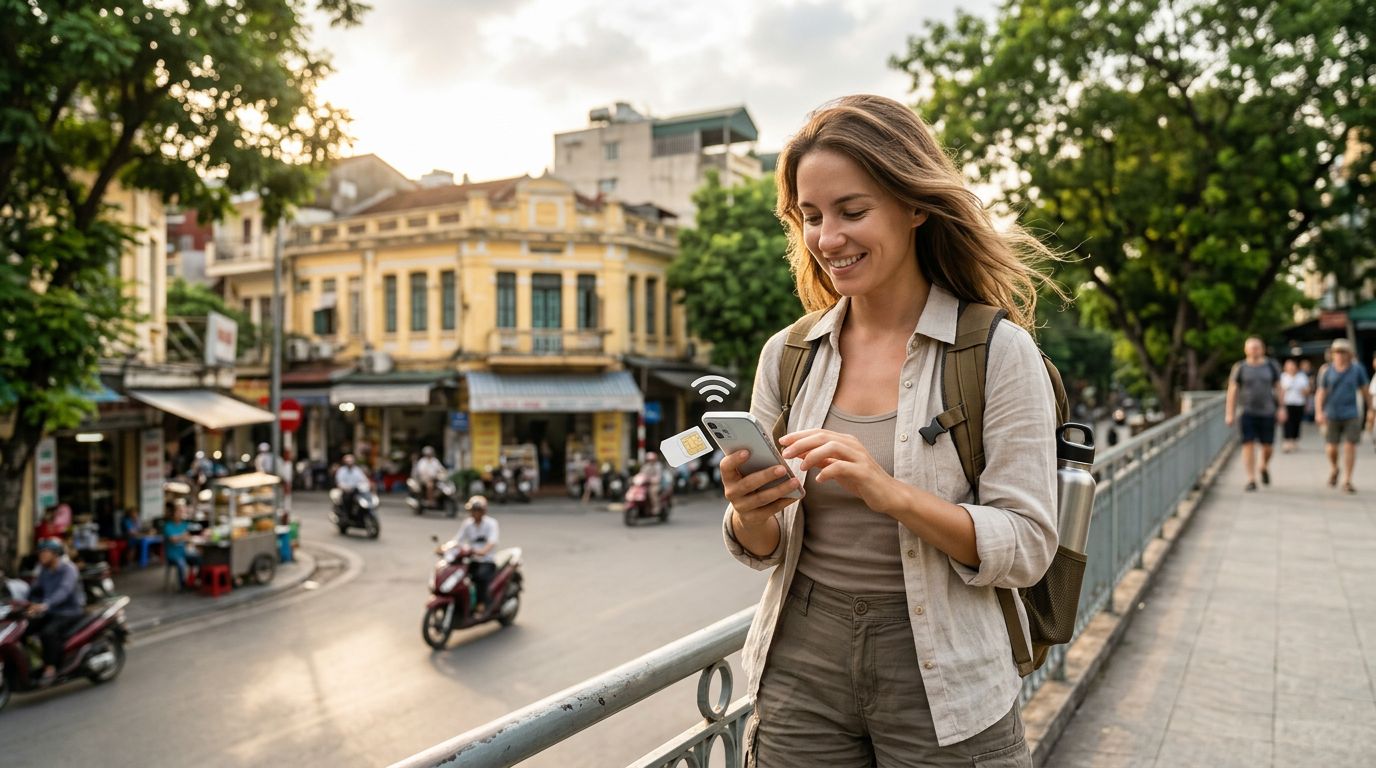
Many travelers find themselves wondering about the best way to get data in Vietnam. Historically, this meant hunting for a physical SIM card kiosk at the airport, waiting in long lines, and dealing with language barriers while trying to register a local number. While physical SIM cards remain an option, they are no longer the most efficient choice for modern travelers. The rise of eSIM technology has transformed how we stay connected abroad, allowing you to manage your data without the need to swap out fragile plastic cards or worry about losing your original home SIM.
Understanding your options is the first step toward a stress-free trip. From local physical SIMs and pocket Wi-Fi devices to the seamless convenience of an eSIM, each method comes with its own set of trade-offs. By evaluating your data usage habits and the length of your stay, you can select the connectivity solution that keeps you online without unnecessary complications.
The Advantages of eSIM Technology
An eSIM, or embedded SIM, is a digital version of a traditional SIM card. It is built directly into the hardware of your smartphone, meaning you do not need to insert a physical chip to access a cellular network. This technology has become the standard for international travel because it eliminates the need to visit a physical store upon arrival.
The primary benefit of using an eSIM is convenience. You can purchase and install your data plan before you even board your flight. Once you land at Tan Son Nhat or Noi Bai International Airport, your phone will automatically connect to a local network, allowing you to call a ride or check your hotel reservation immediately. This is particularly helpful if you arrive late at night or during peak hours when airport kiosks are crowded or closed.
Another significant advantage is the ability to keep your home number active. With a physical SIM, you often have to remove your primary card, which means you cannot receive important SMS verification codes or calls from home. With an eSIM, you can keep your home SIM as your primary line for calls and texts while dedicating your eSIM to data. OneTapSIM offers a streamlined experience for travelers who want to avoid the hassle of physical cards, ensuring that your device is ready for the local network the moment you touch down.
To use an eSIM, your device must be carrier-unlocked and compatible with the technology. Most modern smartphones released in recent years support eSIM functionality. You can verify your device’s compatibility through official manufacturer resources or by checking your phone’s cellular settings menu.
Practical Tips for Staying Connected
Once you have secured your data plan, managing your usage is key to ensuring you stay connected throughout your entire trip. Vietnam has excellent 4G and 5G coverage in urban centers, but signal strength can fluctuate in remote mountainous regions or deep in the countryside.
To maximize your data, consider downloading offline maps for the cities you plan to visit. Navigation apps are incredibly useful for exploring Vietnam’s labyrinthine alleyways, but streaming map data constantly can consume a significant amount of your allowance. Similarly, adjust your phone’s settings to restrict background data usage for apps that do not require constant updates. This ensures that your data is reserved for essential tasks like messaging, translation, and booking transportation.
If you find yourself in a situation where you need to share your connection, remember that mobile hotspots can be a major data drain. If you are traveling with a companion, it is often more cost-effective and reliable for each person to have their own eSIM plan rather than tethering multiple devices to one phone.
Public Wi-Fi is widely available in cafes, restaurants, and hotels throughout Vietnam. While it is tempting to rely solely on these networks, they are not always secure. Using an eSIM provides a private and secure connection, protecting your personal information from potential risks associated with open public networks. If you must use public Wi-Fi, consider using a virtual private network for an added layer of security.
Finally, keep an eye on your data consumption through your phone’s built-in usage tracker. Most smartphones provide a detailed breakdown of which apps are using the most data. If you notice you are running low, you can often add a top-up or purchase a secondary plan through your provider’s interface. By preparing your connectivity strategy in advance, you can focus on the sights, sounds, and flavors of Vietnam rather than worrying about your signal. Whether you are trekking through the northern highlands or relaxing on the beaches of Da Nang, having a reliable data plan ensures you are never truly lost and always able to share your experiences with those back home.
Get an eSIM for
Plans for the destinations covered in this guide, with instant QR delivery.