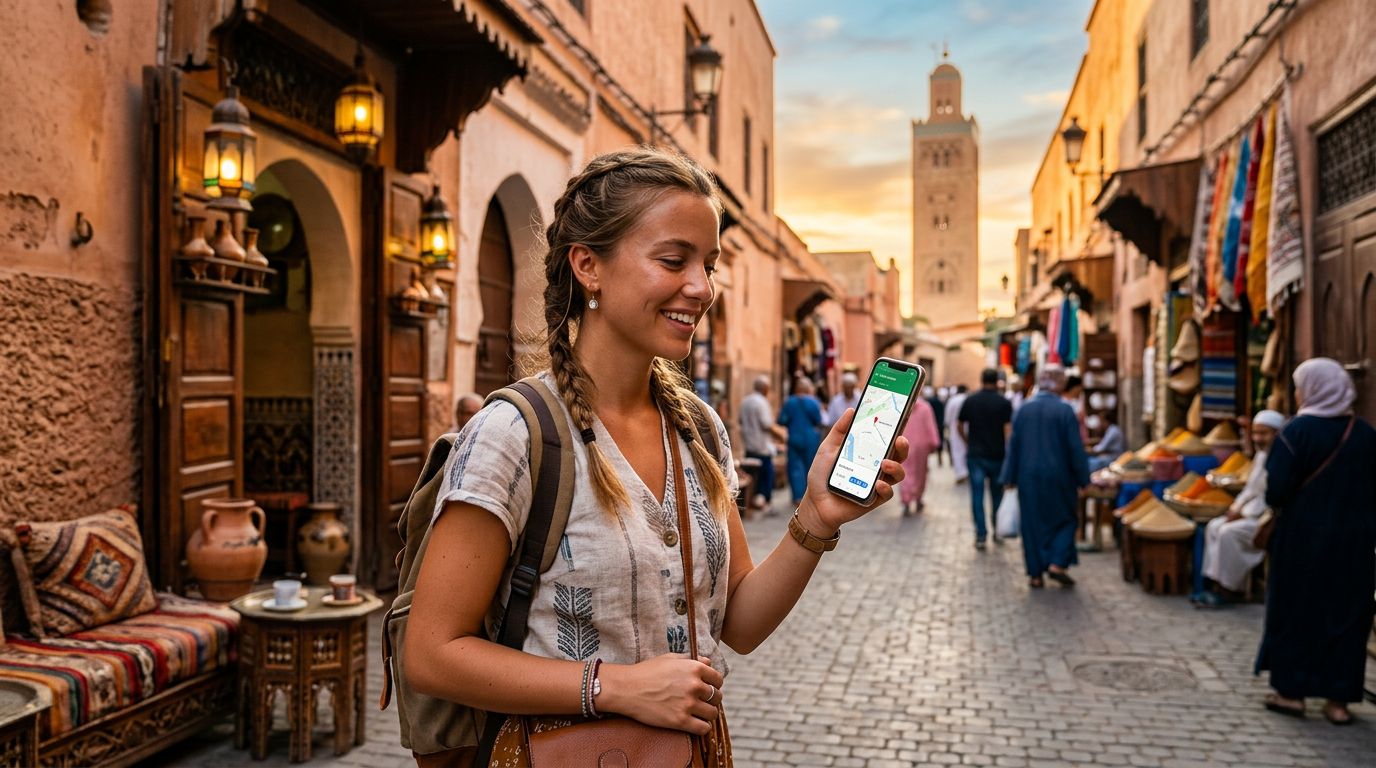
Morocco is a land of stunning contrasts, from the snow-capped Atlas Mountains to the golden dunes of the Sahara and the vibrant, labyrinthine medinas of Marrakech and Fes. Whether you are planning to get lost in the blue streets of Chefchaouen or seeking the perfect photo opportunity at the Hassan II Mosque in Casablanca, having reliable internet access is essential. Staying connected allows you to use navigation apps, translate local phrases, manage your travel bookings, and share your experiences with friends and family back home.
Many travelers find themselves overwhelmed by the options for mobile connectivity when arriving in a new country. Should you rely on hotel Wi-Fi, hunt for a local SIM card at the airport, or choose a more seamless digital solution? Finding the best way to get data in Morocco requires balancing convenience, reliability, and cost-effectiveness.
Evaluating Your Connectivity Options
When you arrive in Morocco, you will encounter several ways to stay online. The most traditional method involves purchasing a physical SIM card from a local carrier. You can usually find kiosks at major airports like Mohammed V International Airport or in city centers. This process often involves waiting in lines, showing your passport for registration, and manually swapping out your home SIM card—a tiny piece of plastic that is remarkably easy to lose.
Public Wi-Fi is another option, though it is rarely a reliable primary source of data. While many cafes, riads, and hotels offer complimentary internet, the connection speeds can be inconsistent, and security is often a concern. Relying on public networks makes it difficult to access sensitive information like banking apps or private emails. Furthermore, once you step out of your accommodation or a specific cafe, you are effectively offline, which can be problematic if you are trying to navigate the winding, narrow alleyways of an old medina.
Roaming with your home mobile provider is theoretically the easiest option, as it requires no setup. However, it is frequently the most expensive choice. Many domestic carriers charge high daily rates for international roaming, and some may throttle your data speeds once you hit a certain threshold. Before relying on this, it is vital to check your home provider’s specific terms, as you might return home to a surprisingly large bill.
The Advantages of eSIM Technology
The emergence of eSIM technology has fundamentally changed how travelers approach connectivity. An eSIM is a digital SIM card that is embedded directly into your smartphone’s hardware. Instead of physically inserting a chip, you simply download a profile that connects you to local networks. This removes the need to carry extra hardware or visit a physical store upon arrival.
For most modern smartphones, the process is straightforward. You can purchase your data plan before you even leave your home country. Once you land in Morocco, you simply activate the eSIM profile in your phone settings. Because the eSIM functions as a secondary line, you can keep your home number active for calls or texts while using the eSIM specifically for data. This is the best way to get data in Morocco for those who value efficiency and want to start exploring the moment they step off the plane.
OneTapSIM offers a streamlined experience for travelers who want to avoid the hassle of local registration processes. By opting for a digital solution, you bypass the language barriers and administrative hurdles that sometimes accompany buying a physical card in a foreign country. You maintain full control over your data usage, and because the process is entirely digital, there is no risk of damaging your phone’s SIM tray or misplacing your original card.
Tips for a Seamless Experience
To ensure your journey through Morocco remains stress-free, there are a few technical steps to keep in mind. First, verify that your device is unlocked. If your phone is locked to a specific carrier, it will not be able to accept an eSIM from a different provider. You can usually check this in your phone’s settings or by contacting your home service provider. If you are unsure about your device's compatibility, you can find helpful documentation on the support pages for your specific device manufacturer.
Once you have your eSIM ready, manage your data settings to avoid unexpected consumption. For instance, you can set your phone to use the eSIM strictly for cellular data while keeping your primary SIM for voice and SMS. This prevents your home carrier from accidentally triggering expensive roaming charges for background data usage. It is also a good practice to download offline maps for the cities you plan to visit. While a reliable data connection is excellent, having a backup map ensures you can always find your way back to your accommodation, even in areas with spotty reception.
Battery management is another factor to consider. Using GPS and data-heavy applications will drain your battery faster than normal usage. Carrying a portable power bank is a smart addition to your travel gear, especially if you are spending long days touring the desert or mountain regions where power outlets are not readily available.
Ultimately, the best way to get data in Morocco is the one that allows you to focus on the experience rather than the logistics. By preparing your connectivity solution in advance, you ensure that you are never left guessing which direction to take in a souk or struggling to call a taxi. Whether you are capturing the sunset over the dunes or navigating the bustling markets of Marrakech, having a stable, reliable internet connection allows you to travel with confidence and peace of mind. With the right preparation, you can spend less time worrying about your signal and more time enjoying the rich culture and breathtaking landscapes that make Morocco such an unforgettable destination.
Get an eSIM for
Plans for the destinations covered in this guide, with instant QR delivery.