Fiji is a breathtaking archipelago known for its turquoise waters, lush rainforests, and vibrant coral reefs. Whether you are planning a trip to the bustling streets of Nadi, the resort-heavy Denarau Island, or the remote beauty of the Yasawa Islands, getting around requires a bit of preparation. While the islands offer a laid-back pace of life, the geography—scattered across hundreds of miles of ocean—makes reliable navigation essential.
To make the most of your island-hopping adventure, you need a combination of digital tools that can handle both land and water. Relying on paper maps or local signage alone is rarely sufficient, especially when you are trying to catch a ferry or find a hidden waterfall. By securing a stable data connection through OneTapSIM before you land, you ensure that these navigation tools are always ready to assist you the moment you step off the plane.
Essential Mapping Tools for Land Travel
When you are exploring the main islands of Viti Levu or Vanua Levu, standard mapping applications are your best friends. These tools help you locate rental car agencies, public bus stops, and local eateries.
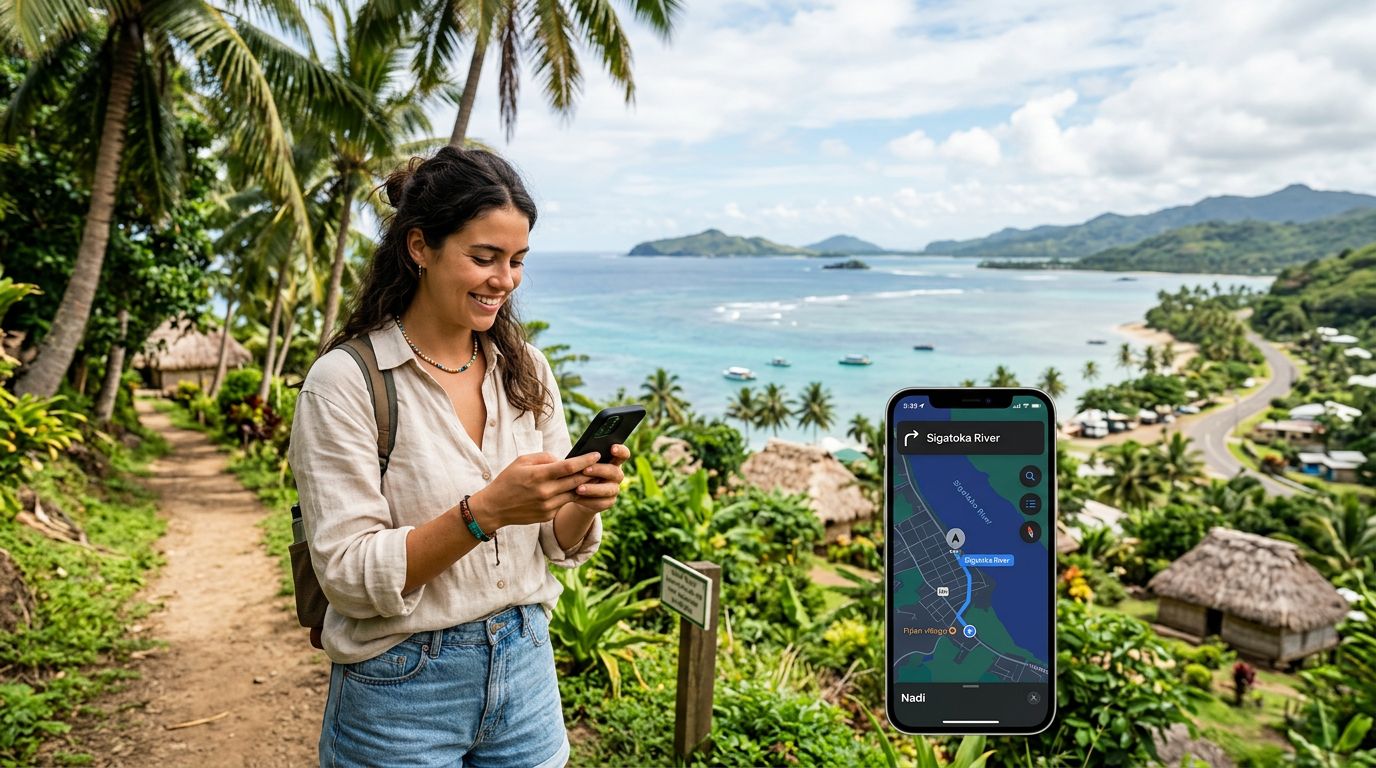
Google Maps remains the industry standard for land navigation in Fiji. It provides comprehensive coverage of the main road networks, including the Queens Road and Kings Road that circle the largest island. One of the most useful features of this application is the ability to download offline maps. While you should always aim to have a consistent data connection via an eSIM for real-time traffic updates and search capabilities, having an offline backup ensures you are never stranded if you venture into the mountainous interior where cell signals might fluctuate.
In addition to Google Maps, Waze is a popular alternative for those who prefer community-driven data. Because Fiji’s road conditions can change due to weather or construction, Waze users often report hazards, road closures, or police presence in real-time. This can be particularly helpful if you are driving between Nadi and Suva, where road conditions can vary significantly depending on the season.
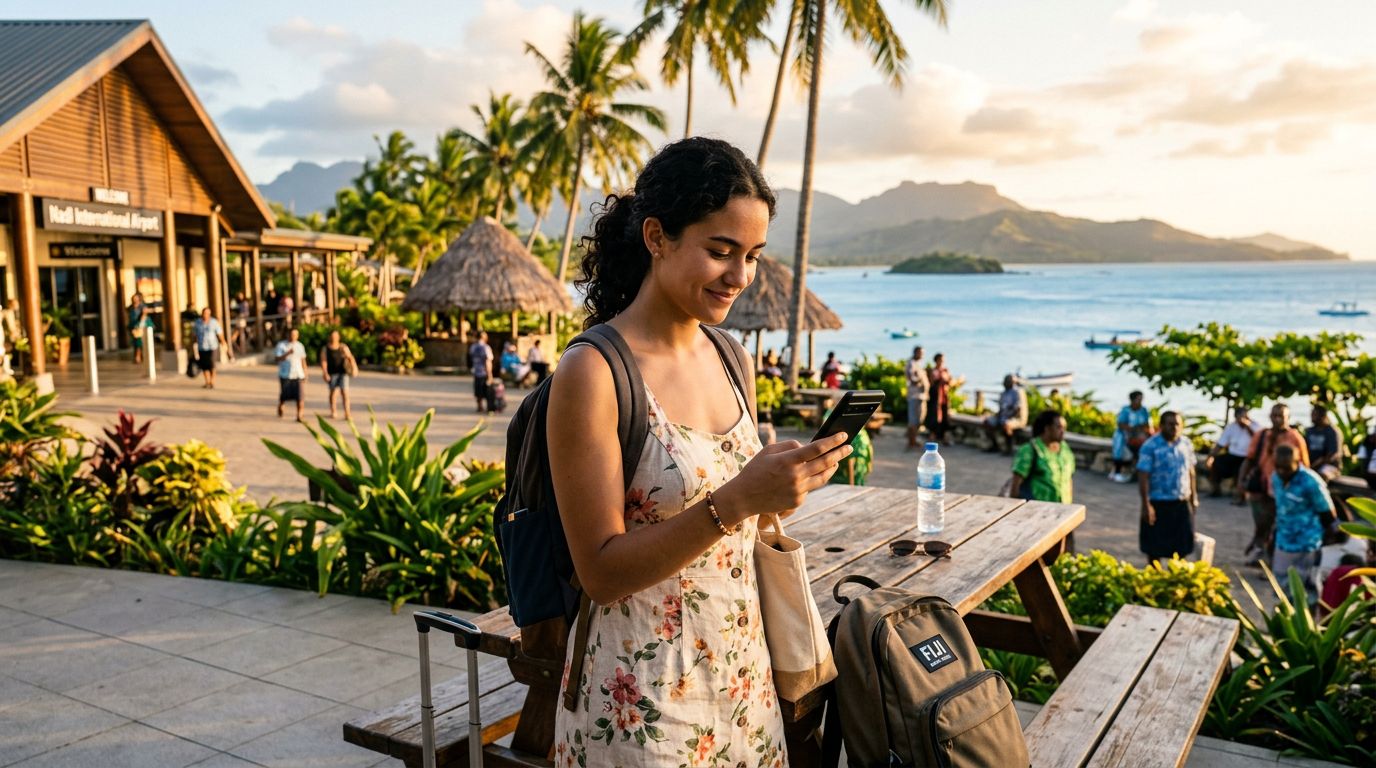
To use these apps effectively, you need a reliable data plan. OneTapSIM allows you to activate your service immediately upon arrival, meaning you can pull up your navigation apps while still at the airport. This eliminates the stress of searching for local SIM kiosks or dealing with physical cards that are easy to lose. With your digital connection active, you can seamlessly transition from the airport to your transport without missing a beat.
Navigating the Fiji Waters and Island Transfers
Fiji is defined by its ocean. If you plan to visit the Mamanuca or Yasawa groups, your navigation needs shift from roads to maritime routes. Navigating these areas is different because there are no physical roads to follow. Instead, you are dealing with ferry schedules, private boat transfers, and tide patterns.
MarineTraffic is an excellent app for those interested in tracking watercraft. While it is primarily used by maritime professionals, travelers can use it to monitor the location of ferries and water taxis. If you are waiting at a jetty for a transfer to your resort, checking the app can provide peace of mind by showing you the vessel’s progress in real-time.
For those who rely on scheduled ferry services, keeping track of time is critical. Ferry operators in Fiji often run on "island time," meaning schedules can be fluid. Having a constant data connection allows you to check official operator websites or communicate via messaging apps with your resort staff. If a boat is delayed or if you need to adjust your pick-up time, being able to send a quick message or check a live status update is invaluable.
By using an eSIM, you avoid the common pitfalls of roaming charges or the hassle of finding a local store to purchase a physical SIM card. You can manage your connectivity directly from your phone settings, ensuring that your data stays active throughout your entire island-hopping journey. This level of convenience allows you to focus on the scenery rather than worrying about your communication status.
Tips for Reliable Connectivity and Navigation
The secret to a smooth travel experience in Fiji is preparation. Before you leave home, take the time to organize your digital toolkit. Start by updating your operating system and ensuring your navigation apps are running the latest versions. If you are using an iPhone, check your cellular settings to ensure your eSIM is configured correctly. For Android users, verify your network settings to confirm that data roaming is enabled for your new plan.
Once you arrive, perform a quick test of your navigation apps. Search for your accommodation or the nearest grocery store to ensure your GPS is locking on correctly. If you find that your signal is weak in a remote area, remember to rely on the offline maps you downloaded previously.
Another tip for navigating Fiji is to keep a portable power bank in your day bag. Using GPS, bright screen settings, and cellular data simultaneously can drain your battery quickly. Since you will likely be spending long days outdoors, having a backup power source ensures that your phone—and your navigation—remains functional until you return to your hotel.
Finally, remember that local knowledge is often better than any app. While technology is a powerful aid, don't hesitate to ask locals for directions or advice on the best routes. Fijians are famously friendly and helpful, and they can often provide context that an algorithm might miss, such as a shortcut through a village or a warning about a specific stretch of road that is prone to flooding during heavy rain.
By combining the convenience of OneTapSIM with the right set of navigation applications, you can move through Fiji with confidence. You will have the freedom to explore at your own pace, knowing that you have the tools to find your way back to your resort or to the next adventure on your itinerary. Whether you are driving along the coast or waiting for a boat to take you to a secluded beach, staying connected makes all the difference in your travel experience.