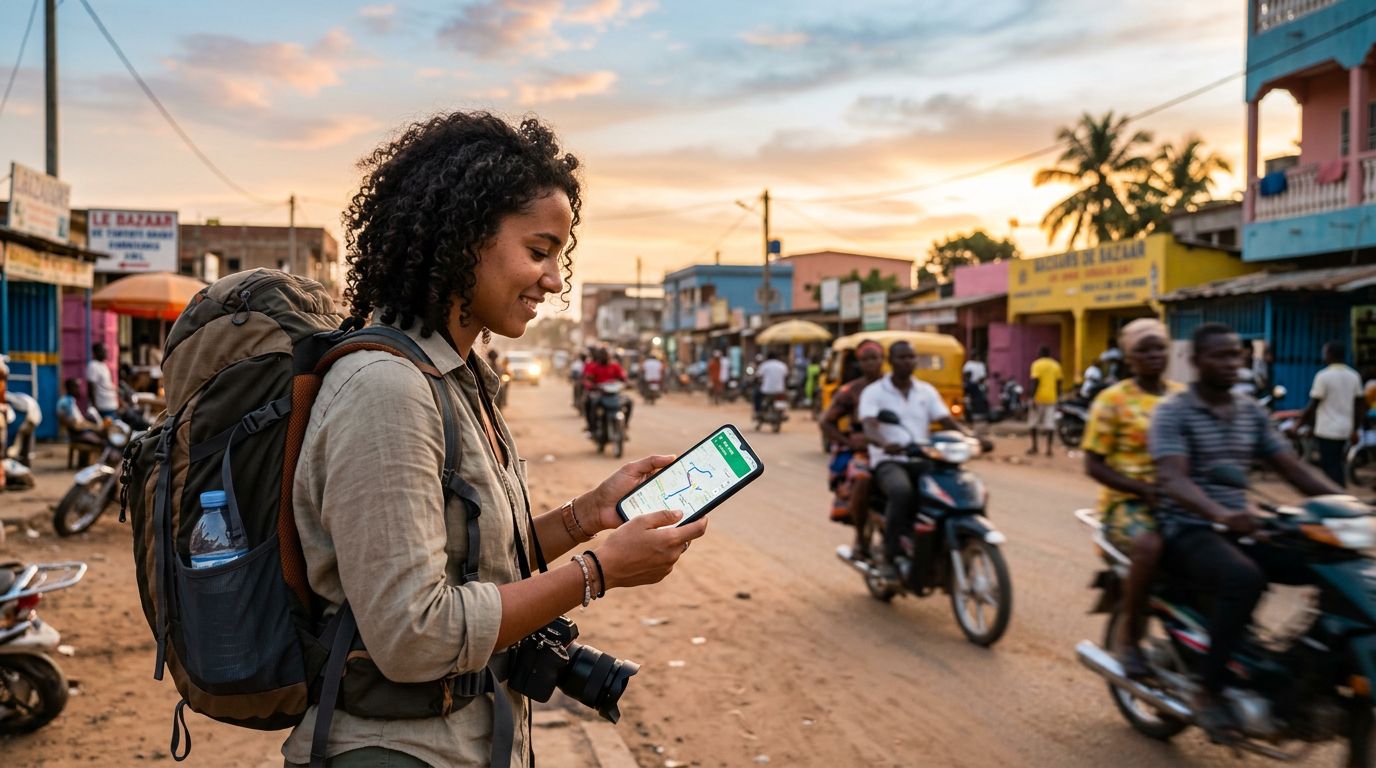
Cameroon is a land of incredible diversity, stretching from the sandy beaches of the Atlantic coast to the rugged peaks of Mount Cameroon and the lush rainforests of the south. Whether you are trekking through the highlands or exploring the bustling markets of Douala and Yaoundé, finding your way is essential to a successful trip. However, local infrastructure can be complex, and street addresses are not always standardized. Having the right digital tools on your smartphone can transform a confusing journey into a smooth adventure.
To make the most of these digital tools, you need a reliable data connection. Relying on public Wi-Fi is rarely practical when you are moving between cities or exploring remote regions. Using a OneTapSIM travel eSIM allows you to maintain a consistent connection the moment you land, ensuring your maps and translation apps are ready to go without the hassle of hunting for physical SIM cards.
Essential Mapping and Location Tools
When it comes to finding your way through Cameroon’s urban centers, standard global mapping applications are your primary resource. Google Maps remains the most comprehensive tool for identifying landmarks, businesses, and transit routes. In cities like Yaoundé and Douala, you can use it to find cafes, hotels, and government offices with relative ease.
However, the effectiveness of these apps depends entirely on your ability to download map data for offline use. While major roads are well-mapped, signal strength can fluctuate in rural areas or dense forest regions. Before you set out, download the offline map tiles for the specific regions you plan to visit. This ensures that even if your connection drops, your GPS coordinates will still display on the screen, allowing you to track your progress.
For those venturing into the more remote northern regions or the national parks, consider using specialized topographic mapping apps. These tools offer elevation data and trail markers that standard navigation apps might miss. If you are planning a hike up Mount Cameroon, having a dedicated offline topographic map is a safety necessity. Always ensure your device is fully charged and that you have a backup power source, as GPS tracking consumes battery life quickly.
Local Transport and Ride-Hailing Apps
Navigating the local transport system in Cameroon can be an experience in itself. In major cities, shared taxis are the standard way to get around. These vehicles are common, but they do not follow fixed routes or schedules in the way a visitor might expect. This is where local ride-hailing apps have changed the game for travelers.
Apps that allow you to request a private car or motorcycle taxi provide a level of transparency that is helpful for those unfamiliar with local pricing norms. These platforms often show the route on a map, which helps you track your driver’s progress and verify that you are heading in the right direction. Because these apps require a stable internet connection to function, having a OneTapSIM eSIM ensures you can request a ride the moment you step out of a hotel or restaurant, rather than relying on the availability of a local network.
Beyond ride-hailing, some travelers find success by joining local travel groups on social media platforms. These groups often share real-time information about road conditions, bridge closures, or transit strikes. While not traditional navigation apps, they function as a vital layer of information that can save you hours of waiting on a blocked road. When you have a reliable data plan, you can check these updates in real-time, allowing you to adjust your itinerary on the fly.
Practical Tips for Digital Navigation
Technology is only as good as the preparation you put into it. The most common mistake travelers make is assuming their phone will automatically connect to a network or that their data will work seamlessly upon arrival. By installing a travel eSIM before you depart, you eliminate the stress of connectivity issues. Once your eSIM is active, your phone can handle the heavy lifting of real-time navigation, language translation, and communication with local contacts.
Another aspect of navigation involves language. While French and English are the official languages, you may encounter various local dialects and regional variations. Having a translation app that allows for offline language packs is a smart addition to your navigation toolkit. If you get lost or need to ask for directions, being able to translate a question into French or a local phrase can make the difference between finding your destination and wandering in circles.
Remember that battery management is part of the navigation process. High-brightness screens and constant GPS polling will drain your battery significantly faster than normal use. Carry a portable power bank and keep your phone in a protective case to guard against the humidity and dust that are common in many parts of the country. If you are traveling by bus between cities, look for seats near power outlets, although you should never rely on these being functional.
Finally, always keep a physical backup. While digital tools are convenient, they are not infallible. A simple paper map or a printed list of addresses and contact numbers for your accommodations can be a lifesaver if your phone is lost, damaged, or runs out of power. Combine this traditional approach with the efficiency of modern apps to create a balanced strategy for your travels. By staying connected and prepared, you can focus on the vibrant culture and stunning landscapes of Cameroon rather than worrying about the logistics of your next turn.
Get an eSIM for
Plans for the destinations covered in this guide, with instant QR delivery.