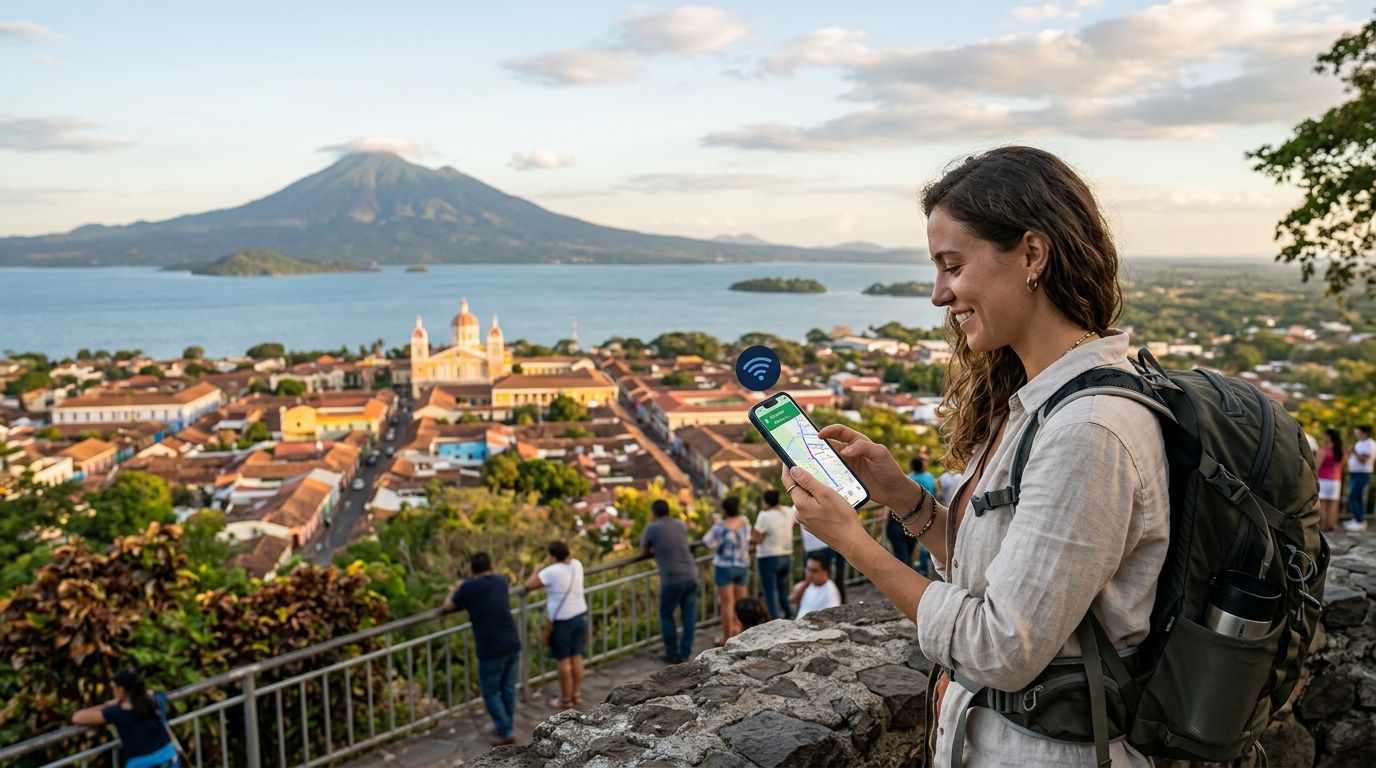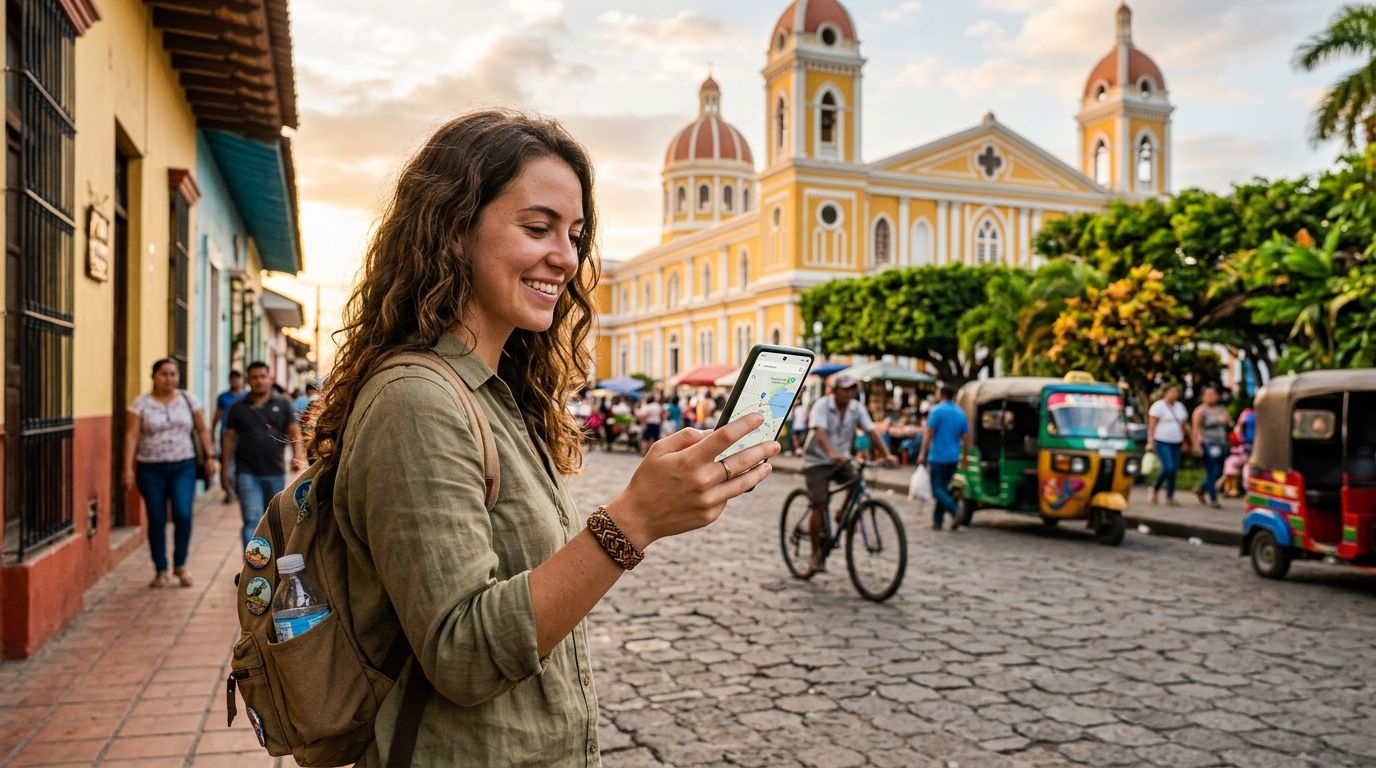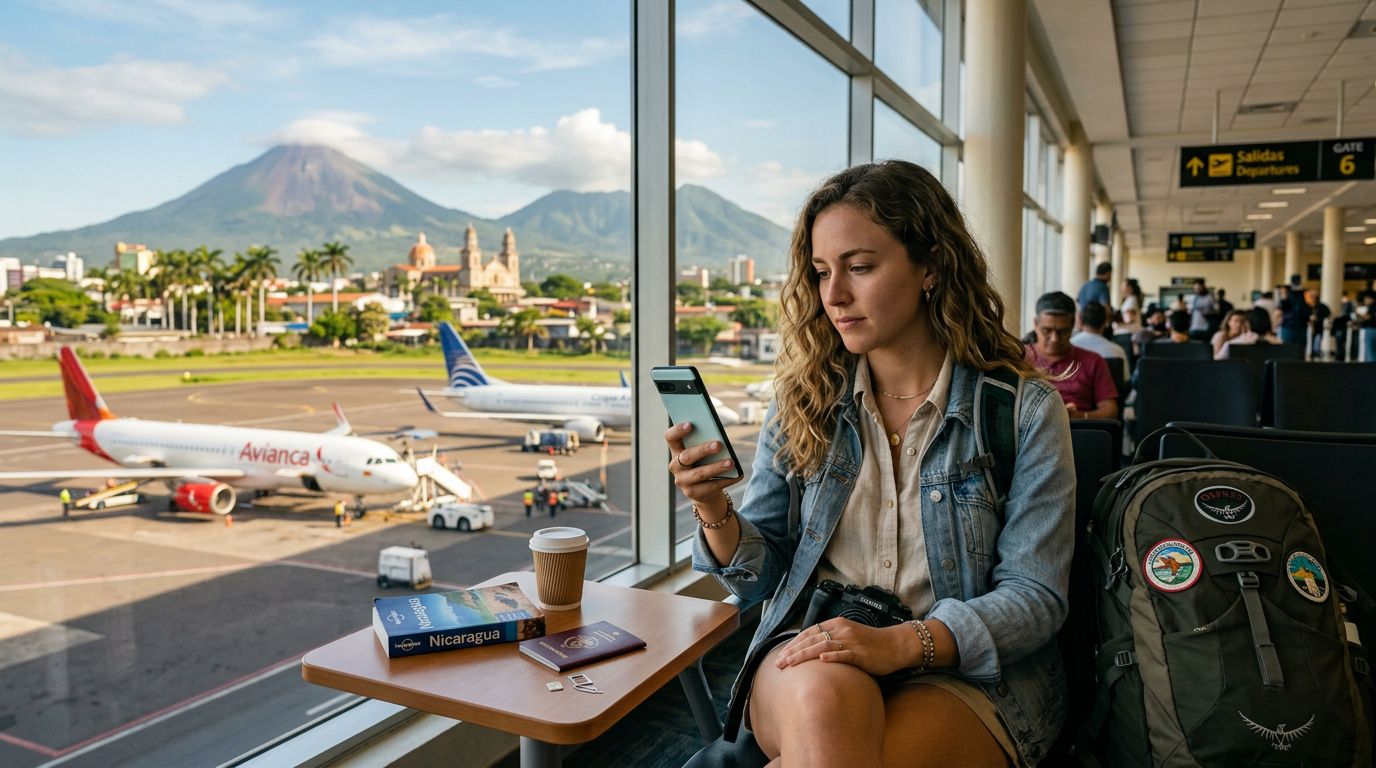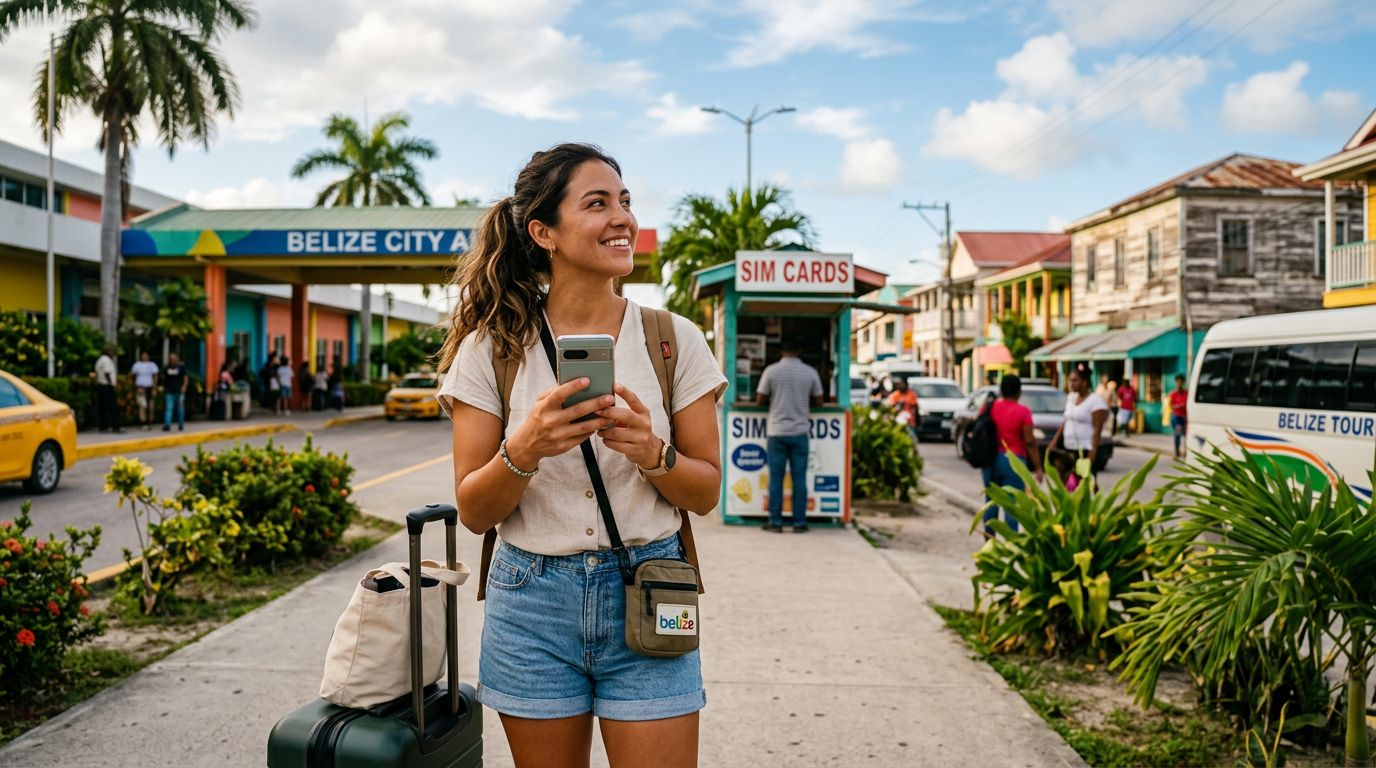
The Connectivity Challenge in Nicaragua
Planning a trip to Nicaragua involves balancing the excitement of exploring colonial cities like Granada, surfing the waves of San Juan del Sur, or hiking the volcanic landscapes of Ometepe. Amidst the logistics of flights and accommodation, connectivity often falls to the bottom of the priority list until the moment a traveler lands. Once you step off the plane at Augusto C. Sandino International Airport, the immediate need for navigation, translation, and communication becomes apparent.
For years, the standard approach was to seek out a physical SIM card upon arrival. This often meant standing in queues at airport kiosks, fumbling with tiny plastic cards, and hoping the local provider’s setup process would be straightforward. However, the rise of eSIM technology has shifted the landscape. Comparing an airport SIM vs eSIM in Nicaragua is essential for any traveler who wants to avoid unnecessary stress and ensure they are connected from the moment they touch down.
The primary difference lies in convenience and control. A physical SIM card requires a hardware change, which carries the risk of losing your original home SIM card. An eSIM, by contrast, is a digital profile that lives on your phone’s internal chip. This allows you to maintain your home number for essential calls or texts while using a secondary data plan for your Nicaraguan adventures.
Why Airport SIM Cards Often Fall Short
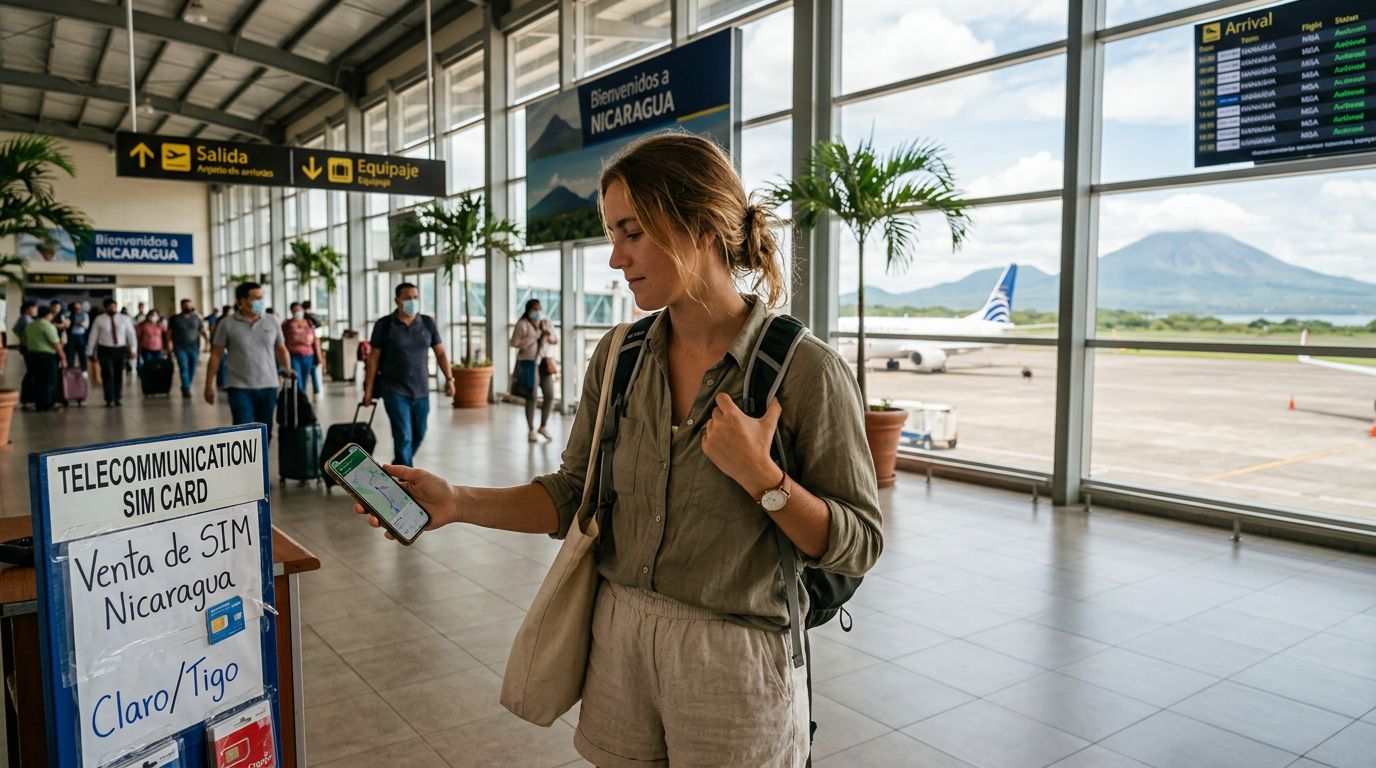
When you arrive at a busy international airport, your first instinct is to get through customs and reach your destination. Stopping at a kiosk to purchase a physical SIM card can be a significant bottleneck. These kiosks are frequently crowded, and the staff may be dealing with multiple customers at once, leading to long wait times.
Beyond the time investment, there are technical hurdles. You must physically remove your existing SIM card, which is small and easily misplaced. If you are not careful, you might drop it in the terminal or lose it in your luggage. Furthermore, some local providers require you to register your passport or provide specific identification details at the counter, which can be a slow, manual process.
Language barriers can also complicate the setup. If the instructions provided at the kiosk are not clear, or if the configuration settings on your phone do not automatically adjust to the local network, you may find yourself without internet access despite having paid for a card. Troubleshooting a physical SIM card while standing in a busy airport terminal is rarely an ideal start to a vacation. By the time you realize the card is not functioning correctly, you may have already left the airport, making it difficult to return for assistance.
The Advantages of Choosing an eSIM
The shift toward eSIM technology has simplified the experience for international travelers. With a provider like OneTapSIM, you can manage your connectivity before you even leave your home country. By purchasing and installing your data plan ahead of time, you eliminate the need to hunt for a kiosk or interact with local vendors upon arrival.
The installation process is seamless. Once you receive your digital instructions, you simply scan a QR code or enter the provided details into your device’s settings. Because the eSIM is already on your phone, your device will automatically connect to the local network as soon as you land. There is no need to swap out hardware or worry about where to store your home SIM card.
Another significant benefit is the ability to manage multiple plans. If you are traveling through Central America, you can have your home plan active for essential SMS and a OneTapSIM data plan active for your internet needs. This dual-sim capability ensures that you are never disconnected. If you run out of data, you can often top up your plan through an app or website without needing to visit a physical store.
Furthermore, eSIMs are generally more environmentally friendly. They eliminate the production and distribution of plastic cards and the associated packaging. For the modern traveler who values efficiency and sustainability, the digital route is clearly superior.
Making the Right Choice for Your Trip
When weighing the pros and cons of an airport SIM vs eSIM in Nicaragua, the decision comes down to how much value you place on your time and peace of mind. If you prefer to handle your logistics in advance, an eSIM is the logical choice. It provides a reliable connection that is ready the moment you land, allowing you to call an Uber, check your hotel reservation, or look up directions to your first stop without delay.
To ensure your device is compatible, check your phone’s settings to confirm it supports eSIM functionality. Most modern smartphones produced in the last few years are fully compatible. If you are unsure, you can consult the official support pages for your device manufacturer to verify that your specific model allows for secondary digital SIM profiles.
Nicaragua is a country that rewards those who are prepared. Whether you are trekking through the cloud forests or relaxing on the Pacific coast, having a stable internet connection is vital. By opting for a digital solution, you remove the friction of the arrival process. You avoid the queues, the language barriers, and the risk of losing your home SIM card.
Ultimately, the goal of any travel plan is to maximize your time spent enjoying the destination rather than managing the logistics of your phone. By choosing an eSIM, you are investing in a smoother, more efficient travel experience. You gain the freedom to move through the airport quickly, knowing that your digital connection is already active and waiting for you. As you prepare for your journey to Nicaragua, consider the benefits of a pre-installed data plan and enjoy the confidence that comes with being connected from the very first moment.
Get an eSIM for
Plans for the destinations covered in this guide, with instant QR delivery.