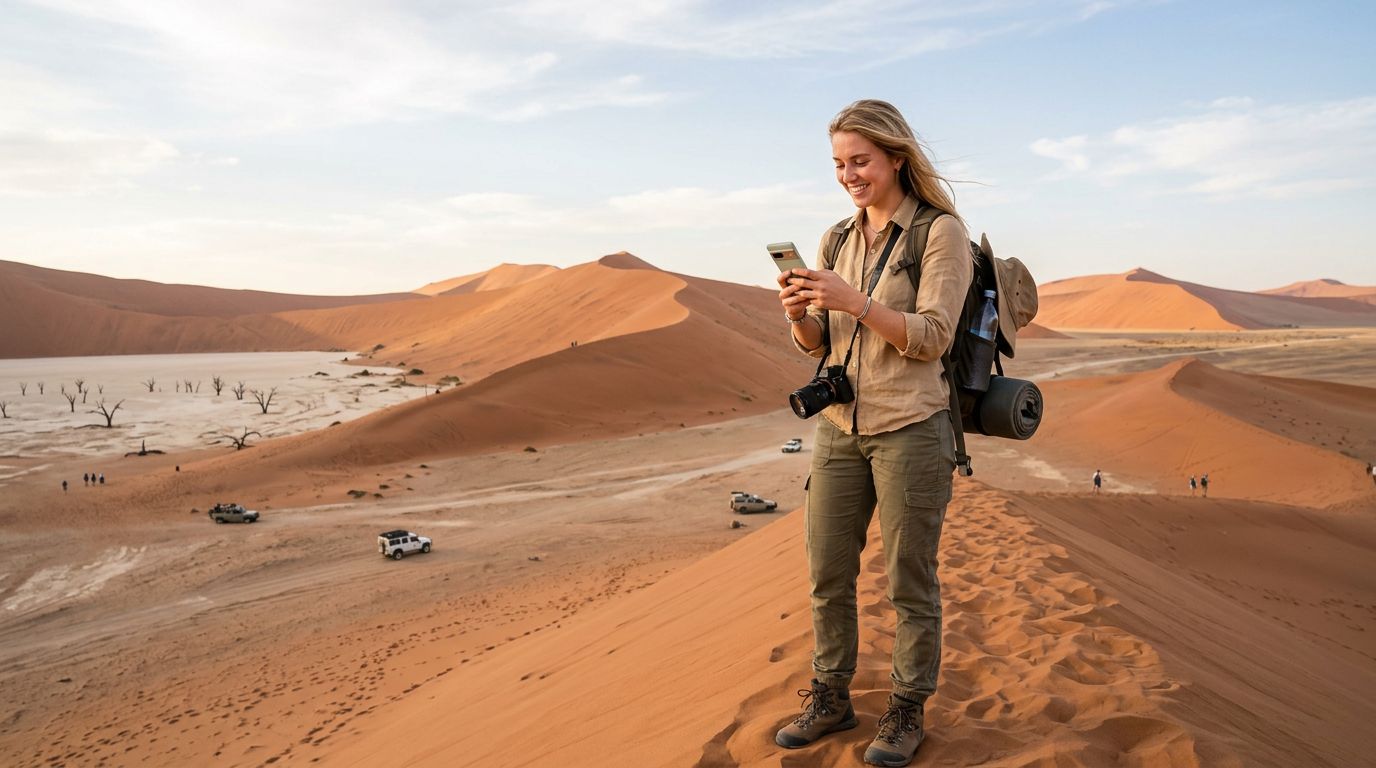
Backpacking through Central Africa is an experience that defies simple description. From the dense rainforests of the Congo Basin to the vibrant markets of Cameroon and the vast, rugged landscapes of Chad, the region offers a raw, unfiltered look at one of the most biodiverse and culturally rich parts of the planet. However, for the modern traveler, the thrill of exploration often comes with the practical challenge of staying connected while backpacking in Central Africa. Whether you need to pull up a map in a remote village, translate a local phrase, or check in with family back home, having a reliable internet connection is no longer just a luxury—it is a vital tool for safety and convenience.
The Reality of Connectivity in Central Africa
Travelers often arrive in Central Africa expecting the same level of seamless roaming they experience in Europe or North America. The reality is quite different. Infrastructure varies wildly between major urban hubs and rural provinces. While capital cities like Libreville or Yaoundé offer decent mobile coverage and even pockets of high-speed data, the moment you venture into the interior, the signal can become inconsistent or disappear entirely.
The primary challenge is the sheer geography of the region. Dense canopy cover, mountainous terrain, and vast stretches of uninhabited land make the maintenance of cell towers difficult for local providers. Furthermore, local SIM cards often require a tedious registration process that includes presenting physical identification and sometimes waiting in long lines at a local kiosk. For a backpacker moving from country to country, this process is not only time-consuming but also prone to language barriers and logistical hurdles.
Relying on public Wi-Fi is rarely a viable strategy. While some hotels or cafes in larger cities provide access, these connections are frequently overloaded and insecure. Relying on them for essential travel tasks, such as booking transport or managing digital documents, can leave you stranded. This is why many experienced travelers are shifting toward digital solutions that provide immediate access upon arrival.
Why eSIM Technology is Changing the Game
For those dedicated to staying connected while backpacking in Central Africa, eSIM technology has emerged as the most efficient way to manage mobile data. An eSIM, or embedded SIM, is a digital version of the physical chip that has powered mobile phones for decades. Instead of hunting for a physical shop to buy a local card, you can activate your data plan directly from your device.
The primary advantage for a backpacker is the ability to prepare before you even touch down on the tarmac. With a service like OneTapSIM, you can select your coverage zone and install the profile while still at home or in a transit airport with reliable Wi-Fi. Once you land, your phone connects to the local network automatically. This eliminates the frantic search for a mobile provider at the airport, where you might otherwise be subject to predatory pricing or confusing roaming packages.
Furthermore, eSIMs allow you to keep your primary home number active for calls or SMS while using the eSIM specifically for data. This is crucial for two-factor authentication on bank apps or staying reachable for urgent messages from home, all while enjoying the cost-effective data rates of a local-style connection. Because the eSIM is software-based, you can switch between different regional plans if your itinerary takes you across borders, providing a level of flexibility that physical SIM cards simply cannot match.
Practical Tips for Maintaining Your Connection
If you are planning an extended trip, managing your data consumption is just as important as having the connection itself. Even with a reliable eSIM, you are often dealing with varying network speeds. Here are a few ways to ensure your connection serves you well throughout your journey.
First, adjust your phone’s settings to prioritize data conservation. Disable automatic background updates for apps, as these can consume significant data without your knowledge. Many smartphones allow you to set a data limit or a low-data mode, which prevents apps from syncing in the background unless you are connected to a stable Wi-Fi network. This is particularly useful when you are roaming on a network with limited bandwidth.
Second, download offline versions of essential tools. Google Maps allows you to download entire regions for offline use, which is a lifesaver when you are traveling between cities or venturing into national parks. Similarly, ensure that your translation apps have offline language packs installed. Having these resources ready means that even if your signal drops, you are not left without the information you need to navigate your surroundings.
Third, keep a portable power bank in your daypack. Searching for a signal can drain your battery faster than usual, as your phone constantly scans for the strongest tower. A dead phone is the ultimate end to your connectivity, regardless of whether you have an active data plan.
Finally, remember that in many parts of Central Africa, the most reliable way to stay connected is to be prepared for the moments when you are not. Use your data to research your next destination, confirm your accommodation, and download necessary documents while you have a strong signal in a city. By using an eSIM to bridge the gaps between these urban centers, you can maintain a consistent line of communication that keeps you safe and informed as you traverse one of the world's most captivating regions. Staying connected while backpacking in Central Africa is entirely possible with the right preparation and the right technology at your fingertips.
Consigue una eSIM para
Planes para los destinos de esta guía, con entrega instantánea por QR.