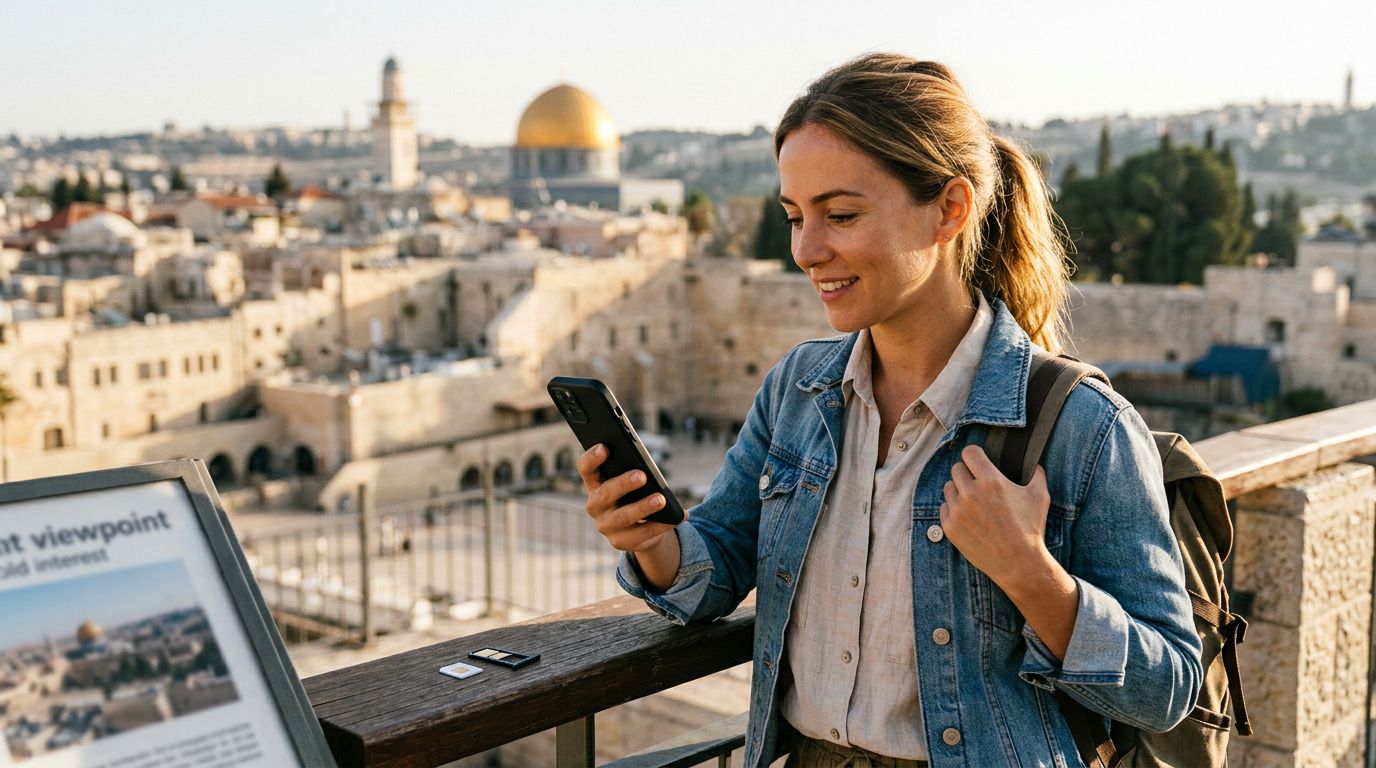
Understanding the Connectivity Options for Israel
Planning a trip to Israel involves a checklist of logistics, from booking tours of the Old City in Jerusalem to finding the best spots for falafel in Tel Aviv. One of the most important items on that list is staying connected. Having reliable internet access is essential for using ride-sharing apps, checking train schedules, and navigating the winding streets of historical sites. When comparing an Israel SIM card vs eSIM, travelers must weigh the convenience of modern technology against the traditional methods they might be used to.
A physical SIM card is the traditional method most travelers have relied on for decades. It involves purchasing a small plastic card, usually from a mobile carrier kiosk at Ben Gurion Airport or a local shop in the city. You physically remove your home SIM card and replace it with the local one. This requires you to keep track of your original card, which is tiny and easily misplaced.
On the other hand, an eSIM—or embedded SIM—is a digital version of that same technology. It is built directly into the hardware of modern smartphones. Instead of swapping out a physical card, you simply scan a QR code or enter activation details provided by a service like OneTapSIM. This process happens entirely on your device, allowing you to activate your connection before you even land in Israel.
Comparing Convenience and Installation
The primary difference between these two options is the installation process. With a physical SIM card, you are often tethered to the airport or a retail store upon arrival. After a long flight, the last thing many travelers want to do is stand in a queue at a mobile kiosk, fumble with a SIM ejector tool, and hope the card activates correctly. There is also the risk of damaging your phone’s SIM tray or losing your home SIM card in the process.
An eSIM changes this experience entirely. Because the technology is software-based, you can purchase and set up your plan from the comfort of your home. Once you arrive in Israel, your phone will automatically connect to the local network as soon as you land. This eliminates the "dead zone" period where you are disconnected from your maps and messaging apps while trying to find transportation from the airport.
Furthermore, managing your connectivity is much simpler with an eSIM. If you are traveling through multiple countries or need to switch between different data plans, you can store multiple eSIM profiles on your device. You can toggle between them in your phone’s settings without ever needing to open your phone casing. For those who prefer a seamless, hands-off approach, the digital nature of OneTapSIM provides a significant advantage by removing the physical friction associated with traditional cards.
Compatibility and Device Considerations
Before deciding between an Israel SIM card vs eSIM, you must ensure your device is compatible. Most smartphones released in the last few years support eSIM technology. You can verify this by checking your device manufacturer’s official support pages. Generally, if you have a modern flagship phone from major brands, you are likely covered.
It is also vital to ensure your phone is carrier-unlocked. If your device is locked to your home service provider, it will not accept a local physical SIM card, nor will it allow you to activate an eSIM from a different provider. You can usually check your device status in your phone’s settings or by contacting your home carrier before you depart.
If your device does not support eSIM technology, a physical SIM card remains your only option. However, for those with compatible devices, the eSIM is increasingly becoming the preferred choice. It avoids the need to hunt down a shop that sells prepaid cards, which can be difficult if you arrive late at night or on a weekend when many businesses in Israel may be closed.
Managing Data and Network Reliability
Reliability is a major concern when traveling. You want a connection that works consistently, whether you are in the bustling center of Tel Aviv or the remote areas of the Negev Desert. Both physical SIM cards and eSIMs generally utilize the same local cellular towers. Therefore, the actual coverage quality depends more on the specific network provider than the format of the SIM card itself.
The advantage of using a service like OneTapSIM is the focus on providing a reliable, pre-configured connection. Because these services are designed specifically for travelers, they often prioritize ease of use and stable data speeds. When you use a local physical SIM, you are subject to the specific terms and service tiers of the local carrier’s retail offerings, which can sometimes be confusing or require a lengthy registration process.
Another factor to consider is data management. With an eSIM, you can often monitor your data usage directly through your phone’s settings. This helps you avoid unexpected overages or running out of data while you are out exploring. If you do run low, adding more data is often as simple as purchasing a top-up through the service provider’s platform, rather than having to find a physical store to buy a new card.
Final Considerations for Your Trip
When choosing between an Israel SIM card vs eSIM, consider your personal comfort level with technology and your travel itinerary. If you are a minimalist traveler who values efficiency and wants to avoid physical clutter, the eSIM is the clear winner. It saves you time at the airport and keeps your home SIM card safely tucked away in your phone, reducing the risk of loss.
If you are visiting for an extended period or have very specific, high-volume data needs that require a local contract, a physical SIM card from a local carrier might offer more specialized options. However, for the vast majority of tourists, the convenience of an eSIM provides a superior experience. By preparing your connectivity in advance with a solution like OneTapSIM, you can focus your energy on enjoying your trip to Israel rather than worrying about your phone settings.
Ultimately, the goal is to ensure you have the tools to navigate, communicate, and share your experiences without interruption. By understanding the differences between these two technologies, you can make an informed decision that suits your specific travel style and device capabilities. Whether you choose the traditional route or the digital modern standard, having a plan in place before you depart will ensure your time in Israel is as smooth as possible.