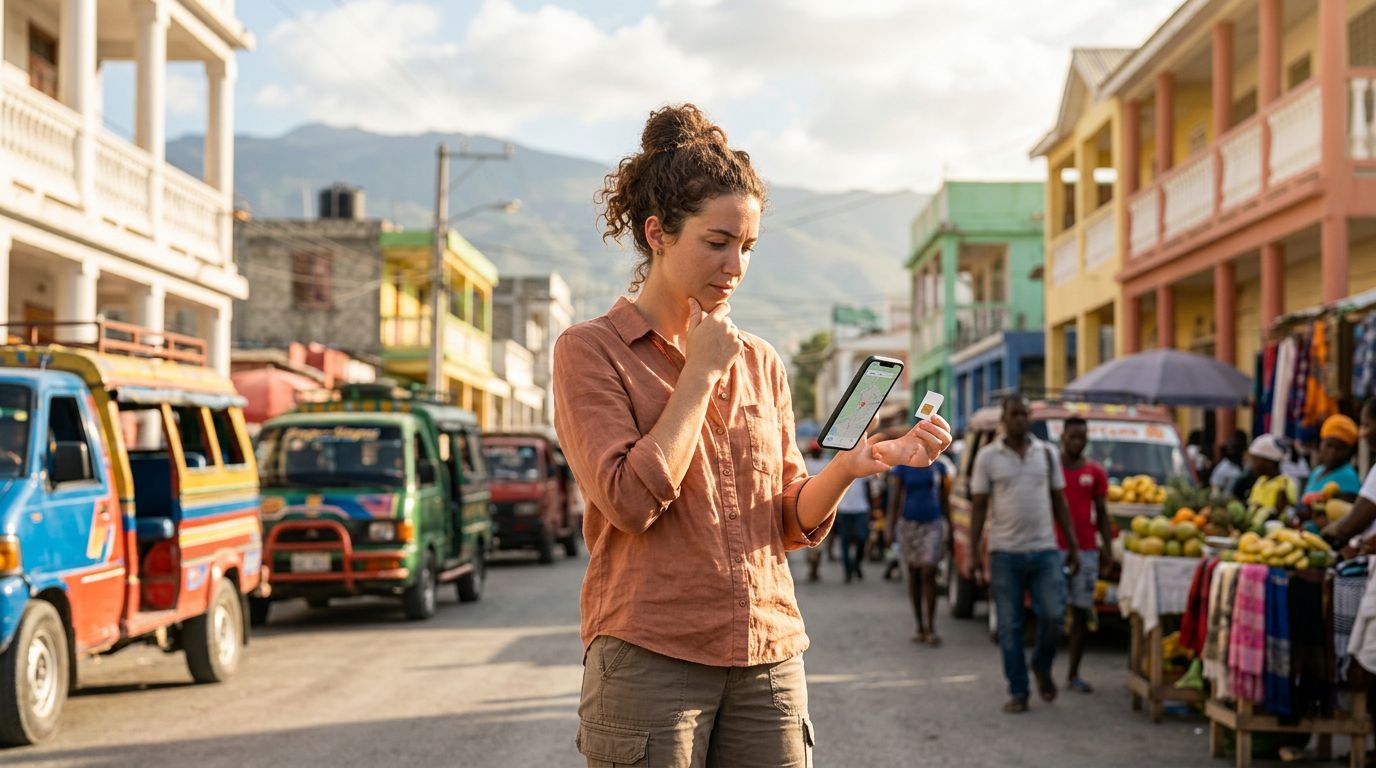
Understanding Connectivity Options in Haiti
Planning a trip to Haiti involves careful preparation, and staying connected is a vital part of your itinerary. Whether you are traveling for business, visiting family, or exploring the vibrant culture of the island, having reliable internet access is essential for maps, translation, and staying in touch with home. When comparing a Haiti SIM card vs eSIM, you are essentially choosing between a traditional physical setup and a modern, digital alternative.
A physical SIM card is the standard method most travelers have used for decades. You purchase a small plastic chip, insert it into your phone, and connect to a local network. This process usually requires finding a mobile provider’s kiosk at the airport or in a city center. You will need to provide identification, potentially wait in line, and manually swap out your home SIM card, which carries the risk of losing or damaging the tiny plastic piece.
On the other hand, an eSIM is a digital version of a SIM card that is embedded directly into your phone’s hardware. Instead of a physical swap, you activate your connection by scanning a QR code or installing a profile through an app like OneTapSIM. This technology is becoming the preferred choice for international travelers because it eliminates the need to handle physical hardware while abroad. Understanding the differences between these two options is the first step toward a stress-free travel experience.
The Practical Benefits of Choosing an eSIM
The primary advantage of using an eSIM for your trip to Haiti is convenience. When you land at Toussaint Louverture International Airport, you do not need to hunt for a local store or wait for a clerk to register your device. With an eSIM, you can set up your data plan before you even leave your home country. As soon as you land and turn off airplane mode, your phone automatically connects to the local network, allowing you to call an Uber or check your hotel reservation immediately.
Another significant benefit is the ability to keep your primary phone number active. Many travelers worry about missing important calls or two-factor authentication codes while traveling. With a physical SIM card, you must remove your home SIM, meaning you lose access to your primary number entirely. Most modern smartphones allow you to keep your home SIM active for calls and texts while using the eSIM specifically for cellular data. This dual-SIM functionality ensures you stay reachable on your main number while enjoying affordable, high-speed data on your secondary eSIM profile.
Security is also a factor. Physical SIM cards can be easily lost or stolen when you are juggling multiple cards in your wallet. Because an eSIM is integrated into your device, there is no physical component to misplace. If you are worried about compatibility, you can check your device settings or visit the official support pages for Apple or Google to confirm that your phone supports eSIM technology. Most flagship devices released in the last few years are fully compatible, making the transition to digital connectivity a smooth process for the vast majority of modern travelers.
Comparing Reliability and Performance
When weighing a Haiti SIM card vs eSIM, performance is often a concern. Many travelers assume that a local physical SIM card provides better coverage than an eSIM, but this is a common misconception. An eSIM is simply a digital delivery method for the same local network services. When you use a service like OneTapSIM, you are connecting to the same local cellular towers as someone using a traditional plastic SIM card. The network quality, speed, and coverage area are determined by the local Haitian mobile operators, not by the method you use to connect to them.
One of the biggest frustrations with physical SIM cards is the language barrier and the administrative process at local kiosks. In some cases, you may be required to register your passport and provide local addresses to activate a physical card. This can be time-consuming and confusing if you do not speak the local language fluently. An eSIM bypasses this entire process. You complete the purchase and activation steps through a user-friendly interface, often in your native language, long before you arrive.
Furthermore, managing your data usage is much easier with an eSIM. Most eSIM providers offer clear dashboards where you can monitor how much data you have consumed. If you run out of data, you can often purchase a top-up instantly through the app without needing to find a physical shop or buy another plastic card. This level of control is particularly helpful in Haiti, where you may be moving between different regions and relying heavily on GPS navigation.
Ultimately, the choice between a Haiti SIM card vs eSIM comes down to your personal preference for technology and your desire for a seamless arrival. While physical SIM cards remain a functional backup, the digital nature of eSIMs offers a level of flexibility and efficiency that is difficult to match. By preparing your connectivity in advance, you can spend less time managing your phone settings and more time enjoying the unique landscapes, history, and hospitality that Haiti has to offer. If your device is compatible, opting for a digital solution is a practical way to ensure your trip remains focused on your experiences rather than your logistics.
Get an eSIM for
Plans for the destinations covered in this guide, with instant QR delivery.