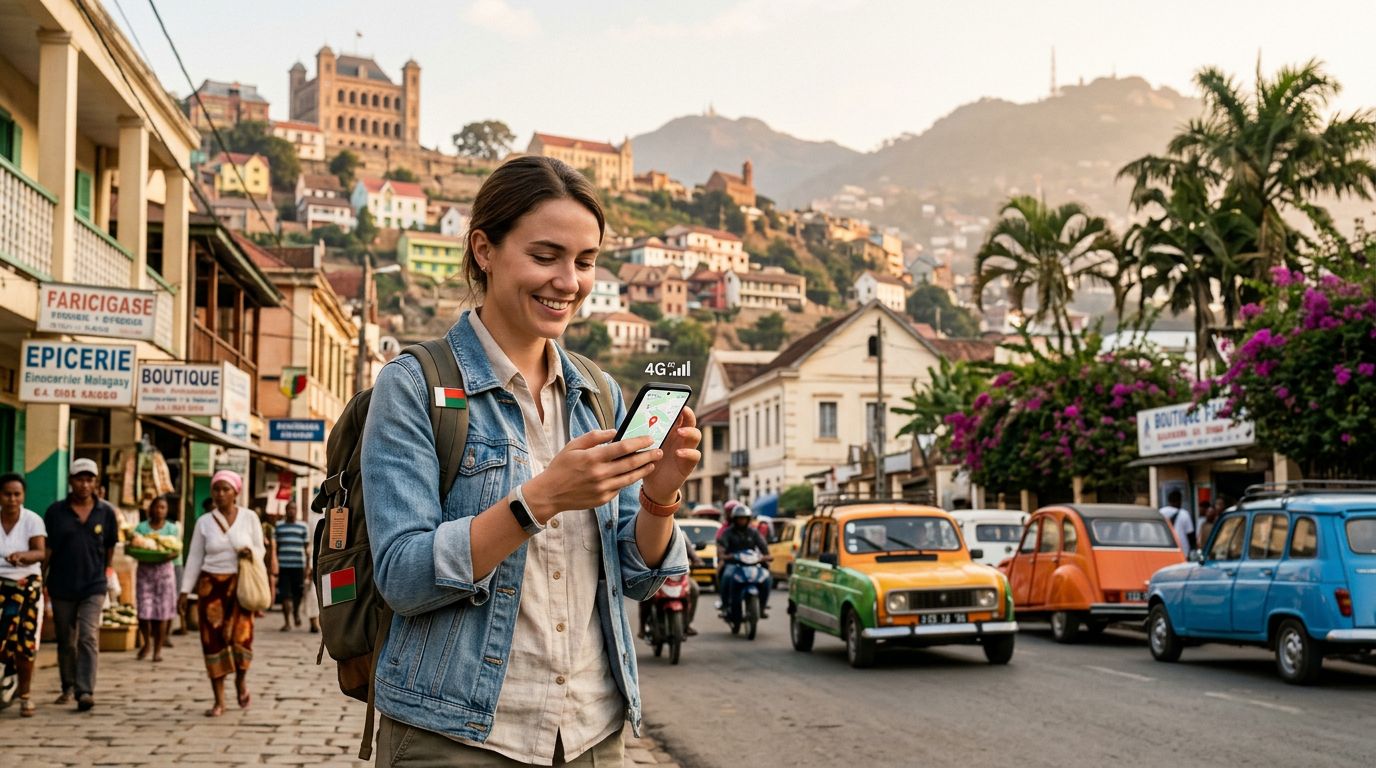
Connectivity Challenges in Madagascar
Madagascar is a destination defined by its unique biodiversity, sprawling national parks, and remote coastal villages. For travelers, the allure of the island often comes with the practical challenge of staying connected. Unlike major metropolitan hubs in Europe or North America, infrastructure in Madagascar can be inconsistent, particularly as you venture away from the capital city of Antananarivo.
Many travelers ask, "does eSIM work in Madagascar?" The answer is yes, but it requires a strategic approach. Traditional physical SIM cards have long been the standard, requiring tourists to visit a local kiosk, present their passport, and wait for activation. This process can be time-consuming and frustrating when you are eager to start your adventure. An eSIM provides a modern alternative that bypasses these physical hurdles.
When you rely on local physical SIMs, you are often at the mercy of shop hours and language barriers. If you run out of data or encounter a technical issue, returning to a physical store is rarely convenient. By opting for an eSIM, you manage your connectivity directly from your smartphone settings. This digital-first approach ensures that you have a data connection the moment you land, allowing you to use navigation apps, translation tools, and messaging services without searching for a local vendor.
How eSIM Technology Enhances Your Travel Experience
An eSIM, or embedded SIM, is a digital version of the traditional plastic card. It is built directly into the hardware of modern smartphones. Because it is software-based, you can switch between different service providers or data plans without physically swapping out a card. This is particularly useful in a country like Madagascar, where you might want to maintain your home number for urgent calls while using a separate data plan for your local browsing needs.
The convenience of using a service like OneTapSIM lies in the simplicity of the installation process. Instead of needing a paperclip to open your SIM tray and risking the loss of your home SIM card, you simply scan a QR code or enter activation details provided by your service provider. Once the profile is downloaded, your phone recognizes the new network, and you are ready to go.
For travelers visiting Madagascar, the primary benefit is reliability. By setting up your data plan before you leave home, you avoid the uncertainty of finding a reliable mobile network provider upon arrival. You can land at Ivato International Airport and immediately access maps to find your transport or check in with your accommodation. This seamless transition is essential when traveling in regions where English signage might be limited and local connectivity options are not immediately obvious.
Furthermore, managing your data usage becomes much easier. With a digital plan, you can monitor your consumption through your phone’s settings. If you find yourself needing more data for uploading photos of the Avenue of the Baobabs or streaming music during long drives, you can manage your plan requirements efficiently. OneTapSIM focuses on providing a straightforward user experience, ensuring that your focus remains on the landscape rather than troubleshooting your mobile settings.
Practical Tips for Using eSIMs in Madagascar
Before you travel, there are several technical requirements to confirm. First, ensure that your smartphone is carrier-unlocked. Many phones purchased through a mobile contract are locked to a specific network provider. If your device is locked, it will not accept an eSIM from a different provider. You can usually check this in your phone’s settings or by contacting your home carrier.
Second, verify that your device is eSIM-compatible. Most flagship phones released in the last few years support this technology. You can check the official support pages for Apple or Google to see if your specific model is on the list of compatible devices. If your phone supports it, you are ready to proceed with a digital plan.
When you arrive in Madagascar, your phone will typically prioritize the network with the strongest signal. However, it is helpful to understand how to toggle between your primary SIM and your travel eSIM. In your phone’s cellular settings, you can designate which SIM is used for mobile data. For travelers, the best practice is to turn off data roaming for your home SIM to avoid unexpected charges, while keeping your travel eSIM enabled for data.
While coverage in Madagascar is generally good in urban areas and major tourist corridors, keep in mind that connectivity can drop in deep rainforests or remote mountainous regions. No mobile provider can guarantee 100% coverage across the entire island due to the rugged terrain. Having an eSIM allows you to have a consistent connection where it is available, but it is always wise to download offline maps and essential documents before heading into the most remote parts of the country.
Finally, consider your data needs. If you are a light user who only needs to check emails and use messaging apps, a smaller data package will suffice. If you plan on sharing your journey on social media or using high-bandwidth apps, look for a plan that offers a higher data allowance. By planning ahead with a service like OneTapSIM, you eliminate the stress of finding a local store and can focus on the unique experience of exploring one of the world’s most fascinating islands. Whether you are trekking through Tsingy de Bemaraha or relaxing on the beaches of Nosy Be, having a reliable digital connection ensures you stay informed and safe throughout your trip.
Get an eSIM for
Plans for the destinations covered in this guide, with instant QR delivery.