Understanding the Connectivity Landscape in Syria
Traveling to Syria offers a profound look into ancient history, resilient culture, and breathtaking landscapes. However, for any modern traveler, staying connected is a primary concern. The telecommunications infrastructure in the country has faced significant challenges over the past decade, making the search for the best way to get data in Syria a task that requires careful planning before you leave home.
The local mobile market is dominated by two primary state-affiliated providers. While these networks cover major urban centers like Damascus, Aleppo, and Homs, they are not always optimized for the needs of international visitors. Purchasing a physical SIM card upon arrival often involves navigating bureaucratic processes, such as registering your passport at specific kiosks or service centers, which can be time-consuming and frustrating after a long journey. Furthermore, language barriers at local retail outlets can complicate the activation process, leaving many travelers without reliable internet access during their first few days.
For those who rely on constant connectivity for navigation, translation apps, or staying in touch with family, relying solely on local physical SIM cards can be unpredictable. Public Wi-Fi is also sparse and often restricted to high-end hotels or specific cafes, meaning it cannot be treated as a primary source of data. Understanding these limitations is the first step toward ensuring you remain connected throughout your trip.
The Advantages of eSIM Technology for International Travel
As mobile technology evolves, the eSIM has become the gold standard for international travelers. An eSIM, or embedded SIM, is a digital version of the traditional physical SIM card. It is built directly into the hardware of modern smartphones, allowing you to switch between networks without the need to physically swap out a tiny plastic chip.
The primary benefit of using an eSIM for your Syrian adventure is the ability to activate your data plan before you even land. By setting up your connection in advance, you avoid the need to hunt for a mobile provider’s office or wait in long queues at the airport. Once you step off the plane, your device can automatically connect to the local network, providing you with immediate access to maps and messaging services.
Compatibility is the first thing you should check. Most flagship smartphones released in the last few years support this technology. You can verify your device's capabilities through your manufacturer’s official support pages. If your phone is unlocked and supports eSIM functionality, you are already halfway to a seamless experience.
OneTapSIM provides a streamlined approach to this process. By offering a digital-first solution, it removes the physical hurdles associated with international roaming. Instead of dealing with local paperwork or risking the loss of your home SIM card, you can manage your connectivity through a simple digital installation process. This ensures that your primary number remains active for essential calls or texts from home while your secondary eSIM handles your data needs in Syria, keeping your digital life organized and stress-free.
Practical Tips for Maintaining Connectivity
Once you have secured your data plan, managing your usage is essential to ensure your connection lasts throughout your trip. Even with a reliable data plan, connectivity in certain regions of Syria can fluctuate due to topography and infrastructure maintenance.
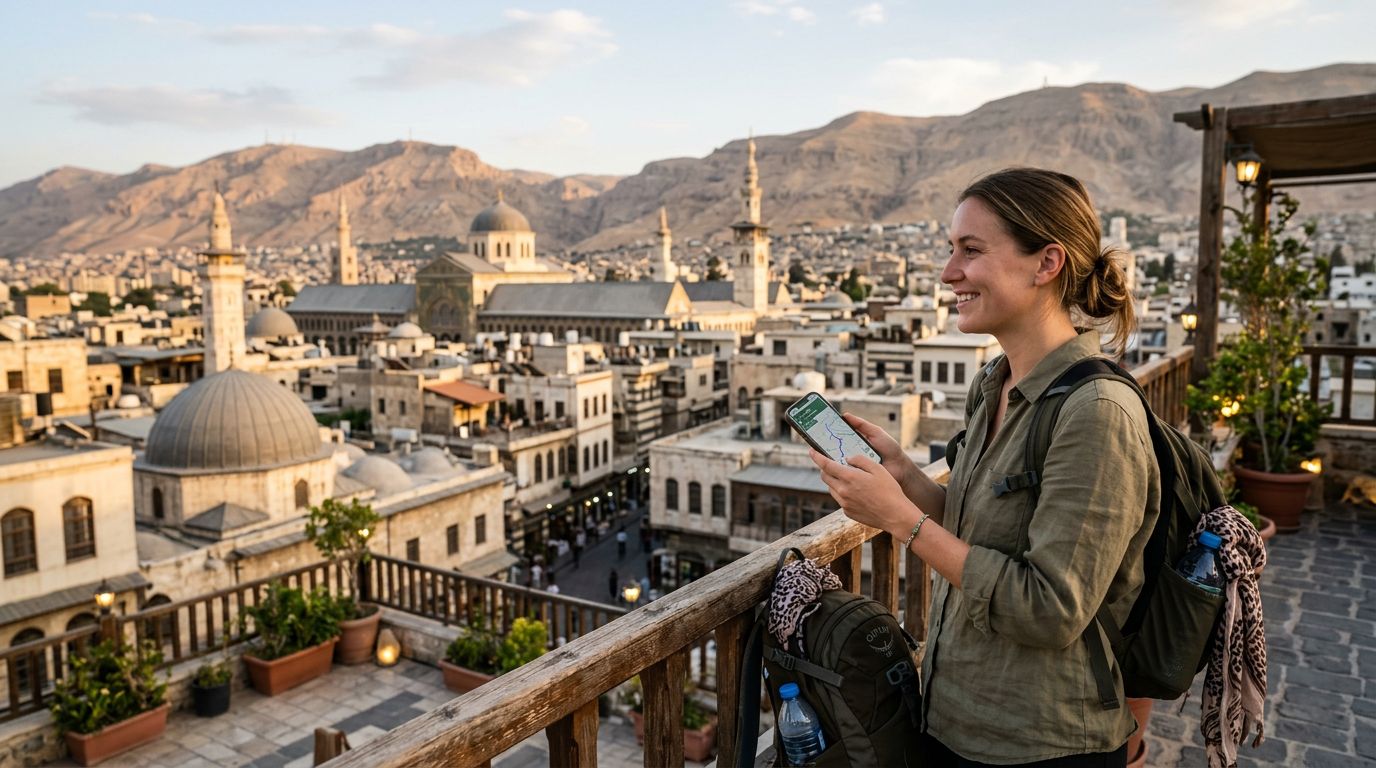
First, adjust your phone’s settings to minimize background data consumption. Many apps, such as social media platforms and cloud backup services, automatically sync in the background. By turning off background data for non-essential applications, you can prioritize your bandwidth for navigation tools and communication apps. Downloading offline maps for the cities you plan to visit is another highly recommended strategy. Having a map of Damascus or Palmyra saved locally on your device means you can navigate confidently even if you move through an area with a weak signal.
Second, consider the power consumption of constant connectivity. Using an eSIM is generally more efficient than roaming on your home carrier, but maintaining a constant data connection will still drain your battery faster than usual. Carrying a reliable power bank is a standard practice for any traveler in the region. Since electrical outlets can occasionally be inconsistent, having an independent power source ensures that your phone—and your connection—remains active when you need it most.
Finally, be mindful of how you communicate. While voice and video calls are convenient, they consume significant amounts of data. Whenever possible, stick to text-based messaging platforms to conserve your data allowance. If you find that your data usage is higher than expected, monitor your consumption through your phone’s built-in data tracking tools.
By preparing your device with a service like OneTapSIM and following these practical usage habits, you can focus on the incredible experience of exploring Syria rather than worrying about your signal strength. The best way to get data in Syria is to rely on a solution that is ready when you are, allowing you to move through the country with the confidence that you are always just a tap away from the information you need. Whether you are wandering through the historic souks or visiting ancient ruins, having a reliable digital connection serves as a vital bridge between your modern travel needs and the rich, timeless history of the region.