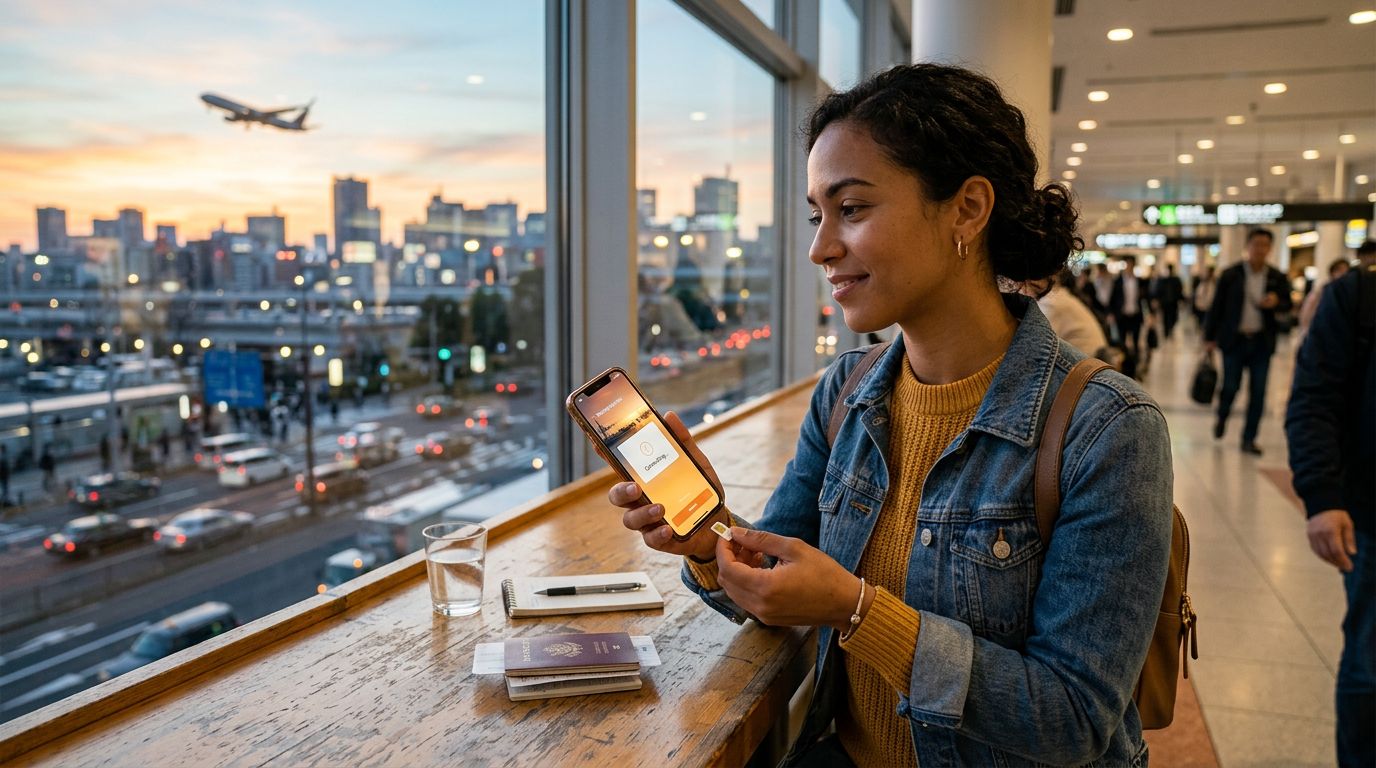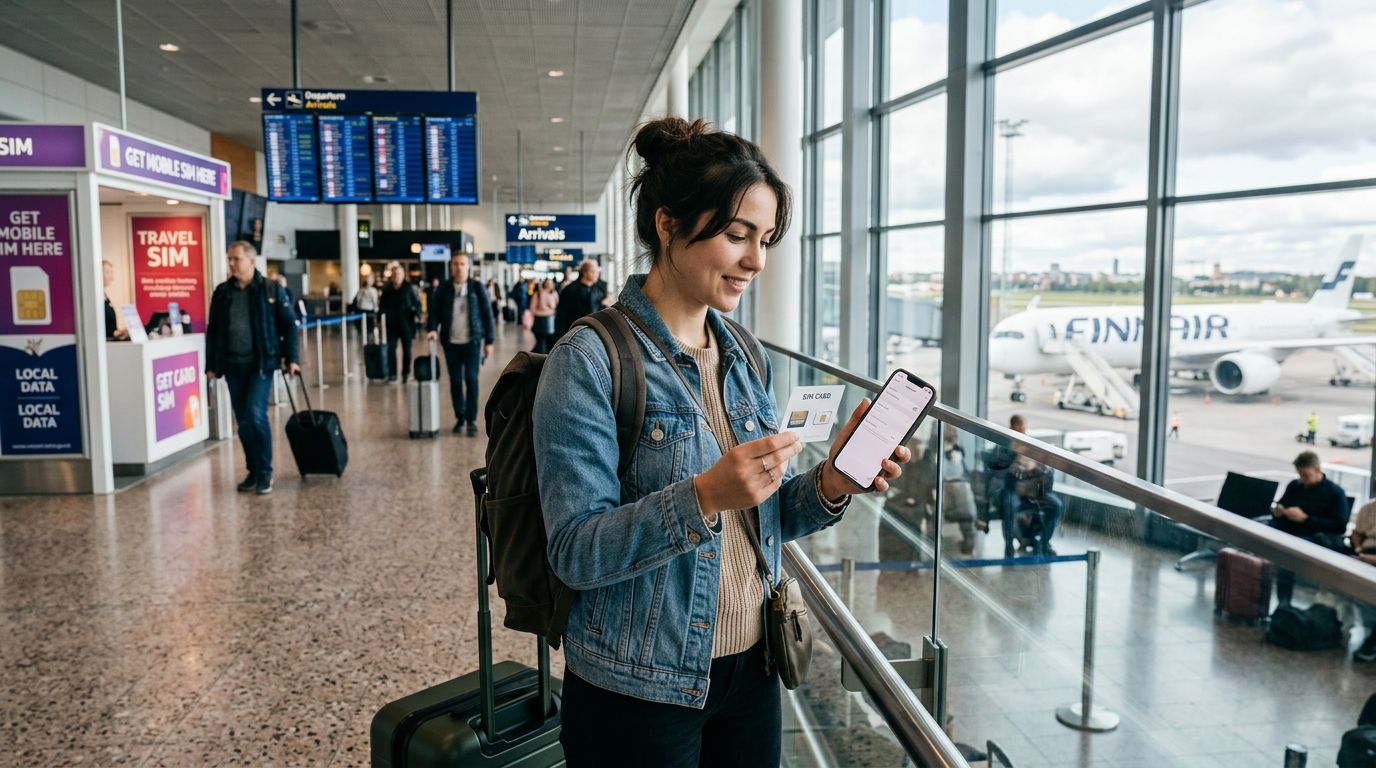
The Traditional Airport SIM Experience
When you step off a long-haul flight, the immediate need to connect is often overwhelming. For years, the standard solution has been to hunt for a kiosk in the arrivals hall. Airport SIM cards have long been the default choice for travelers who want to ensure they have a local number and data the moment they leave the terminal.
The process is familiar: you find a brightly lit booth, wait in a queue, present your passport, and wait for a clerk to physically insert a small plastic card into your phone. While this method is reliable, it comes with inherent frustrations. Airport kiosks are notorious for charging a premium for convenience. Because you are a captive audience at the airport, you are often paying for the overhead of the physical storefront rather than the actual service.
Furthermore, there is the logistical challenge of managing physical SIM cards. You have to ensure you do not lose your original home SIM card, which is easily misplaced when you are shuffling through luggage and trying to navigate a new transit system. If you have a dual-SIM phone, you might manage, but for many, the process involves removing a card that keeps them connected to their home banking and two-factor authentication services. This creates a security risk and a potential headache if you lose your primary card during your trip.
The Shift Toward eSIM Technology
The emergence of eSIM technology has fundamentally altered how we think about international roaming. An eSIM, or embedded SIM, is a digital version of the traditional plastic card that is built directly into the hardware of modern smartphones. Instead of visiting a physical store, you can activate your connectivity through a digital profile.
This shift has made airport SIM vs eSIM for travel connectivity a lopsided comparison in favor of the digital option. With an eSIM, you can purchase and activate your data plan before you even board your plane. As soon as your wheels touch the tarmac, you simply toggle your settings to switch to your travel plan. There is no need to stand in line at a crowded kiosk or communicate with a clerk in a language you might not speak fluently.
OneTapSIM provides a seamless bridge for this transition, allowing travelers to manage their connectivity through a straightforward digital interface. Because the eSIM is integrated into your device’s software, you do not need to physically swap components. This preserves the integrity of your home SIM, meaning you can keep your primary number active for incoming calls or urgent messages while using your secondary eSIM profile for high-speed data. This dual-layer approach ensures that you are never truly disconnected from your home base, even while you explore new destinations.
Why eSIMs Are Winning the Convenience Battle
The primary advantage of choosing an eSIM over an airport SIM is the elimination of friction. Travel is already stressful enough without having to worry about finding a local store, dealing with activation delays, or facing unexpected roaming fees. When you rely on an eSIM, you gain total control over your connectivity.
One of the most significant benefits is the ability to manage multiple plans. If you are traveling through several countries, you can pre-load your device with different eSIM profiles. As you cross borders, you simply switch your active data source in your phone’s settings. This is a far cry from the old days of buying a new SIM card every time you entered a new country, which often involved finding a shop, buying a new card, and hoping the registration process worked correctly.
Security is another factor that often goes overlooked. Physical SIM cards are susceptible to damage, loss, or theft. By keeping your home SIM securely inside your device, you minimize the risk of losing your primary credentials. Additionally, because eSIMs are managed digitally, you are less likely to encounter the common issues associated with poorly cut or damaged plastic cards.
From a sustainability perspective, eSIMs are also the clear winner. The manufacturing, packaging, and shipping of millions of plastic SIM cards contribute to unnecessary waste. By moving to a digital-first model, travelers can reduce their environmental footprint while enjoying a more efficient service.
Practical Considerations for Your Next Trip
Before you decide to switch, it is important to confirm that your device is eSIM-compatible. Most flagship smartphones released in the last few years support this technology. You can typically verify this in your phone’s settings menu under the cellular or mobile data section. If you see an option to "Add eSIM" or "Add Cellular Plan," your device is ready to go.
When you use a service like OneTapSIM, the setup process is designed to be as intuitive as possible. You receive a digital profile that installs directly onto your phone, often via a simple QR code or an automated installation process. Once installed, the plan remains dormant until you reach your destination and activate it. This "set it and forget it" approach is ideal for travelers who want to land and move immediately, whether that means catching a train, ordering a ride-share, or pulling up a map to find their hotel.
Another point to consider is data management. With physical SIMs, you are often limited to the specific data package sold at the airport kiosk, which may not align with your actual usage patterns. eSIM providers typically offer a wider range of flexible data packages. You can choose a plan based on the duration of your trip and your expected data consumption, ensuring you are not overpaying for services you do not need.
Finally, the comparison between airport SIM vs eSIM for travel connectivity ultimately boils down to the value of your time. Standing in a line at an airport kiosk is time spent away from your vacation or business objectives. By preparing your connectivity in advance, you reclaim that time. You walk off the plane with the confidence that your device is ready to communicate, navigate, and help you document your journey without any technical interruptions. Whether you are a frequent business traveler or someone heading out on a once-in-a-lifetime holiday, the transition to digital connectivity is one of the most effective ways to upgrade your travel toolkit. By choosing an eSIM, you are opting for a modern, reliable, and stress-free way to stay connected, no matter where your travels take you.