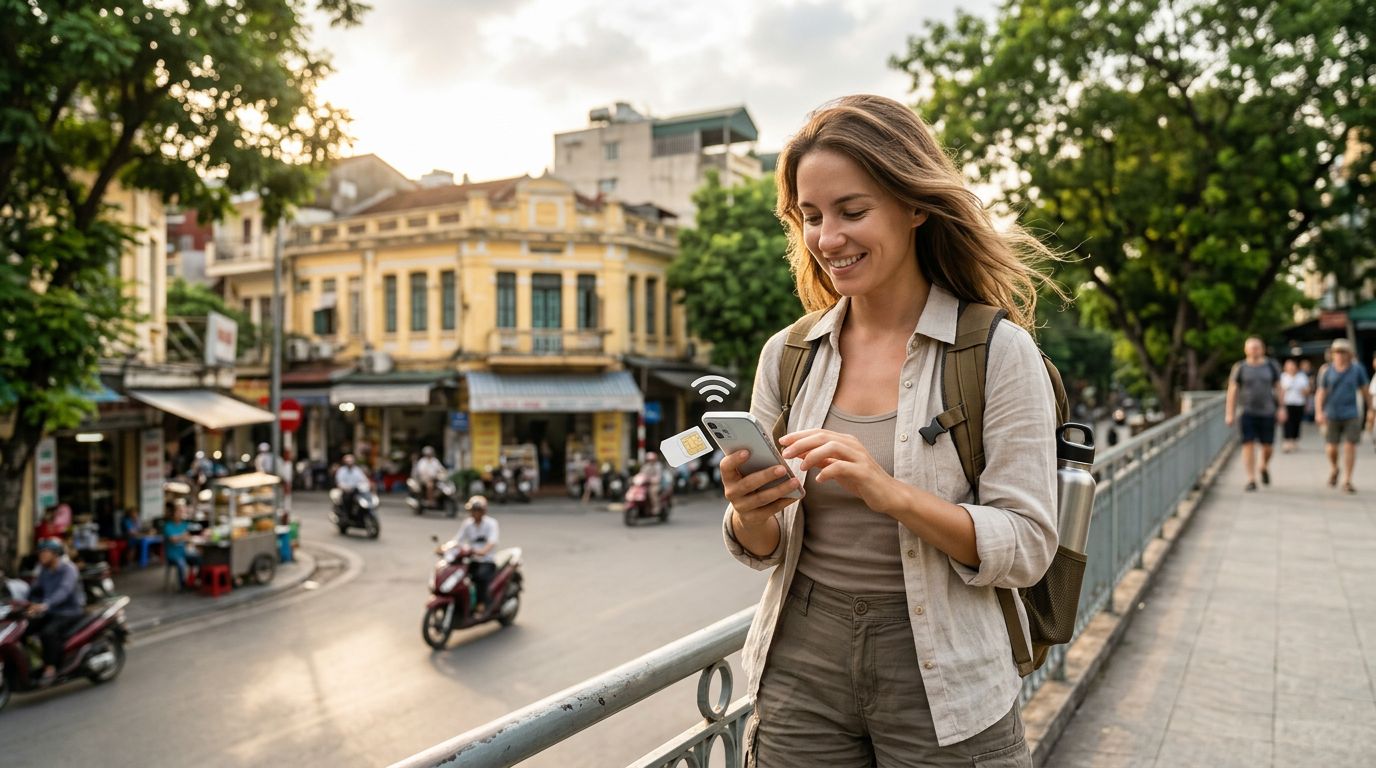
Understanding Connectivity Challenges for Travelers in Nigeria
Visiting Nigeria offers a vibrant experience, from the bustling markets of Lagos to the cultural richness of Abuja. However, staying connected while moving between these diverse regions can be a significant hurdle for international travelers. Relying on local infrastructure or public networks often leads to frustration, slow speeds, and security concerns.
For many years, the standard approach for travelers was to land at the airport, search for a local kiosk, and purchase a physical SIM card. While this method is traditional, it comes with logistical difficulties. You must navigate language barriers, provide identification documents at a physical counter, and physically swap your home SIM card—a tiny piece of hardware easily lost or damaged. Furthermore, local physical SIMs often require manual configuration of APN settings, which can be confusing for those not technically inclined.
The modern traveler requires a solution that is ready the moment the plane touches the runway. Connectivity is no longer a luxury; it is a necessity for accessing ride-sharing apps, finding directions, translating languages, and keeping in touch with family. When you arrive in a new country, the last thing you want is to spend hours standing in line at a mobile provider’s office instead of exploring your destination.
Why eSIM Technology is the Superior Choice
The evolution of mobile technology has introduced the eSIM, or embedded SIM. This digital alternative replaces the physical plastic card with a software-based profile that resides directly on your device’s hardware. Because it is digital, you can manage your connectivity entirely through your smartphone’s settings.
The primary benefit of using an eSIM is convenience. You can purchase and activate your data plan before you even leave your home country. By the time you land in Nigeria, your phone is already prepared to connect to local networks. This eliminates the need to hunt for a vendor or manage physical cards. If you are using a modern smartphone, your device is likely already equipped with an eSIM chip. You can verify this by checking your device manufacturer's official support pages, such as those provided by Apple or Google.
Security is another major advantage. Public Wi-Fi networks in airports, hotels, and cafes are often insecure, leaving your personal data vulnerable to interception. By using a dedicated eSIM data plan, you maintain a private, encrypted connection that does not rely on shared infrastructure. This allows you to check your bank accounts, send sensitive emails, and use messaging apps with peace of mind.
Furthermore, an eSIM allows you to keep your primary SIM active alongside your travel data plan. This is particularly useful for travelers who need to receive incoming calls or SMS verification codes from their home country while simultaneously using local data for navigation and browsing. You can designate your eSIM as the primary source for cellular data while keeping your home number active for voice calls if needed.
Selecting the Best Way to Get Data in Nigeria
When considering the best way to get data in Nigeria, it is important to look for providers that offer reliable coverage and a seamless user experience. OneTapSIM provides a streamlined approach to international connectivity by offering eSIM profiles specifically designed for travelers. By choosing a dedicated travel eSIM, you avoid the common pitfalls of roaming with your home carrier, which can be prohibitively expensive and often throttled to slower speeds.
To get started, ensure your device is unlocked. An unlocked phone is one that is not tied to a specific mobile carrier's contract. If you are unsure about your device's status, contact your home provider before your trip. Once you have confirmed your device is compatible and unlocked, you can select a data package that fits the duration and intensity of your trip.
Installation is straightforward. After purchasing your plan, you will receive a digital activation method, usually in the form of a QR code or a manual activation string. You simply navigate to your phone's cellular settings, select the option to add a new plan, and follow the prompts. The entire process takes only a few minutes.
Once activated, your device will automatically search for the strongest available local network in Nigeria. This ensures that whether you are in a major urban center or traveling between regions, you maintain a consistent signal. Because OneTapSIM and similar services prioritize high-quality network partnerships, you get the benefit of local infrastructure without the hassle of local procurement.
Beyond the technical benefits, using a digital solution supports a more sustainable way of traveling. By removing the need for plastic SIM cards and the packaging associated with them, you reduce your environmental footprint. It is a cleaner, faster, and more efficient way to stay online.
As you plan your itinerary, consider how much data you typically consume. If you are a heavy user of social media, video streaming, or navigation apps, opt for a plan that offers a generous data allowance. If you are primarily using your phone for maps and occasional messaging, a lighter plan will suffice. The beauty of digital eSIMs is that they are flexible; if you find yourself running low on data mid-trip, you can often purchase a top-up or an additional plan through your provider’s interface without needing to replace your SIM card.
In summary, the best way to get data in Nigeria is to bypass the physical SIM card process entirely. By opting for an eSIM, you gain the freedom to explore without the stress of connectivity gaps. You save time, protect your privacy, and ensure that your phone is ready to act as your ultimate travel companion from the moment you arrive. Whether you are visiting for business or leisure, a pre-activated eSIM ensures that your focus remains on the experience rather than the logistics of your mobile connection.
Ottieni una eSIM per
Piani per le destinazioni di questa guida, con consegna immediata via QR.