Understanding the SIM Meaning and Its Evolution
When you prepare for an international trip, you likely encounter the term "SIM" repeatedly. If you have ever wondered about the SIM meaning, it stands for Subscriber Identity Module. At its core, a SIM is a small, removable smart card that stores a unique identification number, known as an International Mobile Subscriber Identity (IMSI). This number serves as your digital passport on a cellular network, allowing your device to connect to towers, make calls, send messages, and access mobile data.
For decades, the physical SIM card was the standard. It evolved from the size of a credit card in the early 1990s to the Nano-SIM size we recognize today. However, the physical nature of these cards created friction for travelers. You had to track down a local kiosk, swap out your home card, and risk losing your original SIM in the process.
The industry has shifted toward eSIM technology, which stands for "embedded" SIM. An eSIM is essentially a digital version of the traditional card, built directly into the hardware of your smartphone. Because it is software-based, you no longer need to physically insert or remove anything from your phone. This transition has simplified global connectivity, allowing travelers to manage their network profiles through settings menus rather than hardware trays.
Why eSIMs Are Essential for Modern Travel
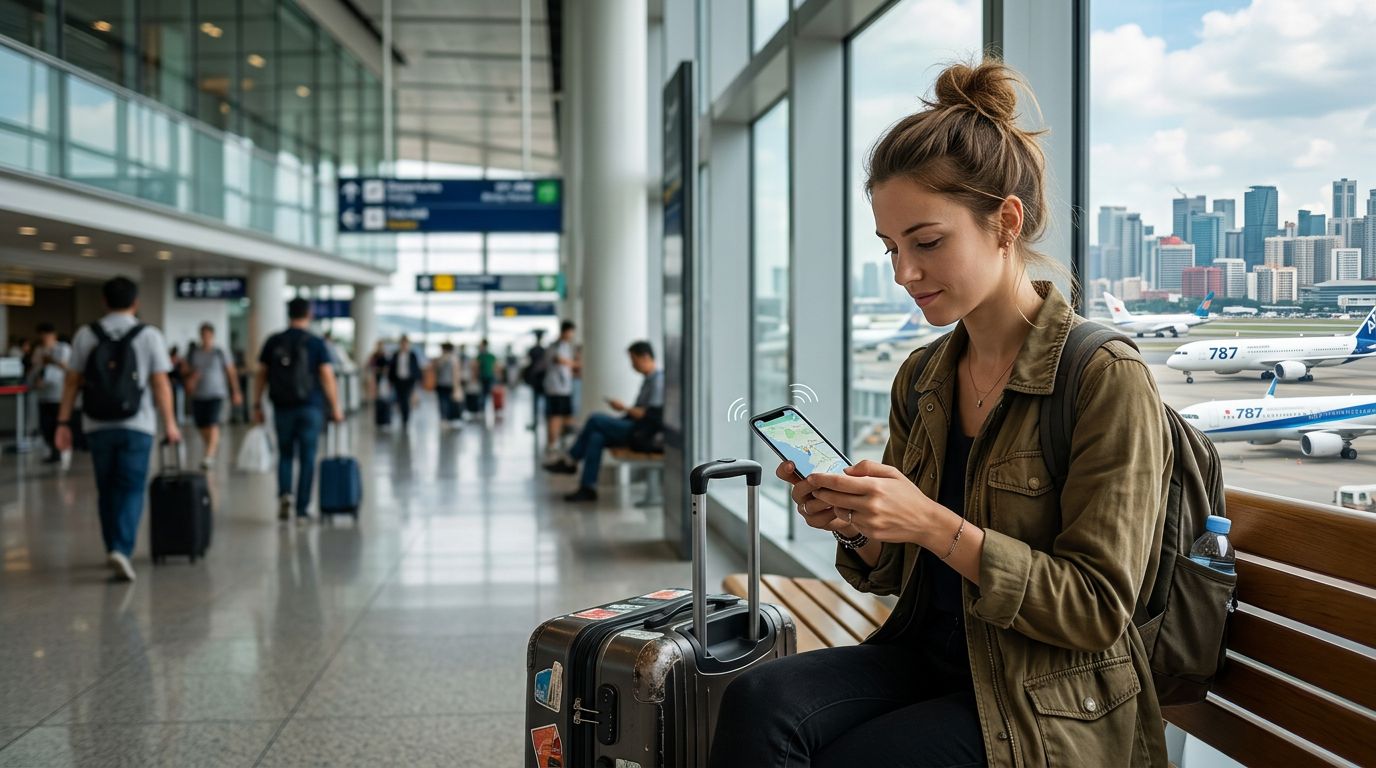
The primary benefit of moving away from physical cards is the convenience of digital provisioning. With an eSIM, you can download a connectivity profile before you even leave your home country. This means that as soon as your plane touches down, you can switch to your travel data plan without searching for a local shop or dealing with language barriers at a mobile carrier counter.
OneTapSIM provides a streamlined way to manage these digital profiles. By utilizing the eSIM capabilities already present in most modern smartphones, you can maintain your primary phone number for calls and texts while using a separate data profile for your internet needs abroad. This dual-SIM functionality is a significant advantage for those who need to stay reachable on their home number while avoiding the high costs of international roaming.
Beyond convenience, eSIMs offer improved security. A physical card can be damaged, lost, or stolen, which leaves you without service and potentially exposes your data. An eSIM is integrated into the device, meaning it cannot be physically misplaced. If your phone is lost, the eSIM profile is tied to your device’s secure element, making it more difficult for unauthorized users to manipulate your network connection. Furthermore, because the technology is digital, it is more environmentally friendly, reducing the production of plastic cards and the shipping waste associated with physical distribution.
How to Check Compatibility and Activate Your Service
Before you rely on an eSIM for your next trip, you must ensure your device is compatible. Most smartphones released in the last few years support this technology, but it is always wise to verify your specific model. You can check your device settings under the "Cellular" or "Mobile Data" sections to see if there is an option to "Add eSIM" or "Add Cellular Plan." If this option appears, your device is ready to support digital profiles.
The activation process is generally straightforward. Once you have selected a data plan, you will typically receive a QR code or an activation code. You simply navigate to your phone’s cellular settings, select the option to add a plan, and scan the code provided. Your phone will then download the necessary network credentials and register with the local carrier.
When you use a service like OneTapSIM, the setup process is designed to be intuitive, guiding you through the installation steps so you can get online quickly. It is important to remember that your phone must be "unlocked" to use an eSIM from a provider other than your home carrier. An unlocked phone is not restricted to one specific network, allowing you to install profiles from various providers globally. If you are unsure about your device's status, you can contact your home carrier to request that they unlock your phone for international use.
Once activated, you can manage your data usage directly through your phone’s interface. You can label your plans—for example, naming one "Home" and another "Travel"—to easily distinguish between them. This allows you to toggle data on or off for specific plans, ensuring you stay within your data limits while abroad. By understanding the SIM meaning and embracing the flexibility of eSIMs, you gain control over your connectivity, ensuring you stay connected to maps, translation tools, and communication apps throughout your journey. Whether you are traveling for business or leisure, the ability to switch networks instantly provides a level of reliability that was previously difficult to achieve with physical cards.