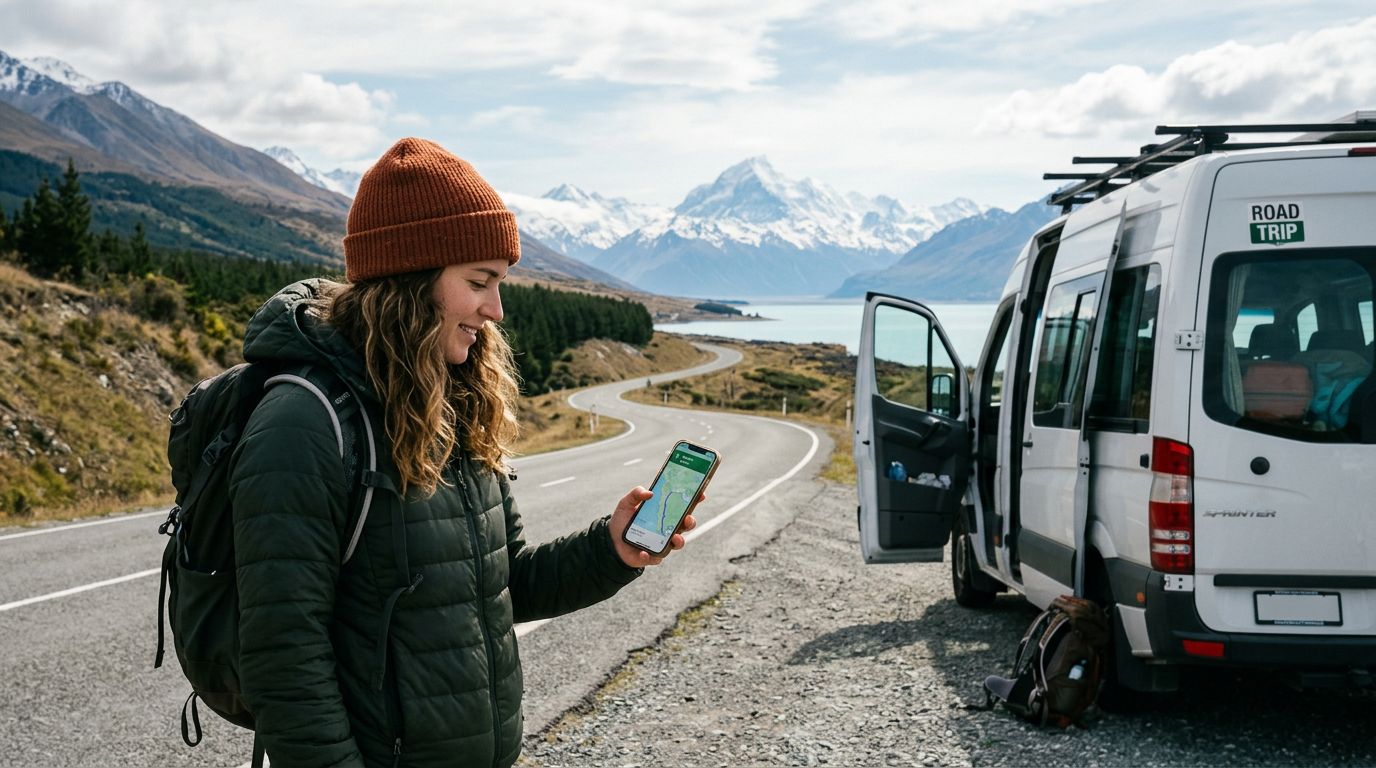
The Evolution of Connectivity on the Open Road
Planning a road trip involves a long checklist: checking tire pressure, mapping out scenic routes, booking accommodations, and ensuring you have enough snacks. However, one of the most critical items often overlooked until you are miles away from home is how you will stay connected. Whether you are relying on GPS to find hidden mountain passes, streaming music to keep the energy high, or sharing photos of your journey with friends and family, a reliable internet connection is the backbone of a modern road trip.
For years, the standard solution for travelers was the pocket WiFi device—a small, battery-operated router that creates a local hotspot. While these devices revolutionized travel connectivity, the landscape has shifted significantly with the introduction of eSIM technology. When comparing pocket WiFi vs eSIM for road trips, the choice depends on your specific travel style, the number of devices you need to support, and your tolerance for carrying extra gear. Understanding the nuances of each option will help you decide which technology is the best companion for your next adventure.
The Case for Pocket WiFi: Shared Connectivity
Pocket WiFi devices function as portable cellular routers. You insert a physical SIM card—or connect to a pre-configured network—and the device broadcasts a WiFi signal that allows your phone, tablet, and laptop to connect as if they were at home.
The primary advantage of a pocket WiFi device is its ability to support multiple users simultaneously. If you are traveling with a group of friends or family members who all need high-speed data for various devices, a single pocket WiFi unit can serve as a central hub. It keeps everyone connected, which can be useful for coordinating stops or keeping children entertained with tablets during long stretches of driving.
However, the downsides of pocket WiFi are significant for road trippers. First, you are responsible for an additional piece of hardware. This means you must manage its battery life throughout the day. If the device runs out of power, your entire group loses connectivity until you find a way to charge it. Furthermore, you have to keep track of the device, its charging cables, and the carrying pouch. If you lose it or leave it in a restaurant, you are left without service for the remainder of your trip. Additionally, you often have to pick up the device at a rental counter or wait for it to be shipped to your home, adding logistical steps to your travel preparations.
The Advantages of eSIM Technology
An eSIM, or embedded SIM, is a digital version of a traditional plastic SIM card. It is built directly into the hardware of modern smartphones. Because it is digital, you do not need to physically swap out a card or carry a separate device. You simply download a profile, activate it through your phone’s settings, and you are ready to go.
For a road trip, the convenience of an eSIM is unmatched. Since the technology is integrated into your phone, you never have to worry about charging an extra battery or losing a router. You are using the device you already have in your pocket. This makes it an ideal solution for solo travelers or couples who want a seamless, clutter-free experience.
OneTapSIM offers a streamlined way to manage this process. By utilizing an eSIM, you maintain a direct connection to local cellular towers, which often provides better stability than a secondary device trying to bridge a signal. Because the eSIM is tied to your phone, you also avoid the risk of leaving your internet source behind at a rest stop or hotel. If you are driving through remote areas, having your connectivity integrated directly into your primary communication device ensures that your GPS and emergency services are always accessible without the potential failure points of a third-party router.
Performance and Reliability on the Move
When you are driving through varying landscapes—from dense urban centers to rural highways—signal strength is everything. Pocket WiFi devices are essentially external antennas. While they can be placed near a window to catch a better signal, they are still limited by the quality of the network they are connected to and the hardware's internal antenna.
eSIMs, by contrast, leverage the advanced internal antennas of modern smartphones. These devices are engineered to switch between cellular bands efficiently, providing a more consistent connection as you move between cell towers at highway speeds. When you use a service like OneTapSIM, you are tapping into established local networks with the same priority and reliability as a local resident.
There is also the matter of setup time. With a pocket WiFi, you are often tethered to a rental return schedule. If your road trip ends in a different city than where you started, returning the device can become a logistical headache involving mailers or specific drop-off kiosks. With an eSIM, the service is entirely digital. You can purchase and activate your plan minutes before you cross a border or arrive at your destination. Once your trip is over, the eSIM profile simply expires or can be deleted from your phone settings, leaving no physical trace and requiring no return logistics.
Making the Final Decision for Your Trip
To determine the right path, evaluate your specific requirements. If you are traveling with a large group of people who all need to connect laptops and tablets simultaneously, a pocket WiFi might still hold some appeal despite the extra hassle. It serves as a dedicated network for a team or a large family.
However, for the vast majority of road trippers, the eSIM is the superior choice. It is lighter, more reliable, and significantly easier to manage. You eliminate the fear of a dead battery, the anxiety of losing a rented device, and the inconvenience of managing logistics. By choosing an eSIM, you can focus on the road ahead rather than the technology in your bag.
As you prepare for your journey, consider how much you value simplicity. The ability to stay connected without extra cables or hardware allows you to be more present in the moments that matter. With options like OneTapSIM, connectivity becomes a background utility that works exactly when you need it, ensuring your maps stay loaded, your music keeps playing, and your memories are shared the moment they happen. Whether you are crossing state lines or exploring international borders, the transition to digital connectivity is the most practical upgrade you can make for your travel toolkit.