The Reality of Connectivity Upon Arrival in Belize
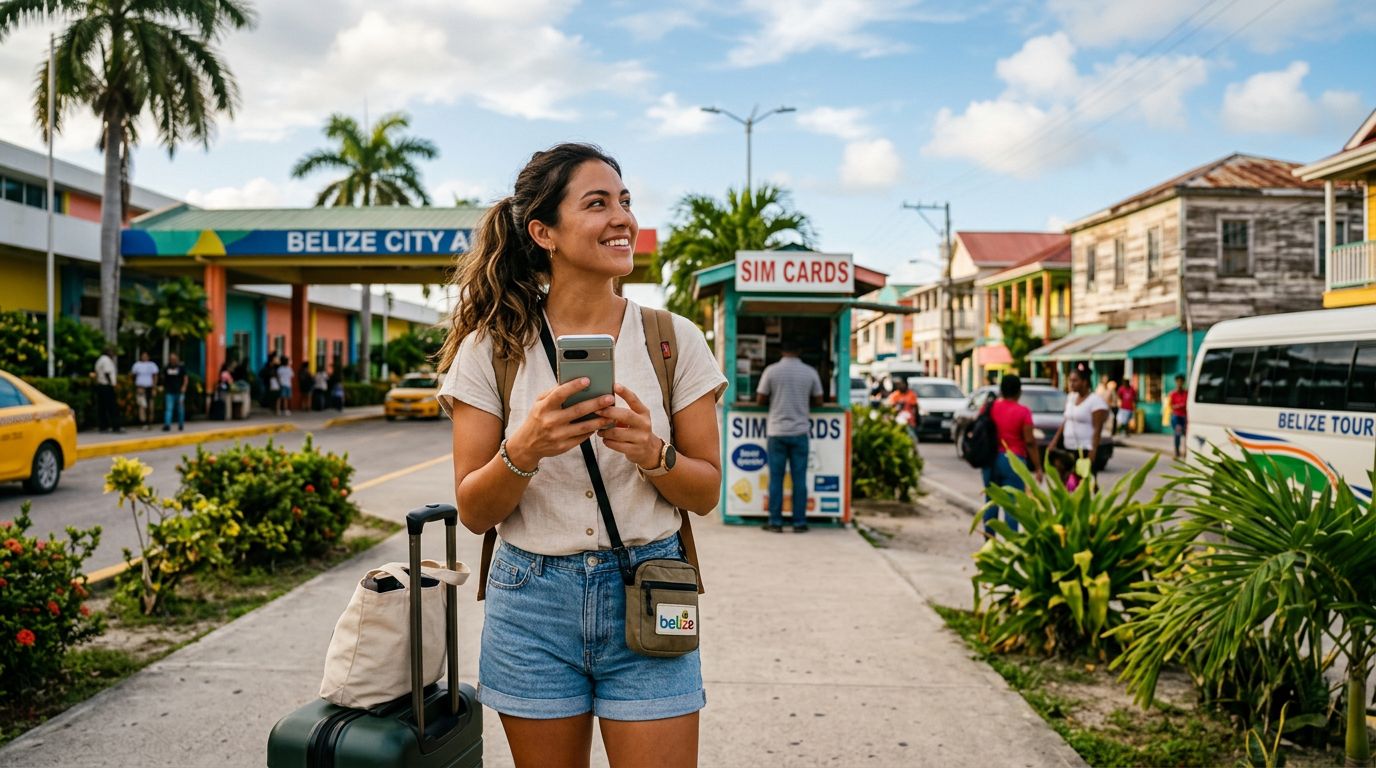
When you touch down at Philip S. Goldson International Airport, the excitement of your Belizean adventure begins immediately. Whether you are heading toward the lush jungles of the Cayo District or catching a puddle-jumper flight to the pristine cayes, staying connected is essential for maps, translation, and sharing your journey. Many travelers arrive with the assumption that they will simply pick up a physical SIM card at the airport kiosk, but the reality of airport connectivity can be a mixed experience.
Choosing between an airport SIM and an eSIM involves weighing convenience against the potential for frustration. Airport kiosks are often the first thing travelers see, but they are also subject to long queues, limited inventory, and the physical hassle of handling tiny plastic cards. When you land after a long flight, the last thing you want to do is stand in a slow-moving line while your fellow travelers are already boarding their shuttles or taxis.
Furthermore, physical SIM cards require you to remove your home carrier’s card, which creates an immediate risk of losing your original chip. If you are not careful, that tiny piece of plastic can easily slip into the cracks of a rental car or get lost in your luggage. By contrast, digital solutions eliminate the need for physical hardware entirely. Understanding how these options differ will help you decide which path ensures the smoothest start to your vacation.
Comparing the Convenience of Physical SIMs and eSIMs
The primary difference between a traditional airport SIM and an eSIM is the delivery method and the installation process. A physical SIM card is a tangible object that must be inserted into your device's SIM tray. At an airport kiosk in Belize, you are at the mercy of the staff’s availability and the current stock of available plans. If the kiosk is closed due to a flight delay or if they have run out of cards, you are left without service until you find a town center with a mobile provider's shop.
An eSIM, or embedded SIM, is a digital alternative that resides directly on your phone’s internal hardware. Because it is software-based, you can purchase and activate your plan before you even leave your home country. This means that as soon as your plane lands and you switch off airplane mode, your phone is ready to connect to the local network. There is no need to hunt for a shop, wait in a line, or fiddle with a paperclip to eject your SIM tray.
From a security standpoint, the eSIM is superior because it stays inside your phone. You keep your primary SIM card in place, allowing you to receive important calls or texts from home if necessary, while your data is handled entirely by the eSIM. OneTapSIM provides a streamlined way to manage this transition, ensuring that your device is configured correctly before you arrive. This preparation removes the uncertainty of the airport arrival process, letting you focus on your itinerary rather than your technical setup.
Technical Requirements and Compatibility
Before deciding on your connectivity strategy, you must ensure your device is capable of supporting an eSIM. Most modern smartphones released in the last few years are equipped with eSIM technology. You can verify this by checking your phone’s cellular settings to see if there is an option to add a cellular plan or an eSIM. If your device is locked to a specific carrier, you will need to contact your home provider to request an unlock before your trip, as this is a requirement for both physical SIMs and eSIMs to function with a foreign network.
If you are using an older device that does not support eSIM technology, you may be forced to rely on a physical SIM card. In that case, you should research local Belizean providers ahead of time to identify where their official retail stores are located, rather than relying solely on the airport kiosks. However, for the vast majority of travelers with modern hardware, the eSIM is the more reliable choice. It simplifies the transition between countries and avoids the common pitfalls associated with physical card swapping.
When you use a service like OneTapSIM, the setup process is typically handled through a simple scan of a QR code or a manual entry of network details. This digital handshake happens in the background, allowing you to maintain a consistent connection throughout your trip. Whether you are navigating the winding roads of the Mountain Pine Ridge Forest Reserve or checking ferry times to Caye Caulker, having a pre-activated eSIM ensures that your navigation apps and messaging services remain functional from the moment you step off the plane.
Ultimately, the choice comes down to how much you value your time. If you prefer to have your digital life sorted long before you reach the Caribbean coast, the eSIM is the clear winner. By avoiding the airport SIM scramble, you reclaim those first few hours of your trip, allowing you to move directly from the arrival gate to your first Belizean experience without a single technical hiccup.