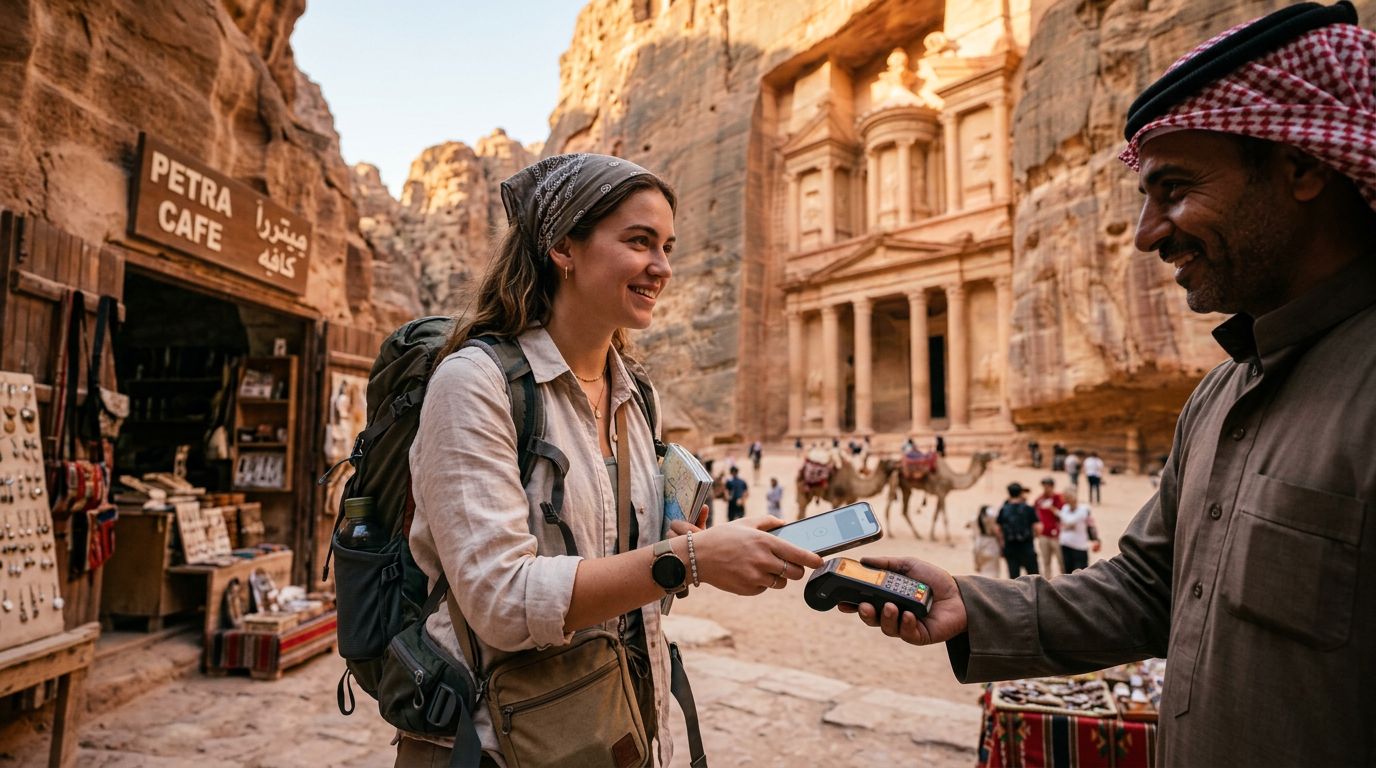
Connectivity and Digital Payments in Jordan
Traveling through Jordan offers a mix of ancient history, from the rose-red city of Petra to the vast dunes of Wadi Rum. As you traverse these landscapes, staying connected is essential, not just for navigation and translation, but for managing your finances. Many travelers rely on digital wallets and banking applications to handle expenses, book tours, or manage local transport. When you arrive in Jordan, your primary connection method will likely be an eSIM, which provides a seamless way to access mobile data without the need for physical SIM cards.
Using payment apps with eSIM in Jordan is generally straightforward, provided you have a reliable data connection. Because these apps require a secure and stable internet link to verify transactions and sync with your bank, the quality of your mobile network is paramount. An eSIM ensures you have immediate access to local data networks the moment you land, allowing you to use your preferred financial tools without the hassle of searching for local kiosks or dealing with physical cards. Whether you are using international banking apps, digital wallets like Apple Pay or Google Pay, or local merchant payment systems, maintaining a consistent data flow is the foundation of a stress-free trip.
Technical Considerations for Your Financial Apps
When you rely on an eSIM for financial transactions, there are a few technical nuances to keep in mind. Most modern payment applications are designed to detect if your device is using a roaming or secondary data connection. While this does not usually block functionality, it is important to ensure your device settings are configured correctly. By using a reliable provider like OneTapSIM, you ensure that your data connection is routed through stable local networks, which minimizes the risk of connection timeouts during a payment process.
If you are using a dual-SIM setup—where your primary home SIM remains active for SMS verification codes while your eSIM handles data—you must ensure your phone is set to use the eSIM for mobile data. This prevents your home carrier from accidentally triggering expensive roaming data charges while ensuring your banking apps have the high-speed connection they need to process requests. Most payment apps perform a security check upon opening; they look for a stable IP address and a secure connection. A high-quality eSIM provides this stability, making it much less likely that your bank will flag your activity as suspicious due to a fluctuating or poor-quality signal.
Furthermore, remember that many banking apps require multi-factor authentication. If your bank sends these codes via SMS, you must ensure your home SIM is roaming-enabled or that you have Wi-Fi calling active. The eSIM acts as the bridge for your data-heavy apps, while your primary line manages the essential verification tokens. Balancing these two connections allows you to move through Jordan with the confidence that you can pay for a coffee in Amman or a guided tour in the desert without technical friction.
Best Practices for Secure Transactions Abroad
Security is the highest priority when managing money while traveling. Using payment apps with eSIM in Jordan is inherently more secure than relying on public Wi-Fi networks found in cafes or airports. Public networks are often unencrypted, making it easier for unauthorized parties to intercept sensitive information. By using a dedicated eSIM, you are utilizing a private cellular data connection, which is significantly more difficult to compromise than an open Wi-Fi signal.
To maximize your security, always ensure that your payment applications are updated to their latest versions before you depart. These updates often include critical security patches that protect against emerging threats. Additionally, consider using a virtual private network (VPN) if you are accessing banking portals, though many banking apps have their own built-in encryption protocols that are sufficient for cellular data.
OneTapSIM provides a reliable data environment that allows these security protocols to function as intended. When you are not actively using your payment apps, it is a good habit to toggle off background data refresh for those specific apps in your phone settings. This ensures that your data is used primarily for the transactions you authorize, providing an extra layer of control over your digital footprint.
Finally, keep a secondary method of payment available. While digital wallets are widely accepted in major Jordanian hotels, restaurants, and larger retail outlets, smaller shops or local markets may still operate primarily on cash. Your eSIM helps you locate ATMs or check exchange rates in real-time, which is invaluable when you need to withdraw local currency. By combining the convenience of digital payments with the reliability of a high-quality eSIM, you can focus on the experience of Jordan rather than the logistics of your travel budget.
By preparing your device and understanding how your eSIM interacts with your financial software, you eliminate the common stressors of international travel. Whether you are checking your balance while waiting for a bus or paying for a museum entry, having a consistent data connection is the key to maintaining control over your finances throughout your journey.
Get an eSIM for
Plans for the destinations covered in this guide, with instant QR delivery.